
Aquamarine
A blue like seawater held in stone. March’s birthstone, a beryl-family gem.
Aquamarine is the blue variety of beryl (Be₃Al₂Si₆O₁₈), a hard mineral at Mohs 7.5–8, crystallizing in the hexagonal system. Its pale water-blue comes from trace iron within the crystal. Named *aqua marina*, “seawater”, in ancient Rome, it has long been loved as a sailors’ talisman and as March’s birthstone.
Aquamarine is the March birthstone. See all March birthstones →
◆ Aquamarine — Stone Meanings
- Composure
- Courage
- Clear thinking
- Renewal
- A happy marriage
- Communication
- Healing
- A sailors’ talisman
◆ About Aquamarine
Aquamarine is the blue variety of beryl. Its formula is Be₃Al₂Si₆O₁₈ (a beryllium-aluminium silicate); it crystallizes in the hexagonal system and is very hard at Mohs 7.5–8, sharing its family with emerald (green beryl), morganite (pink beryl) and heliodor (yellow beryl).
The pale water-blue comes from trace iron (Fe) within the crystal. About 2,000 years ago the Romans saw that blue and named it *aqua marina*, “seawater”. In an age before modern navigation, Roman sailors are said to have worn it as a talisman to calm the wrath of the sea god and to pray for safe passage.
Its associations include composure, courage, clear thinking, a happy marriage and communication. A calm, water-like blue that settles the heart, it is cherished today as March’s birthstone and the gift for a 19th wedding anniversary.
Much of the aquamarine on the market has its blue drawn out by heat treatment; untreated, natural-color stones are rare and prized. From pale light-blue to the deep marine blue of Brazil’s Santa Maria mine, the expression shifts with the depth of blue, the clarity and the landscape of the inclusions — the appeal of raw stone.
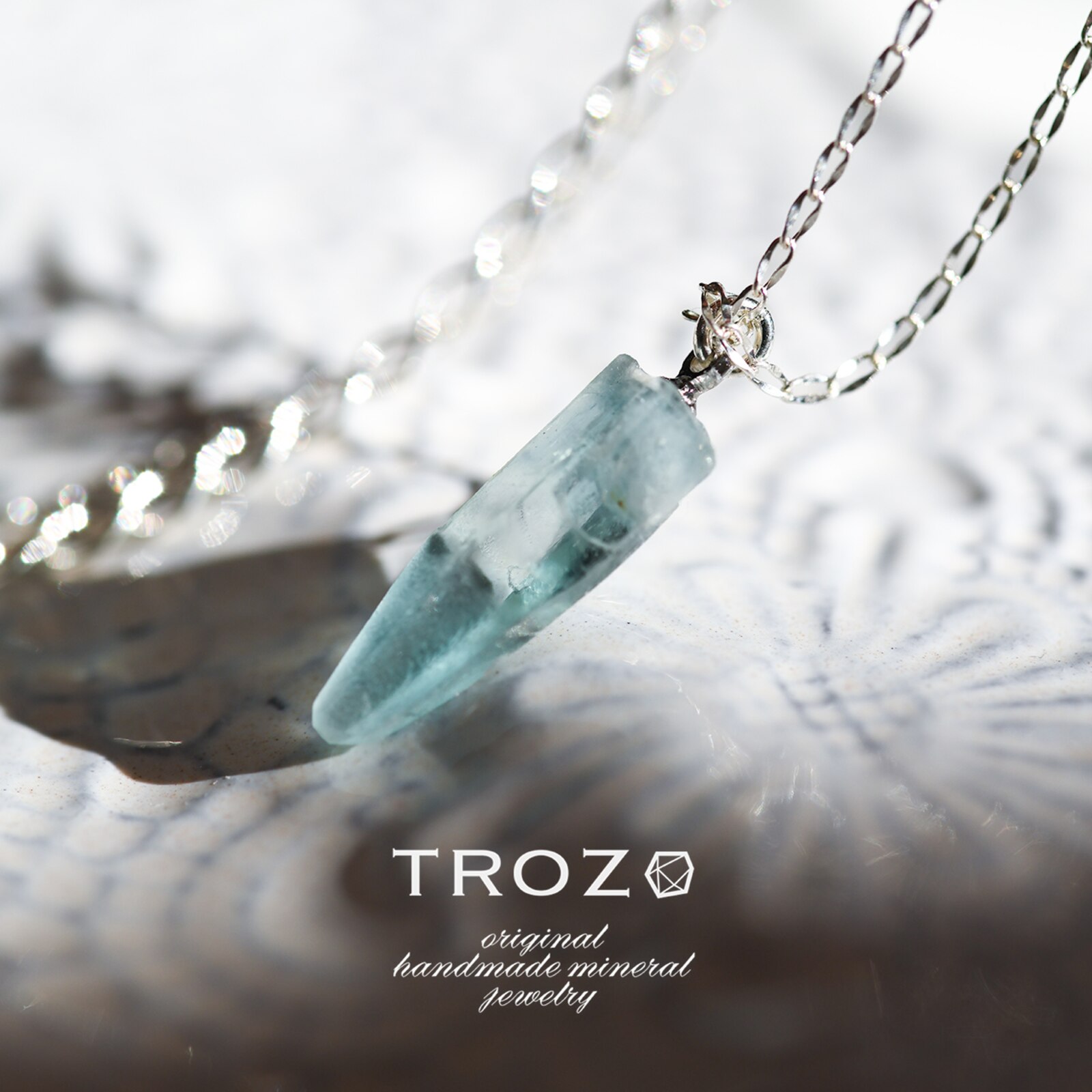
◆ The Many Faces of Aquamarine
Every piece differs in hue and inclusion — the unrepeatable character of raw stone.

![Aquamarine Aquamarine Raw Stone Bracelet - One of a Kind | Handmade Natural Stone Jewelry [Veiled Nereids Collection]](https://cdn.shopify.com/s/files/1/0713/5585/9244/files/c8fcee4e27be41a285956004ba87aa95.jpg?v=1783320014)
![Aquamarine Aquamarine Raw Stone Clip-On Earrings - One of a Kind | Handmade Natural Stone Jewelry [Veiled Nereids Collection]](https://cdn.shopify.com/s/files/1/0713/5585/9244/files/224b45ba4f5314ca35d9cf30ff9c0ca3.jpg?v=1783319992)
![Aquamarine Aquamarine Raw Stone Earrings - One of a Kind | Handmade Natural Stone Jewelry [Veiled Nereids Collection]](https://cdn.shopify.com/s/files/1/0713/5585/9244/files/014fbde25d0a5bef9aea1625cf3d150f.jpg?v=1783319964)
◆ Mineral Data
- English name
- Aquamarine
- Chemical formula
- Be₃Al₂Si₆O₁₈ (beryllium-aluminium silicate — the blue variety of beryl)
- Mineral class
- Beryl family
- Crystal system
- Hexagonal
- Mohs hardness
- 7.5 – 8
- Specific gravity
- 2.72 (+0.18, −0.05)
- Main sources
- Brazil (Minas Gerais, Santa Maria mine), Nigeria, Mozambique, Zambia, Madagascar, Russia, Pakistan, Afghanistan and others
- Color range
- Pale light-blue to deep marine blue; Brazil’s vivid Santa Maria aquamarine is the finest quality
- Notable trait
- Trace iron (about 0.5–2%) gives the blue; most market material is heat-treated to draw out the blue, and untreated natural color is rare
- Birthstone
- March
◆ The stone ancient Rome called “seawater”
*Aqua marina* — a name from 2,000 years ago, carried straight into its English name.
The name “Aquamarine” combines the Latin *aqua* (water) and *marina* (of the sea), from the way the Romans praised the stone’s blue as “seawater”. In ancient Rome, sailors wore it as a talisman to calm the wrath of the sea god Neptune (Poseidon in Greek myth) and to protect their ships from storms, praying for safe passage. Aquamarine beads have also been excavated from the tombs of Egyptian royalty — one of the stones humankind has known since ancient times.
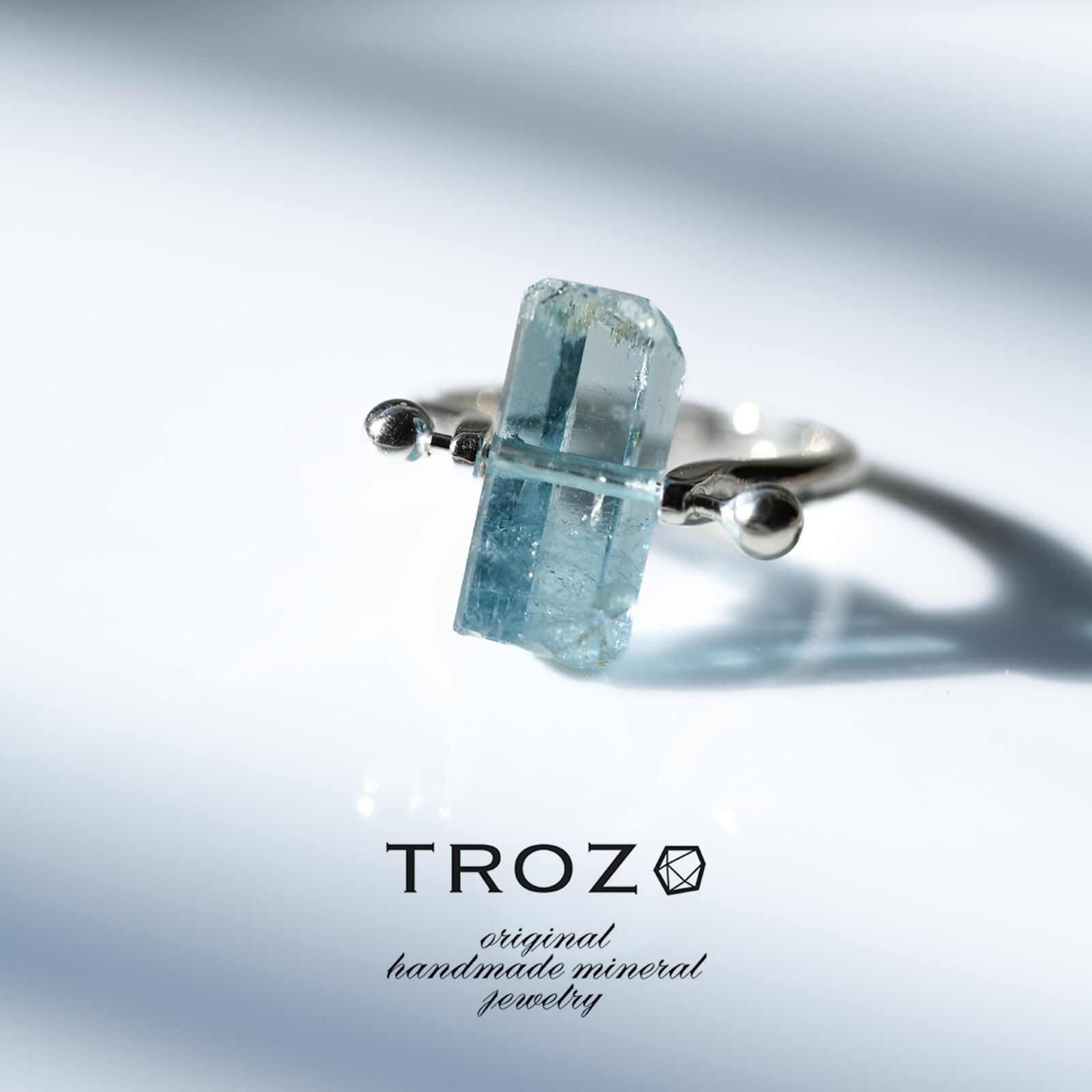
◆ How the blue happens — the beryl family and a touch of iron
One family, but the element decides the color.
Aquamarine is the blue member of the beryl family. Its siblings — emerald (green, from chromium and vanadium), morganite (pink, from manganese), heliodor (yellow, from iron in another state) and goshenite (colorless) — change color with the trace element they hold. Aquamarine’s blue comes from trace iron (Fe), roughly 0.5–2%. Much of the market material is heat-treated to bring out the blue, so untreated, natural-color stones are prized as rare.
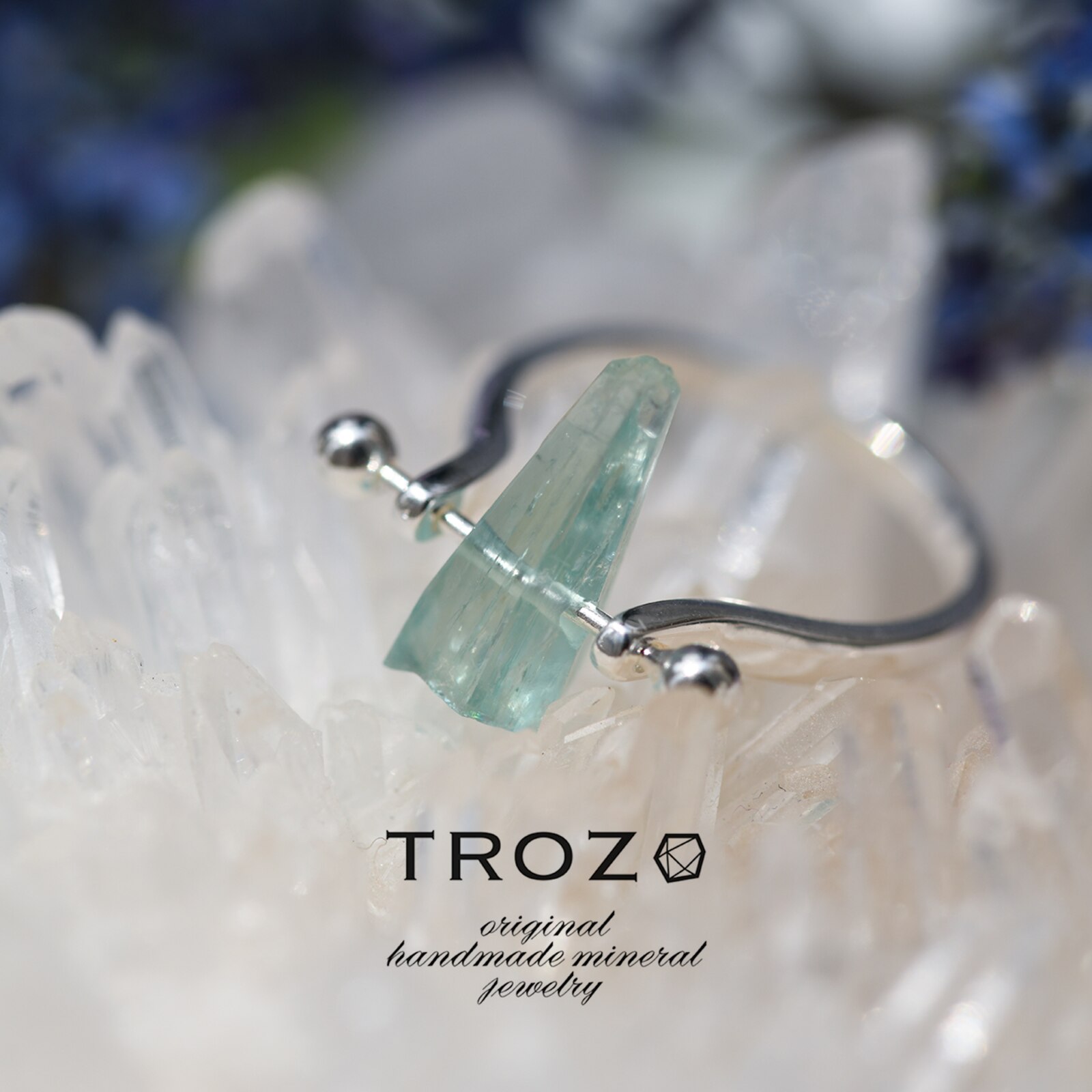
◆ Choosing raw aquamarine jewelry
Choose by depth of blue, clarity and the landscape of the inclusions.
At Mohs 7.5–8 aquamarine is very hard, with ample strength for everyday wear and well suited to raw-stone jewelry. The character of a raw stone turns on the depth of blue (pale light-blue to deep marine), the clarity (from water-clear to stones with a landscape of inclusions) and the sharpness of the natural form. The deep, vivid blue of Brazil’s Santa Maria mine has a presence all its own, while paler blues sit easily against the skin for everyday wear.
TROZO sets aquamarine without polishing away its character, letting the natural blue and inclusions lead the design. We offer pieces for those who would like to choose the depth of blue and size from stock, as well as pieces where the meeting with the stone is left to chance. A calm, water-like blue, it suits everyday life in any season — a stone to keep for years.
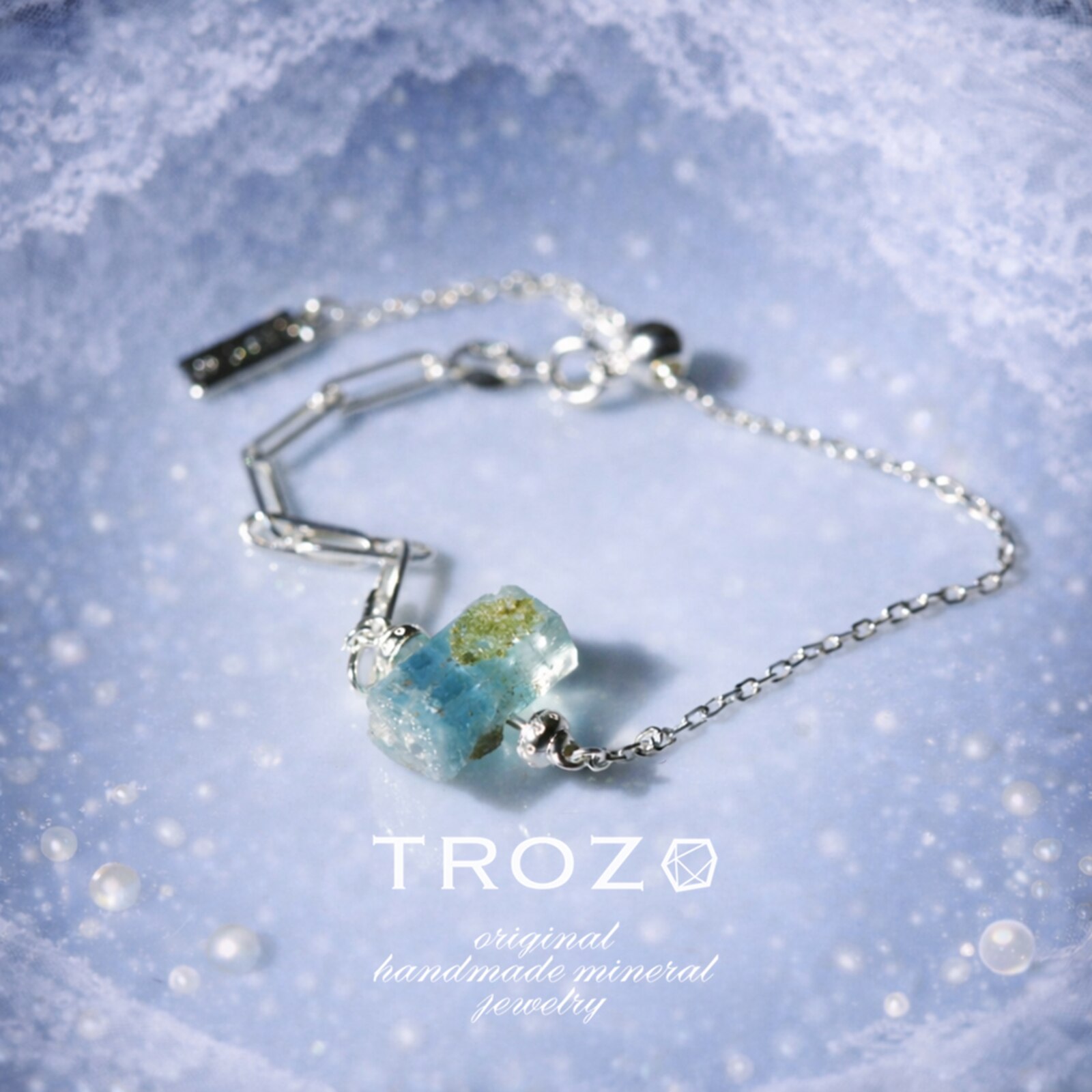
◆ Aquamarine Raw-Stone Jewelry
Handmade raw stone & mineral pieces — TROZO
Aquamarine Raw Stone Ear Cuff | Handmade Natural Stone Jewelry
$33.00
Aquamarine Raw Stone Bracelet - One of a Kind | Handmade Natural Stone Jewelry [Veiled Nereids Collection]
$287.00
Aquamarine Raw Stone Clip-On Earrings - One of a Kind | Handmade Natural Stone Jewelry [Veiled Nereids Collection]
$131.00
Aquamarine Raw Stone Earrings - One of a Kind | Handmade Natural Stone Jewelry [Veiled Nereids Collection]
$131.00
![Aquamarine Aquamarine Raw Stone Earrings - One of a Kind | Handmade Natural Stone Jewelry [Veiled Nereids Collection]](https://cdn.shopify.com/s/files/1/0713/5585/9244/files/f579836b3cd6d428b49346cc45820c42.jpg?v=1783319972)
Aquamarine Raw Stone Earrings - One of a Kind | Handmade Natural Stone Jewelry [Veiled Nereids Collection]
$131.00
![Aquamarine Aquamarine Raw Stone Earrings - One of a Kind | Handmade Natural Stone Jewelry [Veiled Nereids Collection]](https://cdn.shopify.com/s/files/1/0713/5585/9244/files/71592a055a8d9225db4ceed9b39066f8.jpg?v=1783319957)
Aquamarine Raw Stone Earrings - One of a Kind | Handmade Natural Stone Jewelry [Veiled Nereids Collection]
$123.00
![Aquamarine Aquamarine Raw Stone Ring - One of a Kind | Handmade Natural Stone Jewelry [Veiled Nereids Collection]](https://cdn.shopify.com/s/files/1/0713/5585/9244/files/a6338652e0a92c3a6c1c5b4e97f8d95f.jpg?v=1783319949)
Aquamarine Raw Stone Ring - One of a Kind | Handmade Natural Stone Jewelry [Veiled Nereids Collection]
$141.00
![Aquamarine Aquamarine Raw Stone Ring - One of a Kind | Handmade Natural Stone Jewelry [Veiled Nereids Collection]](https://cdn.shopify.com/s/files/1/0713/5585/9244/files/6d16160c8fdbac8ea7951529291f4d4f.jpg?v=1783319943)
Aquamarine Raw Stone Ring - One of a Kind | Handmade Natural Stone Jewelry [Veiled Nereids Collection]
$145.00
◆ Frequently Asked Questions about Aquamarine
Q What does aquamarine symbolize?
Aquamarine is traditionally associated with composure, courage, clear thinking, renewal, a happy marriage and communication. A sailors’ talisman in ancient Rome, it is cherished today as March’s birthstone and the gift for a 19th wedding anniversary.
Q How hard is aquamarine?
Its Mohs hardness is 7.5–8, very hard among natural stones. It has ample strength for everyday jewelry, though a sharp blow can crack or chip it, so taking it off for housework and sport keeps its beauty longer.
Q Are aquamarine and emerald related?
Yes — both are members of the beryl family, sharing the formula Be₃Al₂Si₆O₁₈ and differing only in the trace element that colors them. Aquamarine is blue from iron (Fe), emerald green from chromium and vanadium, morganite pink from manganese, and heliodor yellow — siblings of one family in different colors.
Q Is aquamarine heat-treated?
Much of the aquamarine on the market has its blue drawn out by heat treatment: stones that are greenish or pale-beige in the rough are heated to around 400–500 °C, changing the state of the iron to bring out a vivid blue. Untreated, natural-color stones are rare — some natural-color aquamarine is found in Nigerian material in recent years — and are considered more valuable.
Q What kinds of jewelry can aquamarine become?
As natural-stone jewelry, aquamarine is used for raw-stone earrings, necklaces, rings, brooches and ear cuffs. TROZO makes aquamarine jewelry that keeps the raw stone unpolished so its blue and inclusions lead the design — both pieces you can choose by depth of blue and size from stock, and pieces where the meeting with the stone is left to chance.
Q Where does aquamarine come from?
Brazil (especially the Santa Maria mine in Minas Gerais) is known for the finest quality — the deep marine-blue “Santa Maria aquamarine”. It is also found in Nigeria, Mozambique, Zambia, Madagascar, Russia, Pakistan and Afghanistan, among others.
EXPLORE THE SHOP
Explore the world of Aquamarine
Discover more pieces than we can show here at the TROZO shop.
Shop Aquamarine