
Turquoise
A gradation of blue and green. December’s birthstone, a guardian of travelers.
Turquoise is an opaque natural stone known for its gradation of blue and green — CuAl₆(PO₄)₄(OH)₈·4H₂O (a hydrated copper-aluminium phosphate), triclinic, Mohs 5.5–6. The blue comes from copper, the green from iron impurities. Loved from the jewelry of Egyptian queens around 5000 BC through Persian and Native American cultures, it is one of humankind’s oldest jewelry minerals, cherished as December’s birthstone and a charm for travel.
Turquoise is the December birthstone. See all December birthstones →
◆ Turquoise — Stone Meanings
- Success
- Prosperity
- Health
- Safety
- Protection in travel
- Victory
- Courage
- Hope
◆ About Turquoise
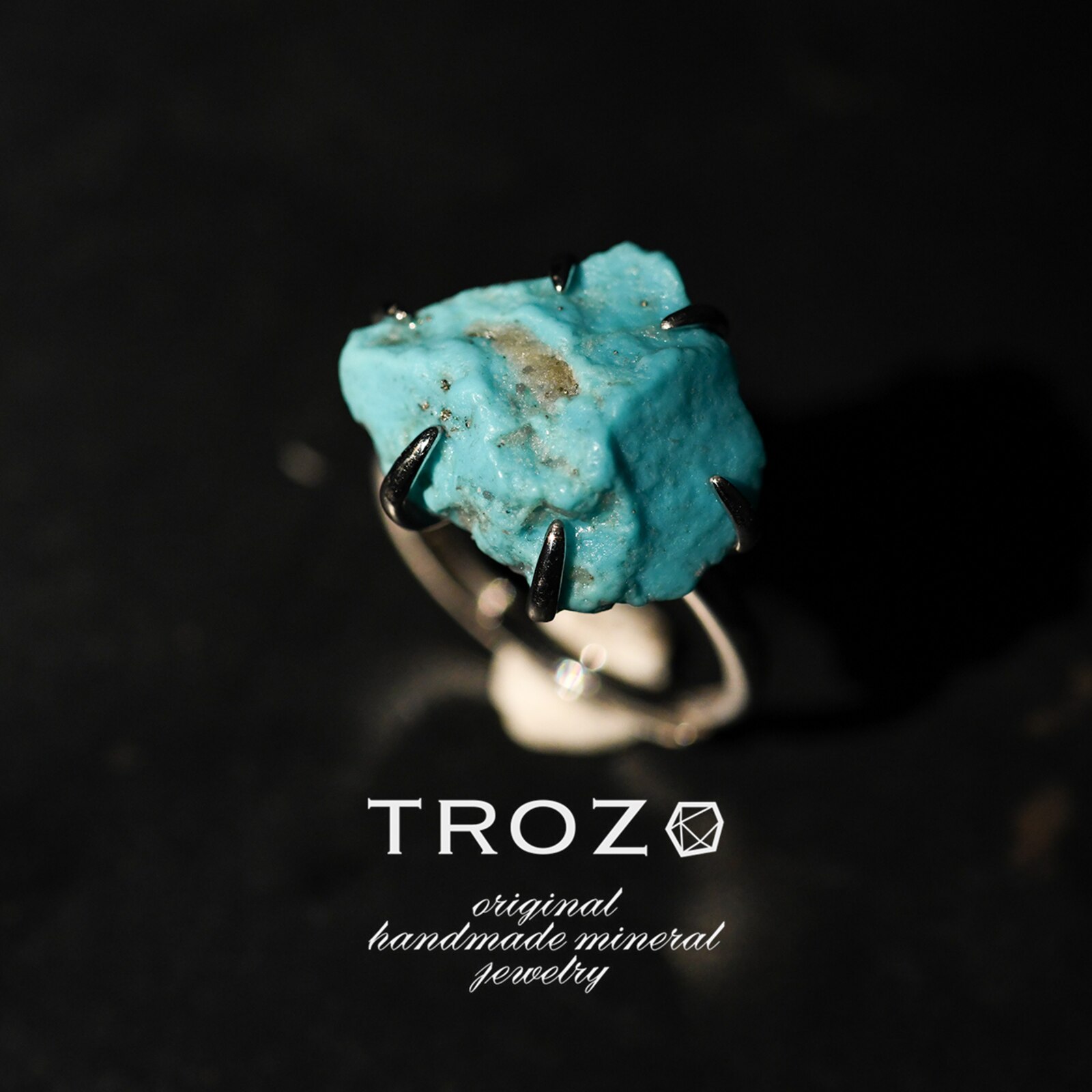
Turquoise is the natural stone known for its gradation of blue and green. Its formula is CuAl₆(PO₄)₄(OH)₈·4H₂O (a hydrated copper-aluminium phosphate); it is triclinic and Mohs 5.5–6, a somewhat soft, opaque mineral. The blue comes from copper ions within the crystal, the green from iron impurities or from dehydration, and a single stone can show a gradation from blue to green.
The name “Turquoise” comes from the French *pierre turquoise* (“Turkish stone”). It is not actually mined in Turkey — the name arose because it reached Europe from Persia (now Iran) by way of Turkey.
Around 5000 BC in ancient Egypt, a turquoise-and-gold bracelet excavated from the tomb of Queen Zer is known as one of the world’s oldest pieces of jewelry, and the stone stood for “fertile earth” and “healing and renewal”. It was a stone of “victory and good fortune” in Persia, a stone of bonds passed from father to son in Native American culture, and a charm worn on the necks of caravan camels and horses to pray for safe travel — loved the world over for more than 5,000 years.
Its associations include success, prosperity, health, safety, protection in travel and courage. December’s birthstone, it is widely cherished today as a charm for travelers and for those setting out on new adventures.
◆ Mineral Data
- English name
- Turquoise
- Chemical formula
- CuAl₆(PO₄)₄(OH)₈·4H₂O (hydrated copper-aluminium phosphate)
- Mineral class
- Phosphate mineral
- Crystal system
- Triclinic (usually massive; well-formed crystals are rare)
- Mohs hardness
- 5.5 – 6
- Specific gravity
- 2.60 – 2.90
- Main sources
- Iran (Persia, Nishapur region), Egypt (Sinai), USA (Arizona, Nevada, New Mexico), China, Tibet, Mexico, Australia
- Color range
- Vivid blue (sky blue, Sleeping Beauty), blue-green, greener tones, with matrix (black or brown veining)
- Notable trait
- Blue from copper, green from iron impurities; a hydrated mineral, sensitive to water, heat, sweat and cosmetics; one of the world’s oldest jewelry minerals
- Birthstone
- December
◆ A gradation of blue and green, born of copper and iron
The elements within the crystal set the spectrum of color.
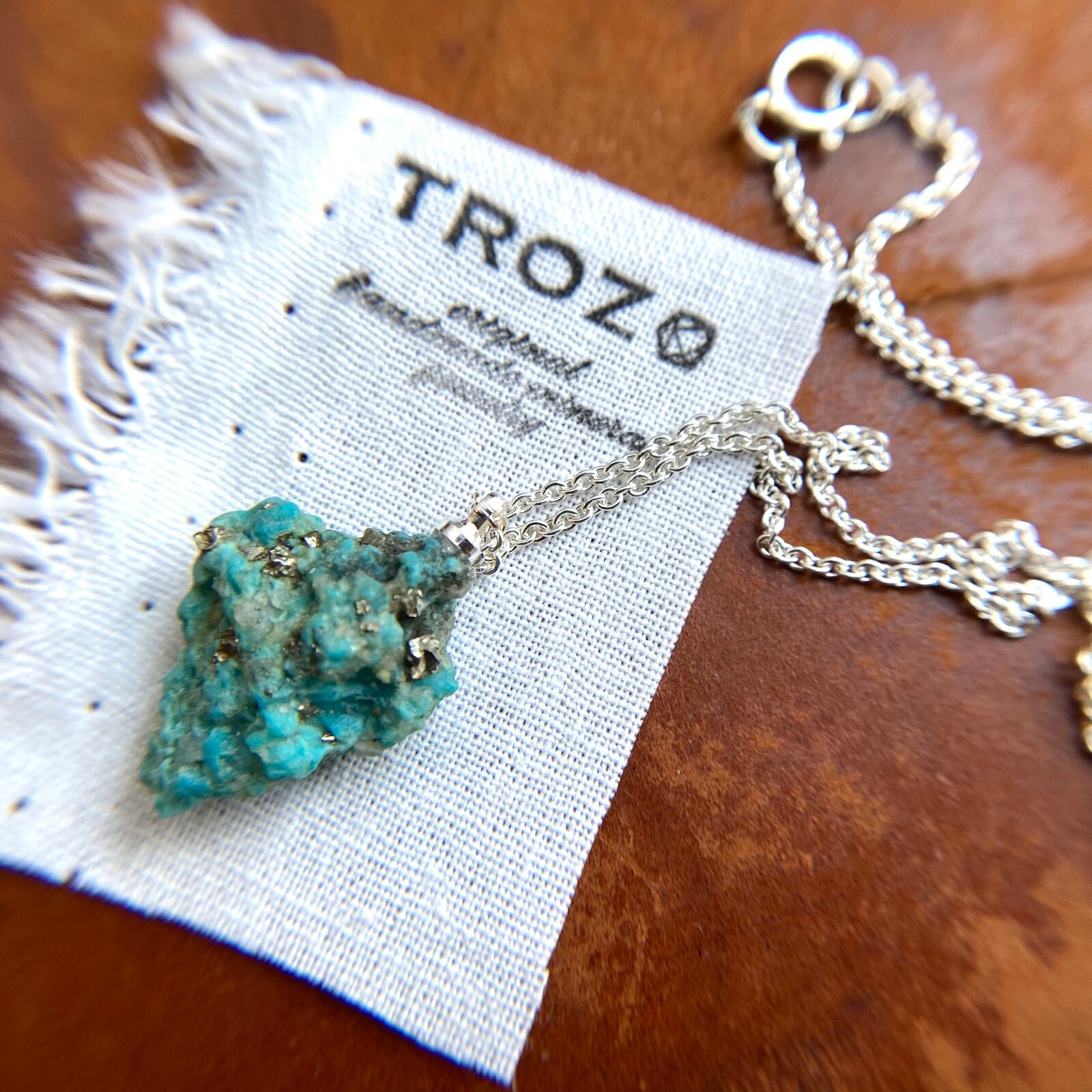
Turquoise’s vivid blue comes from copper ions within the crystal; mixed with iron impurities it turns greener, creating a gradation from blue to green. Stones that keep a netting of host rock, iron or manganese oxide — the “matrix” — carry the very landscape of the time they grew underground. Sleeping Beauty (Arizona, USA) is a clear blue without matrix, Persian (Iranian) material a deep, rich blue, and Chinese and Tibetan material greener and often matrixed — the expression shifts by source.
◆ From 5000 BC — one of the world’s oldest jewelry minerals
Ancient Egypt, Persia, and Native America.
A turquoise-and-gold bracelet excavated from the tomb of Queen Zer in ancient Egypt around 5000 BC is counted among the world’s oldest pieces of jewelry. In ancient Egypt turquoise stood for “fertile earth” and “healing and renewal”; in Persia (now Iran) it was a stone bringing “victory and good fortune”, used in rites and ornament. In Native American culture it was a stone of bonds passed from father to son, and caravans wore it on the necks of camels and horses to pray for safe travel — loved the world over for more than 5,000 years.
◆ Choosing raw turquoise jewelry
Choose by depth of blue, the landscape of the matrix and source.
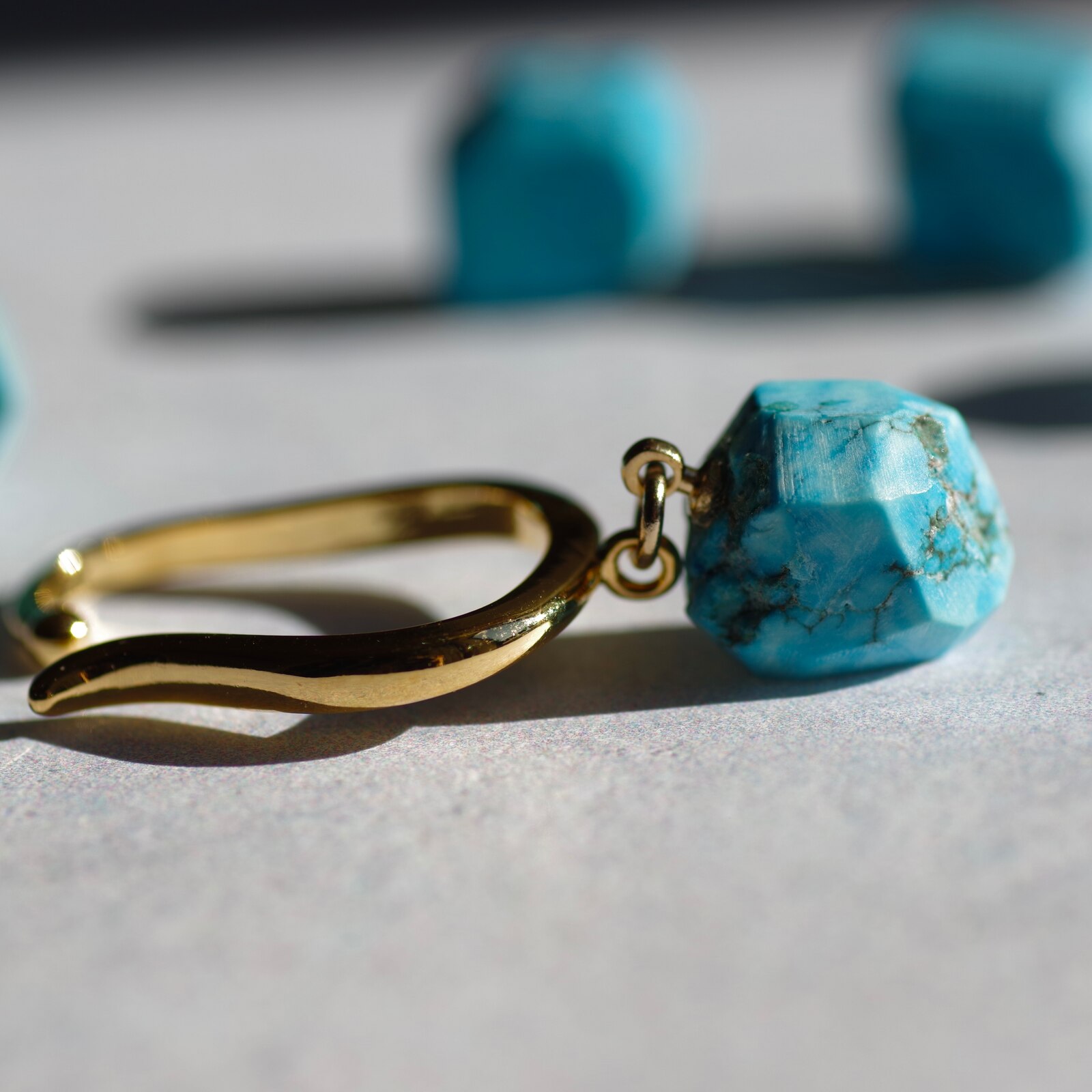
At Mohs 5.5–6 turquoise is somewhat soft, and as a hydrated mineral it is sensitive to water, heat, sweat, cosmetics and perfume. To enjoy it, take it off for bathing and sport, put it on after applying cosmetics and perfume, and store it somewhere dry — and it will keep its beauty longer. Its color spans vivid blue (Sleeping Beauty) to deep blue (Persian) to blue-green and greener tones, and the presence and pattern of the matrix (black or brown veining) changes its expression greatly.
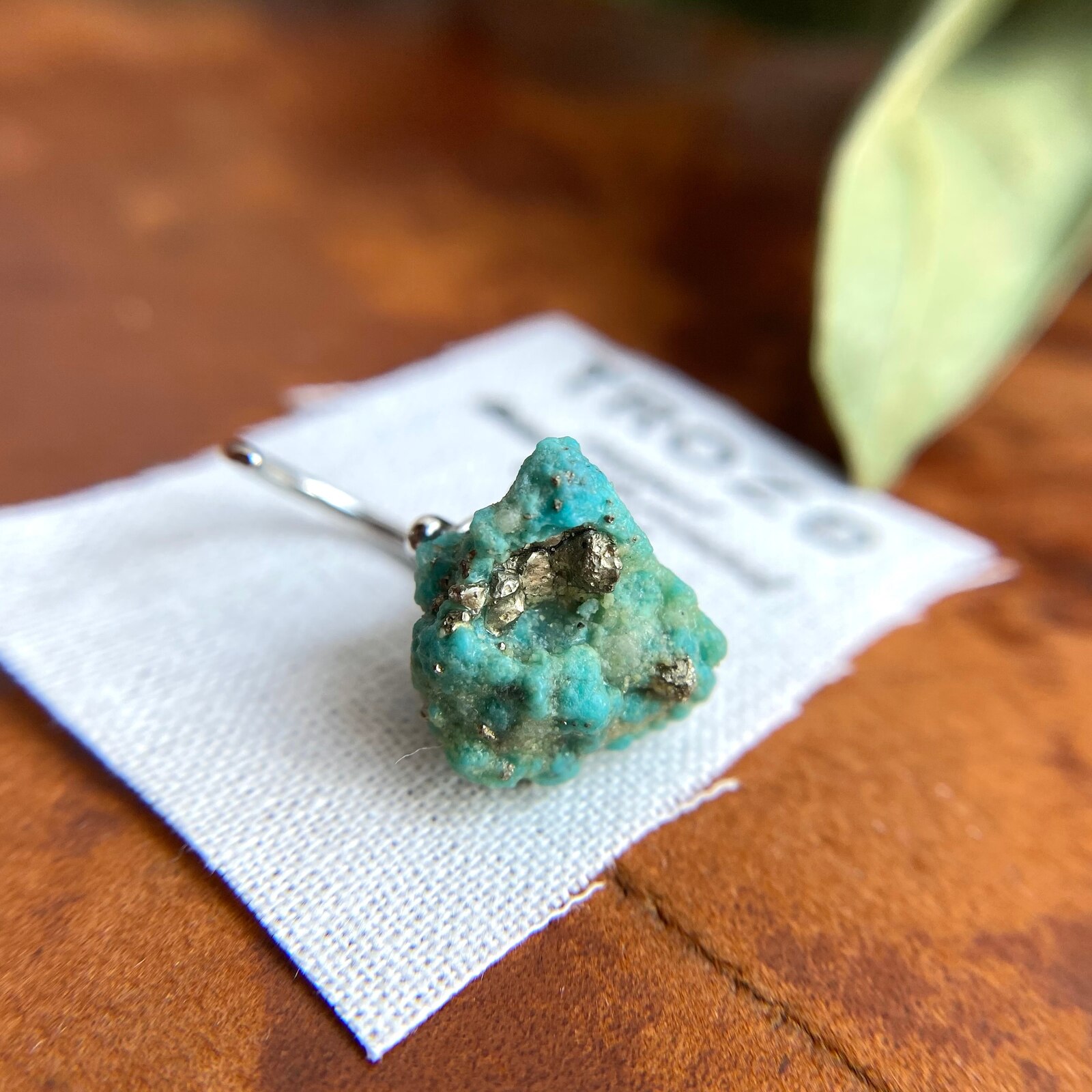
TROZO sets turquoise without polishing away its character, letting the natural color and the landscape of the matrix lead the design. We offer pieces for those who would like to choose the depth of blue, the matrix and the size from stock, as well as pieces where the meeting with the stone is left to chance. The ancient “guardian of travelers”, as everyday jewelry for days that head somewhere new.
◆ Turquoise Raw-Stone Jewelry
Handmade raw stone & mineral pieces — TROZO
◆ Frequently Asked Questions about Turquoise
Q What does turquoise symbolize?
Turquoise is traditionally associated with success, prosperity, health, safety, protection in travel, victory, courage and hope. Long carried as a caravan’s charm for safe travel, it is cherished today as December’s birthstone and a charm for those setting out on adventure or new challenges.
Q Why is it called “turquoise” — is it mined in Turkey?
Almost none is actually mined in Turkey. The name “Turquoise” comes from the French *pierre turquoise* (“Turkish stone”), because the stone reached Europe from Persia (now Iran) by way of Turkey. Its main sources are Iran, Egypt (the Sinai) and the American Southwest.
Q How hard is turquoise, and how should I look after it?
Its Mohs hardness is 5.5–6, somewhat soft, and as a hydrated mineral it is sensitive to water, heat, sweat, cosmetics and perfume. Take it off for bathing and sport, put it on after applying cosmetics, and store it somewhere dry to keep its beauty longer.
Q How does turquoise differ by source?
Sleeping Beauty (Arizona, USA) is a clear, matrix-free vivid blue and very popular; Persian material (Nishapur, Iran) is the finest deep “Persian blue”; Chinese and Tibetan material tends greener and often matrixed; and Egyptian (Sinai) material carries historical value as the origin of ancient Egyptian queens’ jewelry.
Q What is the matrix?
It is the host rock and impurities (iron, manganese oxide and so on) left within turquoise, appearing as a netting of black or brown veining. Clear stones without matrix (such as Sleeping Beauty) are popular, but there is also a long-rooted culture of enjoying the matrix itself as the character of the raw stone.
Q What kinds of jewelry can turquoise become?
As natural-stone jewelry, turquoise is used for raw-stone earrings, necklaces, rings, brooches and ear cuffs. TROZO makes turquoise jewelry that keeps the raw stone unpolished so its color and matrix lead the design — both pieces you can choose by color, matrix and size from stock, and pieces where the meeting with the stone is left to chance.
Q Are there imitation or treated turquoise on the market?
Yes — dyed howlite (a white mineral) sold as “dyed turquoise” and resin-impregnated “stabilized turquoise” do circulate. Natural turquoise has a color that is not too even, a natural matrix pattern and the slightly soft feel of a hydrated mineral. TROZO works only with natural turquoise.
EXPLORE THE SHOP
Explore the world of Turquoise
Discover more pieces than we can show here at the TROZO shop.
Shop Turquoise