
Lapis Lazuli
A blue of 6,000 years, the source of ultramarine. December’s birthstone, one of humankind’s oldest stones.
Lapis lazuli is a rock — an aggregate of blue lazurite with calcite and pyrite. Its composition is Na₇Ca(Al₆Si₆O₂₄)(SO₄)(S₃)·H₂O, Mohs 5–6. Set into Tutankhamun’s mask around 3100 BC and a symbol of kingship in Sumer, it has been loved for over 6,000 years as one of the oldest of gems. Ground to powder it became “ultramarine”, the finest blue pigment of Renaissance painting. December’s birthstone — deep blue with gold flecks of pyrite.
Lapis Lazuli is the December birthstone. See all December birthstones →
◆ Lapis Lazuli — Stone Meanings
- Dignity
- The sublime
- Good fortune
- Truth
- A sacred stone
- Creation
- Insight
- Relief from stress
◆ About Lapis Lazuli
Lapis lazuli is a slightly special natural stone — because it is not a single mineral but an aggregate of several, a kind of rock. The deep blue comes from lazurite (Na₈-₁₀Al₆Si₆O₂₄S₂, of the sodalite group), the white flecks from calcite, and the gold sparkle from pyrite. Mixed together underground, they create lapis lazuli’s unmistakable landscape of “blue, white and gold”. It is Mohs 5–6, SG 2.4. The name “Lapis Lazuli” joins the Latin *lapis* (stone) and the Arabic *lazuli* (blue).
Lapis lazuli’s history is among humankind’s oldest, reaching back to ancient Egypt around 3100 BC. It adorned the golden mask of Tutankhamun, served as Cleopatra’s eyeshadow, and stood for kingship in Sumer (ancient Mesopotamia) — used for more than 6,000 years. Prized in ancient China and the Inca world too, it is the blue stone humankind has loved the longest.
From the Middle Ages, lapis lazuli ground to powder was called “ultramarine” (Latin for “beyond the sea”) and used in Europe as the finest blue pigment. The blue of the turban in Vermeer’s *Girl with a Pearl Earring*, the blue of the religious paintings of Michelangelo and Raphael — almost all the glorious blue of Renaissance painting came from lapis lazuli, a sacred blue then valued above its weight in gold.
Its leading source is Badakhshan, Afghanistan, of the world’s finest quality since antiquity, with further material from Chile (richer in pyrite), Russia (around Lake Baikal), Myanmar and the USA; in 2023 the first domestic Japanese lapis lazuli was confirmed in Itoigawa, Niigata. Its associations include dignity, the sublime, good fortune and truth. December’s birthstone, alongside turquoise and tanzanite.
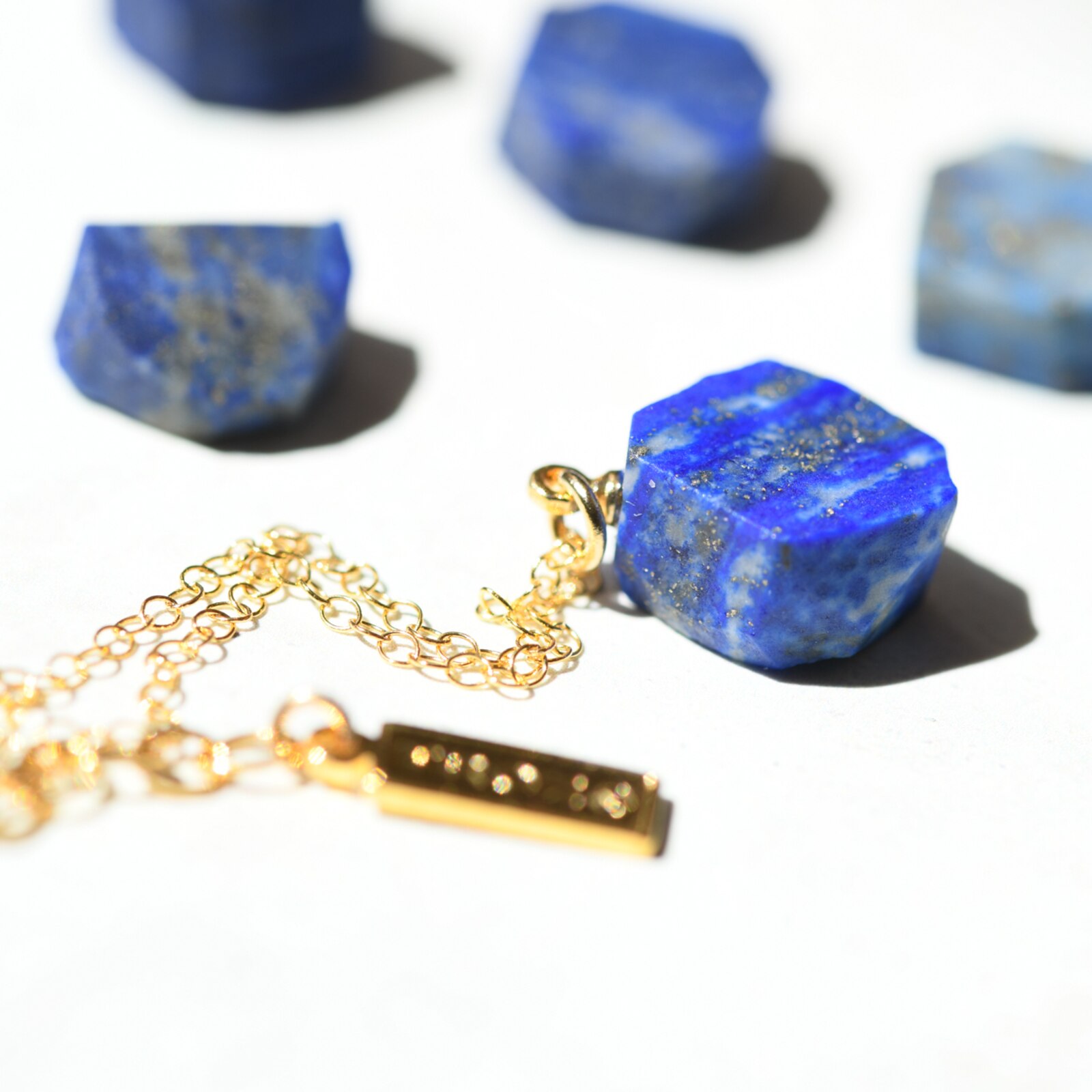
◆ The Many Faces of Lapis Lazuli
Every piece differs in hue and inclusion — the unrepeatable character of raw stone.


◆ Mineral Data
- English name
- Lapis Lazuli
- Chemical formula
- Na₇Ca(Al₆Si₆O₂₄)(SO₄)(S₃)·H₂O (chiefly lazurite Na₈-₁₀Al₆Si₆O₂₄S₂, with calcite and pyrite)
- Mineral class
- A rock (aggregate) — lazurite, calcite, pyrite, sodalite, haüyne and more
- Crystal system
- Isometric (the main component, lazurite)
- Mohs hardness
- 5 – 6
- Specific gravity
- 2.4
- Main sources
- Afghanistan (Badakhshan — finest quality since antiquity), Chile (richer in pyrite), Russia (around Lake Baikal), Myanmar, USA, Japan (Itoigawa, Niigata, first confirmed 2023)
- Color range
- Deep blue to navy to violet-blue; expression varies with the share of calcite (white) and pyrite (gold)
- Notable trait
- Its powder, “ultramarine”, was the world’s finest blue pigment, much used in Renaissance painting (Vermeer’s Girl with a Pearl Earring, etc.); a symbol of kingship and the sacred in ancient Egypt, Sumer and the Inca world
- Birthstone
- December (alongside turquoise and tanzanite)
◆ A blue woven from several minerals — lapis lazuli is a “rock”
The blue of lazurite, the white of calcite, the gold of pyrite.
Strictly speaking lapis lazuli is not a single mineral but an aggregate of several — classed mineralogically as a “rock”, a slightly special natural stone. The deep blue comes from lazurite (a sodalite-group mineral, Na₈-₁₀Al₆Si₆O₂₄S₂); the white flecks from calcite; the gold sparkle from pyrite. Sodalite and haüyne may be present too, and mixed underground they create lapis lazuli’s unmistakable landscape of “blue, white and gold”. Afghan material is high in lazurite for the finest deep blue, while Chilean material runs richer in pyrite, prized by collectors for its gold — the expression shifts by source.
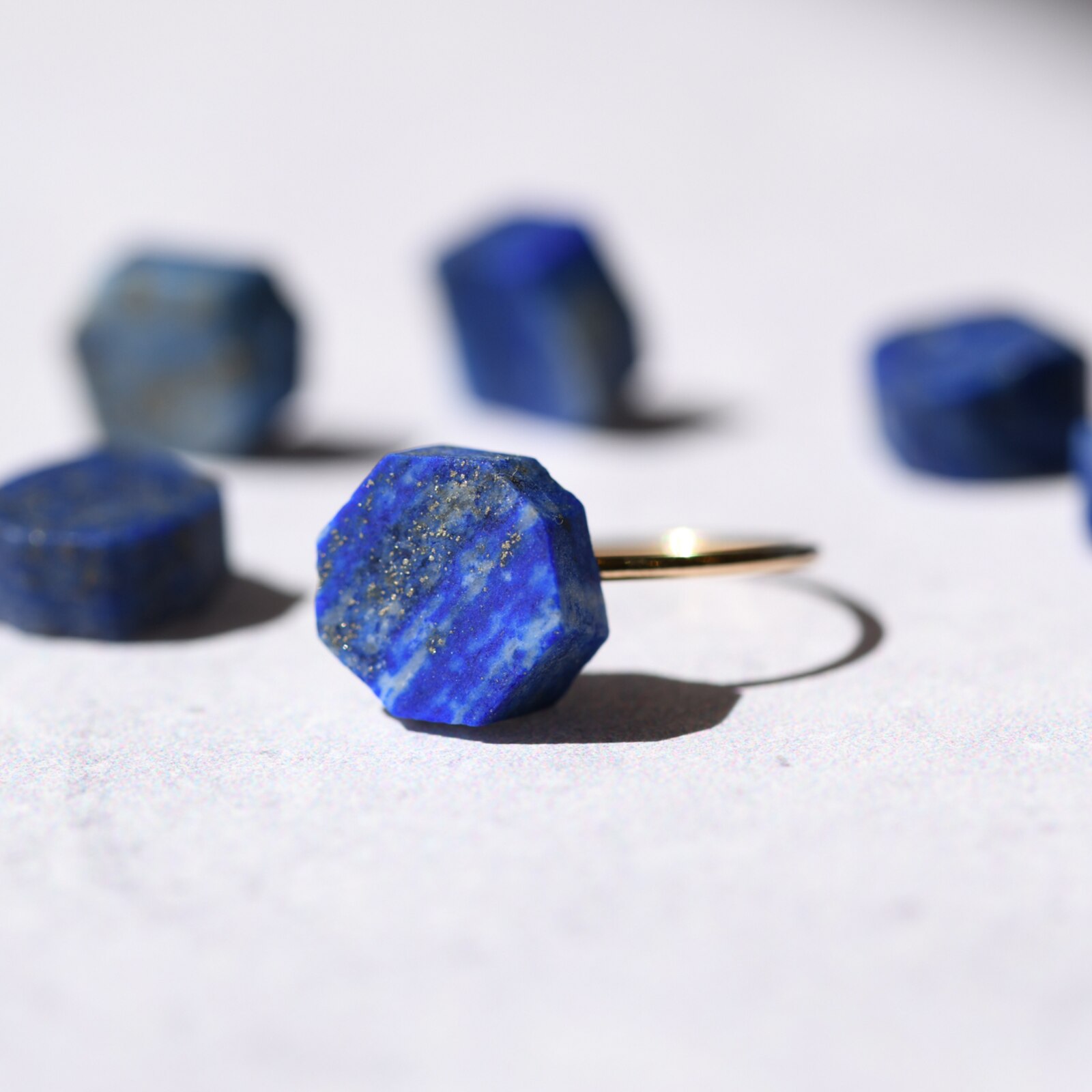
◆ A blue of 6,000 years — from Tutankhamun to ultramarine pigment
One of humankind’s oldest gems, a symbol of kingship and the sacred.
Lapis lazuli’s history reaches back to ancient Egypt around 3100 BC — one of humankind’s oldest gems. It adorned the golden mask of Tutankhamun, served as Cleopatra’s eyeshadow, and stood for kingship in Sumer (ancient Mesopotamia), used for over 6,000 years. From the Middle Ages, ground to powder it became “ultramarine” (Latin for “beyond the sea”), Europe’s finest blue pigment. The turban in Vermeer’s *Girl with a Pearl Earring*, the blue of the religious paintings of Michelangelo and Raphael — almost all the glorious blue of Renaissance painting came from lapis lazuli, a sacred blue then valued above its weight in gold.
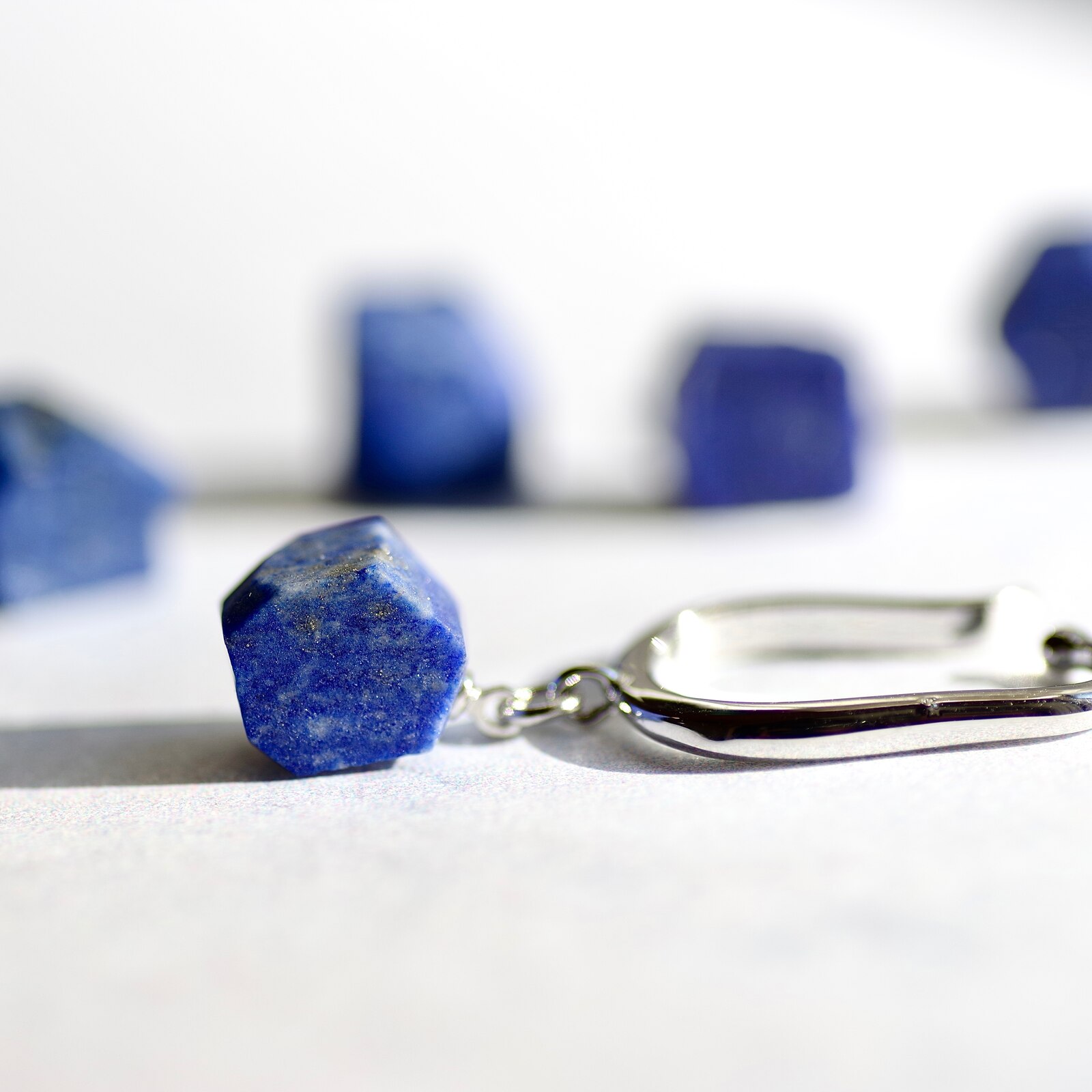
◆ Choosing raw lapis lazuli jewelry
Choose by depth of blue, the distribution of pyrite and source.
At Mohs 5–6 lapis lazuli is relatively soft, and being an aggregate it is not very resistant to breakage, sensitive to hard knocks, water, cosmetics, perfume, direct sun and sudden temperature change. To enjoy it, take it off for bathing and sport, put it on after applying cosmetics, and store it somewhere dry. The character of a raw stone turns on the depth of blue, the amount of white calcite flecking and the distribution of the gold pyrite sparkle. Afghan material of high deep-blue purity, Chilean material where the gold dances — each character makes its own raw-stone drama.
TROZO sets lapis lazuli without polishing away its character, letting the natural blue and the landscape of pyrite lead the design. We offer pieces for those who would like to choose the depth of blue, the pyrite and the size from stock, as well as pieces where the meeting with the stone is left to chance. A “sacred blue of humankind’s oldest gem”, with 6,000 years of history, to carry as an everyday charm.
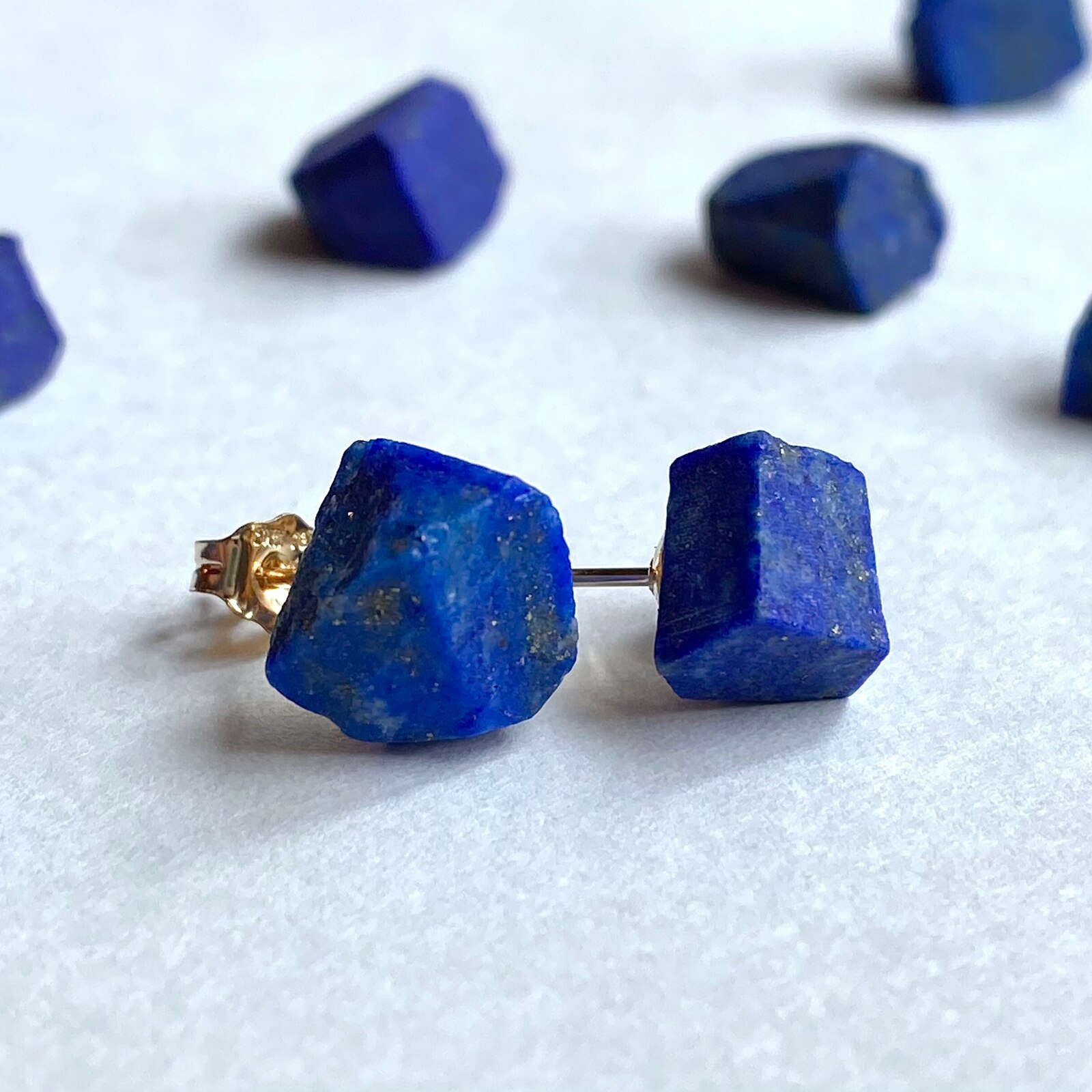
◆ Lapis Lazuli Raw-Stone Jewelry
Handmade raw stone & mineral pieces — TROZO
◆ Frequently Asked Questions about Lapis Lazuli
Q What does lapis lazuli symbolize?
Lapis lazuli is traditionally associated with dignity, the sublime, good fortune, truth, the sacred, creation, insight and relief from stress. With over 6,000 years of history since 3100 BC as “one of humankind’s oldest gems”, it is cherished as one of the choices for December’s birthstone (alongside turquoise and tanzanite).
Q Is it true lapis lazuli is not a “mineral”?
Precisely, it is a “rock”. Lapis lazuli is not a single mineral but an aggregate of several — blue lazurite (the main component), white calcite, gold pyrite, and others such as sodalite and haüyne. Mineralogically it is a slightly special case, a unique natural stone in which deep blue, white and gold share a single stone.
Q How hard is lapis lazuli, and how should I care for it?
Its Mohs hardness is 5–6, relatively soft, and as an aggregate it breaks fairly readily and is sensitive to water, cosmetics, perfume, direct sun and sudden temperature change. Take it off for bathing and sport, put it on after applying cosmetics, and store it somewhere dry; wipe gently with a soft dry cloth to clean.
Q What is ultramarine?
It is the world’s finest blue pigment, made by grinding lapis lazuli to powder. The name comes from the Latin *ultramarine* (“beyond the sea”) — the blue carried to Europeans from far across the sea in Afghanistan. Almost all the glorious blue of Renaissance painting came from ultramarine — the turban in Vermeer’s Girl with a Pearl Earring, the blue of Michelangelo and Raphael — a sacred pigment then valued above its weight in gold.
Q Is the pyrite (gold sparkle) an impurity?
No — it is part of lapis lazuli’s very character. Because lapis lazuli is a rock of several minerals, the gold pyrite flecks are part of its “landscape”. Chilean material runs richer in pyrite and is popular with collectors, while Afghan material has less pyrite and a higher deep-blue purity — each source has its own appeal.
Q Where does lapis lazuli come from?
Badakhshan in Afghanistan has been the source of the world’s finest quality since antiquity, mined from Tutankhamun’s day over 6,000 years ago to the present. Further material comes from Chile (richer in pyrite), Russia (around Lake Baikal), Myanmar and the USA, and in 2023 the first domestic Japanese lapis lazuli was confirmed in Itoigawa, Niigata.
Q Is dyed material on the market?
Yes — dyed and reconstituted lapis lazuli (pale, calcite-rich material soaked with dye to look deep blue) do appear on the market. Genuine natural lapis lazuli has a naturally uneven color and natural pyrite flecking, while dyed material tends to be too even in color or unnatural in cross-section. TROZO works only with natural lapis lazuli.
EXPLORE THE SHOP
Explore the world of Lapis Lazuli
Discover more pieces than we can show here at the TROZO shop.
Shop Lapis Lazuli