
Tanzanite
A blue-violet found only in Tanzania. December’s birthstone, named by Tiffany.
Tanzanite (blue zoisite) is a rare stone found only at the Merelani mine in Tanzania. Discovered by the Maasai in 1967, it was named “tanzanite” and brought to market by Tiffany’s president Henry B. Platt — the world’s newest gem name. Its formula is Ca₂Al₃(SiO₄)(Si₂O₇)O(OH), orthorhombic, Mohs 6–7. Vanadium replacing aluminium gives its deep blue-to-violet gradation and strong pleochroism. It is December’s birthstone, rare in both stone and story.
Tanzanite is the December birthstone. See all December birthstones →
◆ Tanzanite — Stone Meanings
- Nobility
- Calm
- Sincerity
- Intellect
- Hope
- A stone of magic
- Mystery
- The spiritual
◆ About Tanzanite
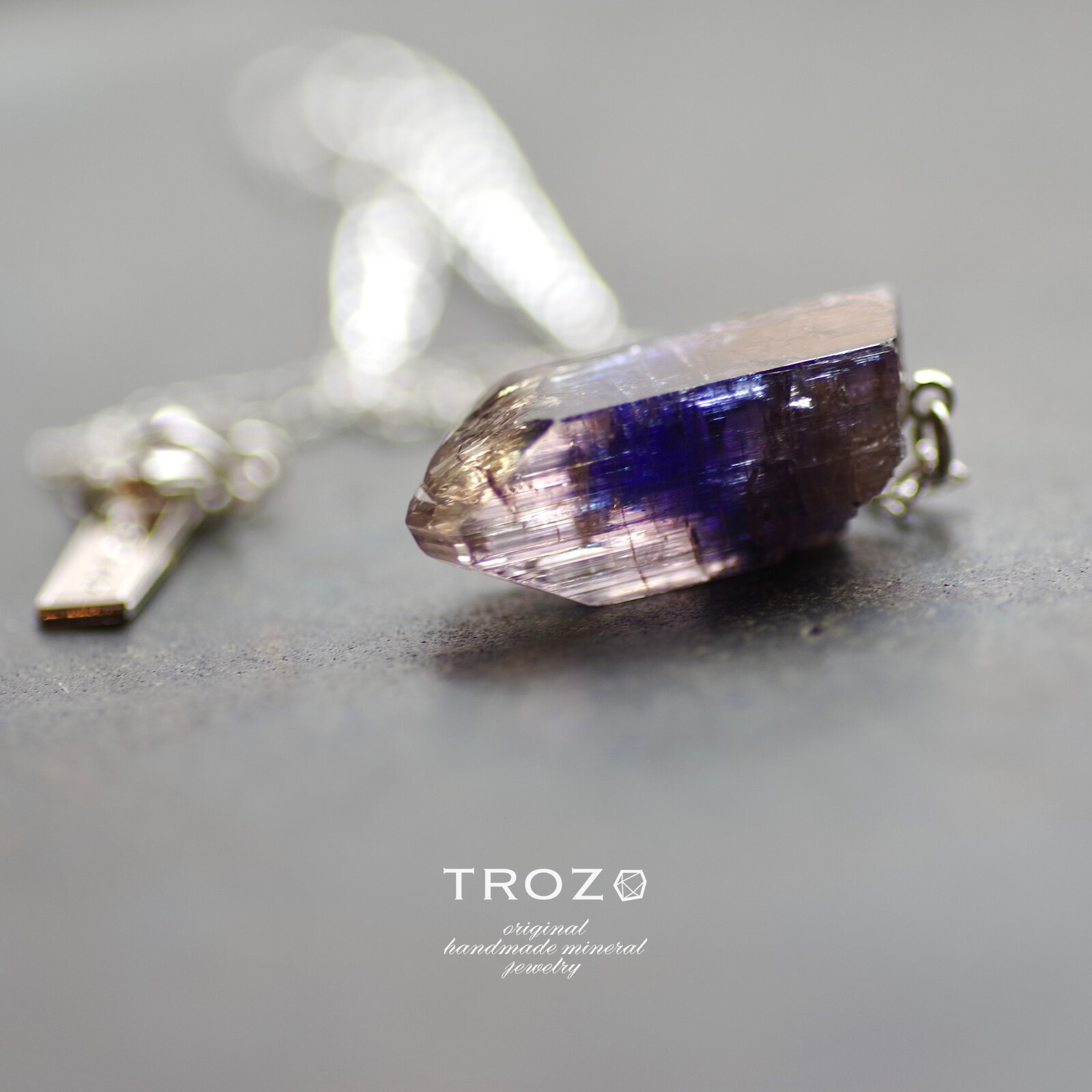
Tanzanite (blue zoisite) is mineralogically the blue variety of zoisite (the epidote group). Its formula is Ca₂Al₃(SiO₄)(Si₂O₇)O(OH); it is orthorhombic, Mohs 6–7. The vivid blue-to-violet comes from vanadium (V) replacing aluminium as the zoisite crystal grows — the more replacement, the stronger the blue-violet. Its official mineral name is blue zoisite.
Tanzanite’s history is special even in the annals of gems. It was discovered in 1967, when Maasai herders chanced upon it at the foot of Kilimanjaro in northern Tanzania. Tiffany’s president Henry B. Platt hailed the new gem as “the most beautiful blue discovered in 2,000 years” and named it “tanzanite” for its country of origin. Launched worldwide from 1968, it rose swiftly to popularity as the world’s newest gem name.
Tanzanite’s greatest distinction is that it is found in only one place on Earth — the Merelani mine in the Arusha region of Tanzania. It has been confirmed nowhere else, and as deposits have a finite life, mining may become difficult in the near future, making it extremely rare. It also has strong pleochroism, showing different colors — blue and violet — along different crystal axes.
Most tanzanite on the market is heat-treated (550–700 °C). Most rough is brownish (vanadium in its unaltered state), and heating it to a vivid blue-violet is the common custom. Its associations include nobility, calm, sincerity and hope. December’s birthstone (alongside turquoise and lapis lazuli), it holds a special place in modern fine jewelry.
◆ Mineral Data
- English name
- Tanzanite (official mineral name: blue zoisite)
- Chemical formula
- Ca₂Al₃(SiO₄)(Si₂O₇)O(OH) — the vanadium-bearing (blue) variety of zoisite
- Mineral class
- Zoisite (epidote group)
- Crystal system
- Orthorhombic
- Mohs hardness
- 6 – 7
- Specific gravity
- 3.35
- Main sources
- Tanzania (the Merelani mine, Arusha region — the world’s only source)
- Color range
- Blue-to-violet gradation; strong pleochroism (blue and violet shift with the angle); bicolor and party-color tanzanite
- Notable trait
- Vanadium replacing aluminium gives the blue-violet; most market material is heat-treated (550–700 °C) from brown to blue-violet. Found by the Maasai in 1967 and named by Tiffany’s H.B. Platt; found nowhere but Merelani, so extremely rare
- Birthstone
- December (alongside turquoise and lapis lazuli)
◆ The world’s newest gem name — discovered in Tanzania in 1967
A blue-violet miracle, chanced upon by the Maasai.
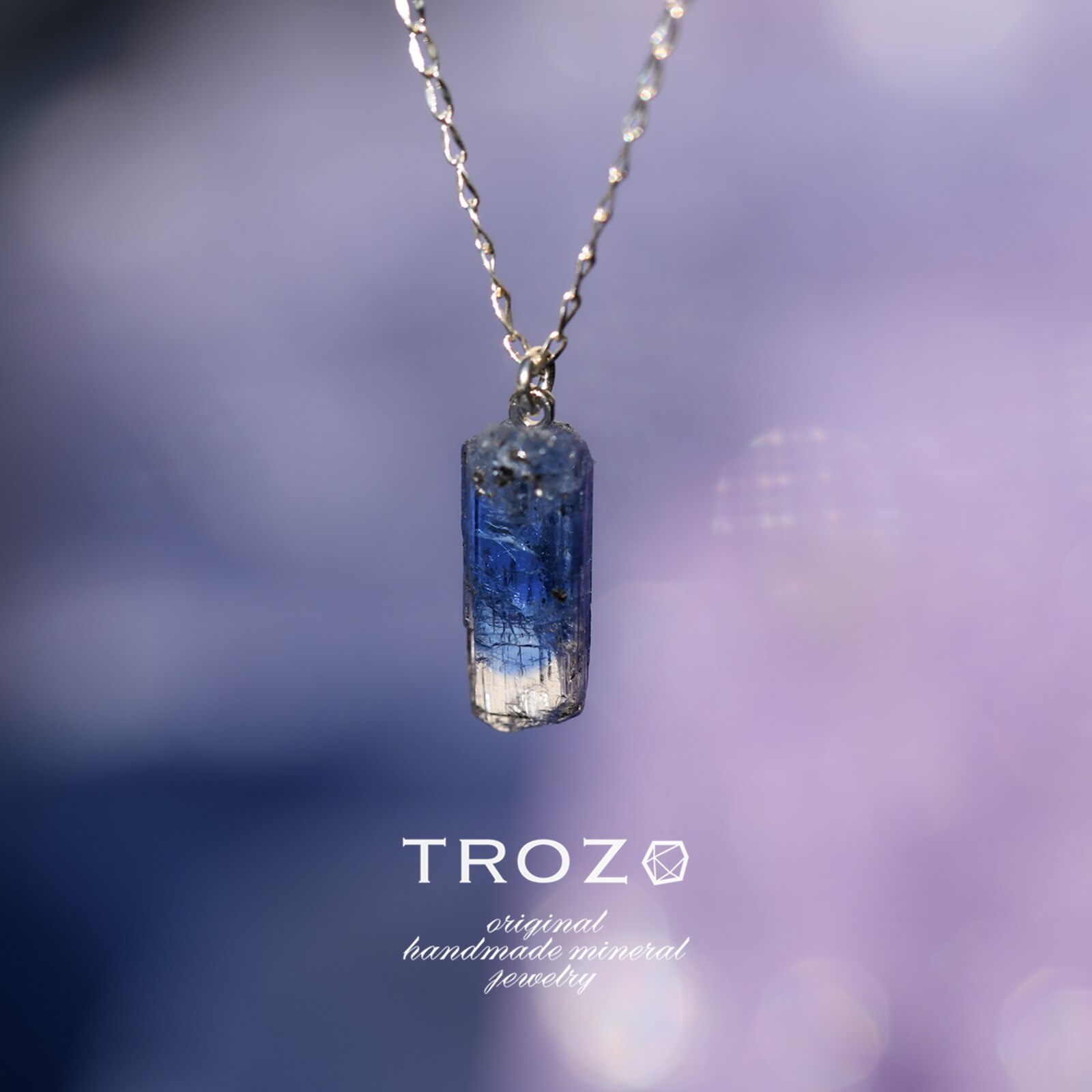
Tanzanite’s history is special even among gems. It was discovered in 1967, when Maasai herders chanced upon it at the foot of Kilimanjaro in northern Tanzania — not a mineral known since antiquity but one of the “world’s newest gem names”, found only in modern times. Tiffany’s president Henry B. Platt hailed this blue-violet newcomer as “the most beautiful blue gem discovered in over 2,000 years” and named it “tanzanite” for its country of origin. Launched worldwide from 1968, in barely fifty years it grew into one of the leading names in the gem market.
◆ Only Merelani — the world’s one source, and great rarity
One place on Earth, and a possible exhaustion in the near future.
Tanzanite’s greatest distinction is that it is found in only one place on Earth — the Merelani mine in the Arusha region of Tanzania. It has been confirmed in no other region, and as deposits have a finite life, mining may become difficult in the near future. Its color arises when vanadium (V) replaces aluminium as the zoisite crystal grows — the more replacement, the stronger the blue-violet, and the geology of the Merelani mine alone made this singular color possible. Scarcer in circulation than diamond or sapphire, it draws attention for collector value as well — an extremely rare natural stone.
◆ Choosing raw tanzanite jewelry — enjoying the pleochroism
Blue and violet that dance, a stone that shifts with the angle.
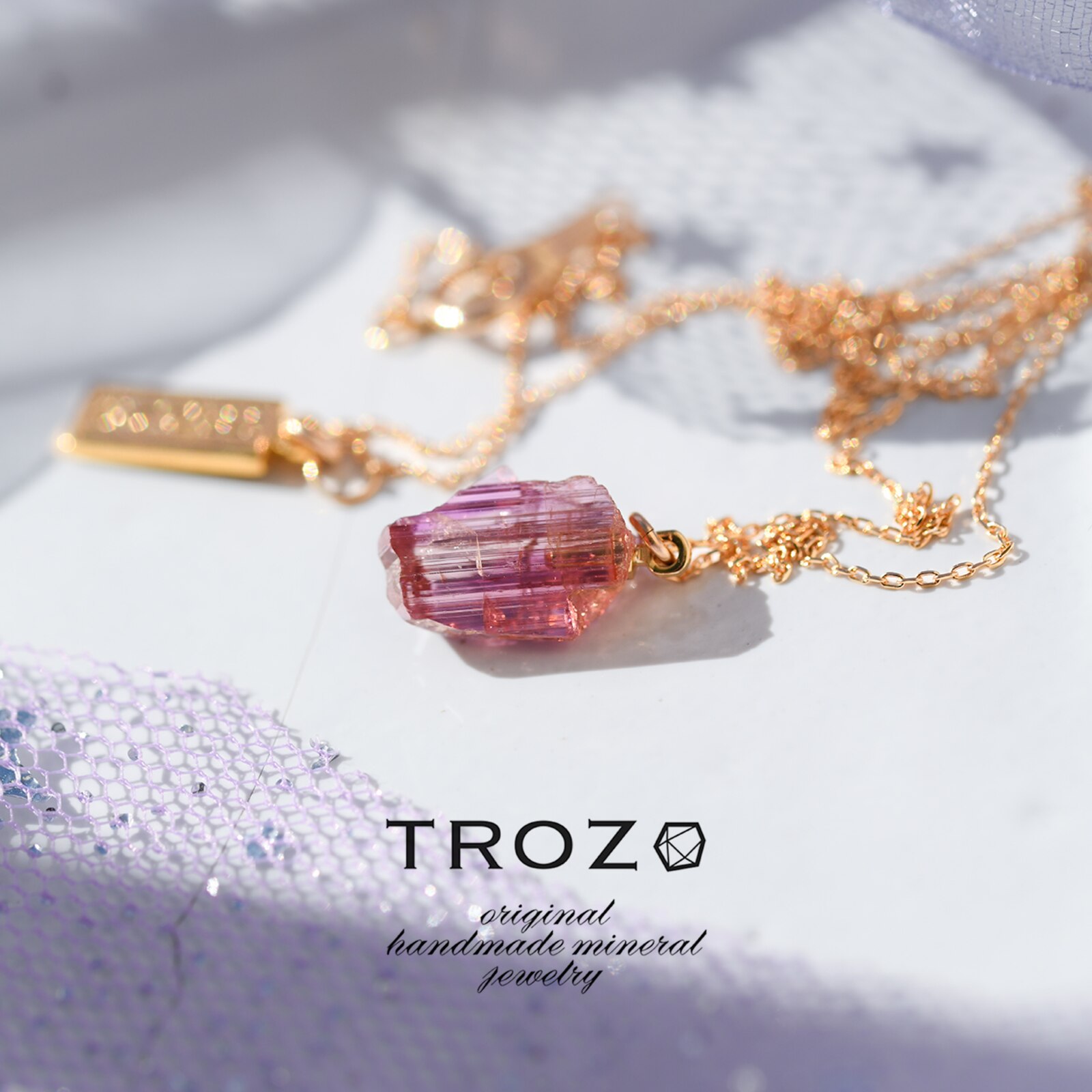
At Mohs 6–7 tanzanite is of middling hardness. It is not as tough as that number suggests and is sensitive to hard knocks, abrasion and sudden temperature change. The character of a raw stone turns on the depth of blue-violet, the drama of the pleochroism (blue and violet trading places as you turn it), the clarity and the size. “Bicolor tanzanite” (with a visible boundary of blue and violet) and “party-color tanzanite” (several colors mixed) are the rare choice of two or more colors in a single stone.
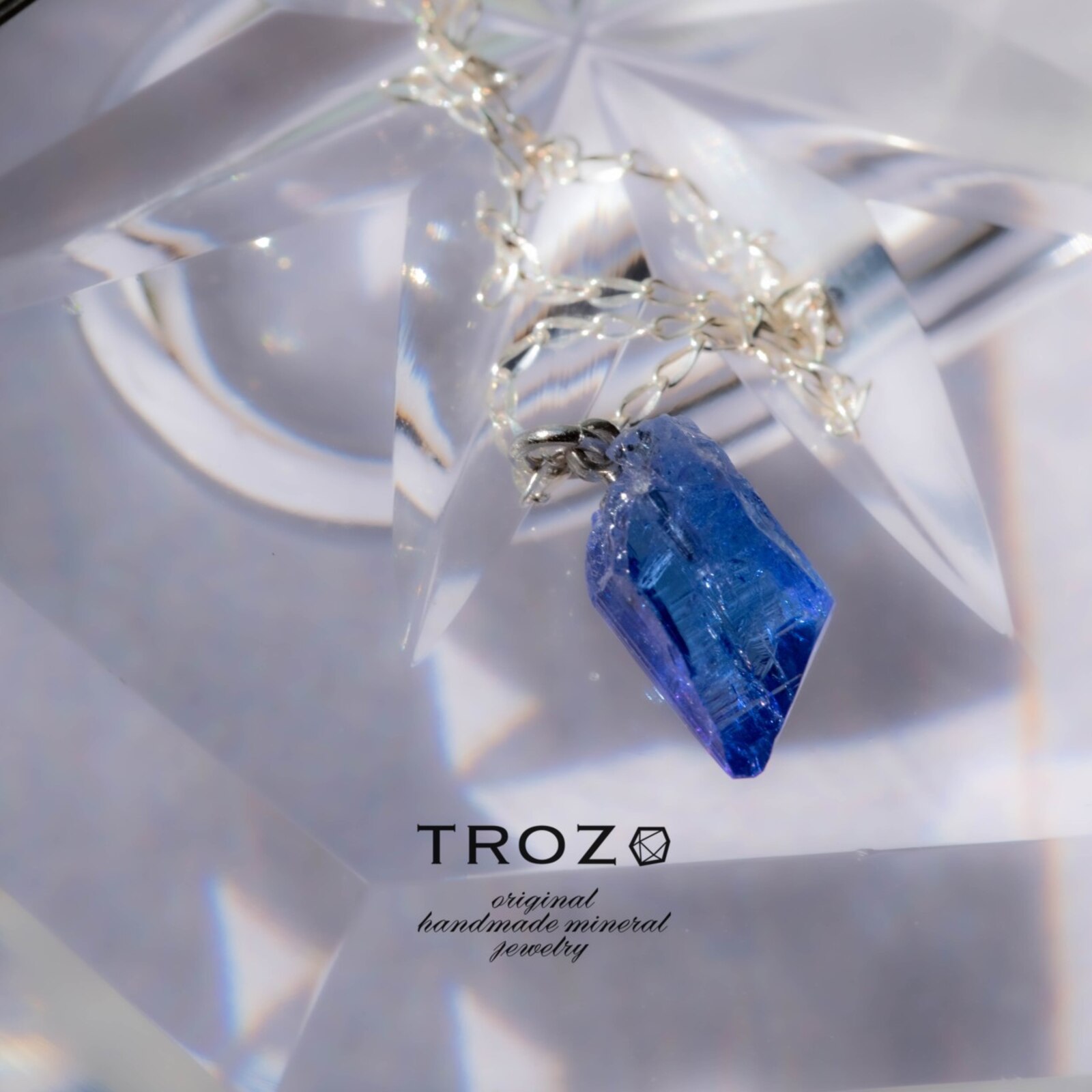
TROZO sets tanzanite without polishing away its character, letting the natural blue-violet and the pleochroism lead the design. We offer pieces for those who would like to choose color, the drama of the pleochroism and size from stock, as well as pieces where the meeting with the stone is left to chance. Most tanzanite on the market is heat-treated (a common practice that does not diminish value). As a rare stone, it is one to keep and treasure for a long time.
◆ Tanzanite Raw-Stone Jewelry
Handmade raw stone & mineral pieces — TROZO
◆ Frequently Asked Questions about Tanzanite
Q What does tanzanite symbolize?
Tanzanite is traditionally associated with nobility, calm, sincerity, intellect, hope, mystery and the spiritual. As the “world’s newest gem name”, discovered in 1967, it is cherished as one of the choices for December’s birthstone (alongside turquoise and lapis lazuli).
Q What is the difference between zoisite and tanzanite?
Tanzanite is the blue variety of zoisite. As a mineral it is the same zoisite, Ca₂Al₃(SiO₄)(Si₂O₇)O(OH), and only the variety in which vanadium replaces aluminium to give blue-violet is called “tanzanite”. The official mineral name is blue zoisite; tanzanite is the trade name, taken from the country of Tanzania.
Q How hard is tanzanite, and how should I care for it?
Its Mohs hardness is 6–7, somewhat softer than corundum (9) or topaz (8). Tanzanite is also not very tough and can crack or chip under a hard blow. Take it off for housework and sport, avoid ultrasonic cleaners and sudden temperature changes (hot or ice-cold water) to keep its beauty longer.
Q Why is it found only in Tanzania?
Its color requires the special geological condition of vanadium replacing aluminium, and that condition was met only in the geology of the Merelani mine in Tanzania — making it the world’s only source. Zoisite is found elsewhere, but blue-violet tanzanite quality has not been confirmed in other regions.
Q Tell me about the heat treatment.
Most tanzanite rough is brownish (vanadium in its unaltered state), and heating to 550–700 °C to bring out a vivid blue-violet is the common practice. It is a modern treatment rather than an ancient custom, but heat-treated material is the industry standard and it does not diminish value; most tanzanite on the market is heat-treated.
Q What is pleochroism?
It is the effect of showing different colors at different angles (along different crystal axes). Tanzanite has especially strong pleochroism, showing blue, violet and red-violet along its three axes. Tilt it to the light and another color surfaces — a raw-stone drama; “bicolor” and “party-color” tanzanite emphasize this pleochroism in the cut.
Q Did Tiffany really name it?
Yes. Tiffany’s president Henry B. Platt hailed the gem discovered in 1967 as “the most beautiful blue discovered in over 2,000 years” and named it “tanzanite” for its country of origin. Launched worldwide from 1968, it grew in barely half a century into one of the leading names in the gem market.
EXPLORE THE SHOP
Explore the world of Tanzanite
Discover more pieces than we can show here at the TROZO shop.
Shop Tanzanite