
Emerald
The green of beryl that captivated Cleopatra. May’s birthstone, a stone that holds a “jardin”.
Emerald is the variety of beryl colored deep green by chromium and vanadium — one of the world’s four precious gemstones. Its formula is Be₃Al₂Si₆O₁₈, hexagonal, Mohs 7.5–8. The same beryl family as aquamarine, it differs only in its coloring element. So loved that Cleopatra kept her own mines, its inclusions are cherished as a *jardin* (“garden”) within the crystal — May’s birthstone.
Emerald is the May birthstone. See all May birthstones →
◆ Emerald — Stone Meanings
- Happiness
- Good fortune
- Marital love
- Stability
- Hope
- Peace
- Clear thought
- Recovery
◆ About Emerald
Emerald is the deep-green variety of beryl. Its formula is Be₃Al₂Si₆O₁₈ (a beryllium-aluminium silicate), the same family as aquamarine, morganite, heliodor and goshenite. Only the trace element differs — emerald’s green comes from trace chromium (Cr) and vanadium (V). It is hexagonal, Mohs 7.5–8, with a specific gravity of 2.7.
Counted among the world’s four precious gemstones with diamond, ruby and sapphire, emerald has stood apart in jewelry since antiquity. Its history reaches back to ancient Egypt some 4,000 years ago: near Luxor lie the “Cleopatra Emerald Mines”, the world’s oldest, and the queen owned mines of her own. A symbol of power and beauty, the green stone has been loved since ancient times.
One of emerald’s defining traits is its abundance of inclusions. What would be a flaw in another gem is here called a *jardin* (French for “garden”) — a “landscape within the stone”, cherished in a culture all emerald’s own. Liquids, gases and other minerals captured as the crystal grew form an “inner garden” no two of which are alike — the stone in which the character of raw stone shows most vividly.
Most emerald on the market is treated with natural resin or oil to soften the look of fissures within the inclusions (oiling), a custom of long standing; untreated (“no oil”) stones are rare. Its associations include happiness, marital love, stability, hope and peace. It is May’s birthstone and the gift for a 55th “emerald” wedding anniversary.
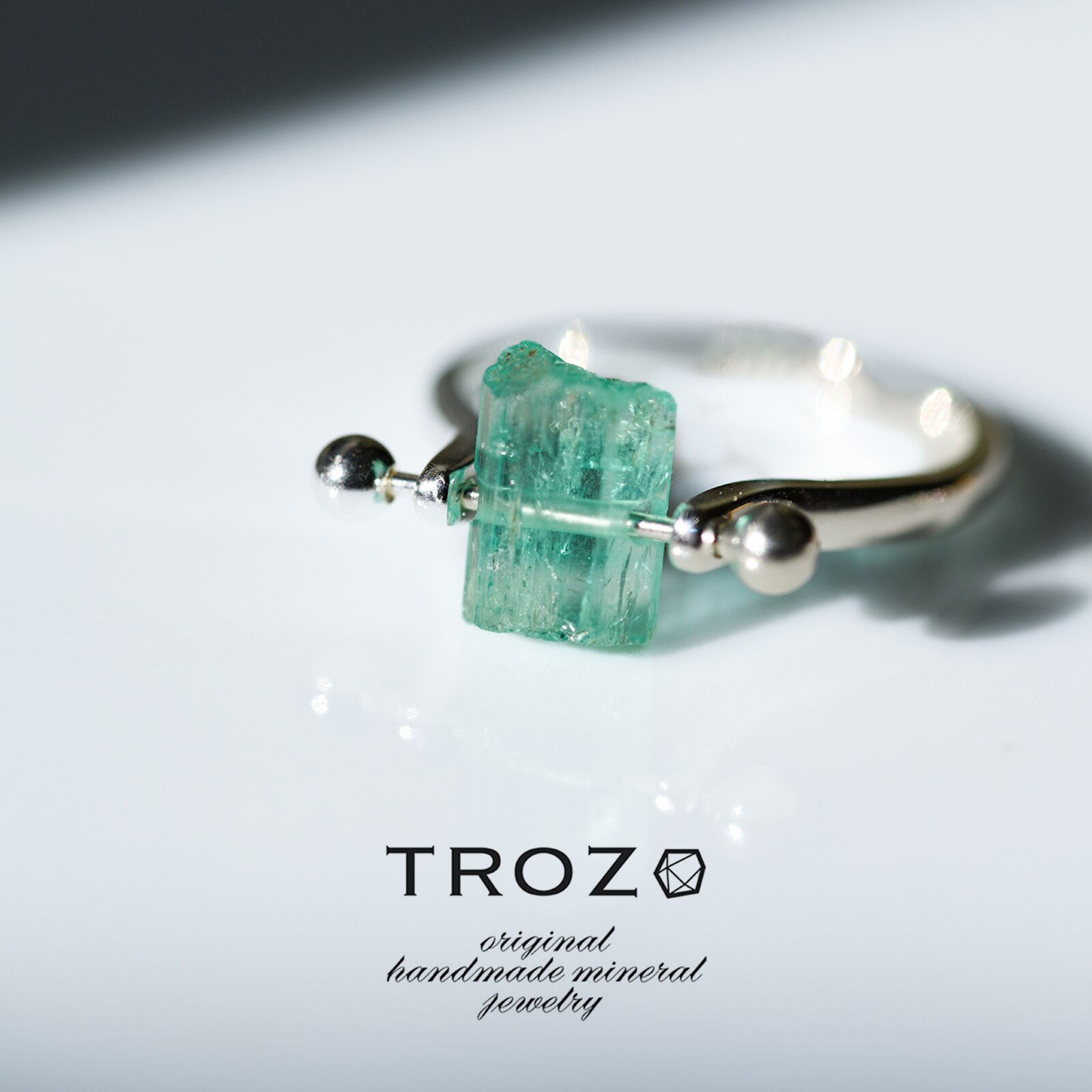
◆ Mineral Data
- English name
- Emerald
- Chemical formula
- Be₃Al₂Si₆O₁₈ + trace Cr (chromium) / V (vanadium) — the green variety of beryl
- Mineral class
- Beryl family
- Crystal system
- Hexagonal
- Mohs hardness
- 7.5 – 8
- Specific gravity
- 2.7
- Main sources
- Colombia (largest producer — Muzo and others), Brazil, Zambia, Zimbabwe, Madagascar, Pakistan, Afghanistan, Russia (Urals), Egypt (the ancient Cleopatra mines)
- Color range
- Vivid to deep green (bluer with more chromium, more yellow with vanadium)
- Notable trait
- Rich in inclusions, cherished as a “jardin” (garden); most market material is oiled; one of the world’s four precious gemstones
- Birthstone
- May (55th “emerald” wedding anniversary)
◆ The beryl family — sister to aquamarine and morganite
The same Be₃Al₂Si₆O₁₈, a different element, a different color.
Emerald belongs to the same beryl family as aquamarine (blue), morganite (pink), heliodor (yellow) and goshenite (colorless). They share the formula Be₃Al₂Si₆O₁₈ and the hexagonal system, yet the trace element changes the color entirely. Emerald’s deep green comes from trace chromium (Cr) and vanadium (V). Within the family only the gem-quality green earns the name “emerald”, set apart with diamond, ruby and sapphire as one of the world’s four precious gemstones.
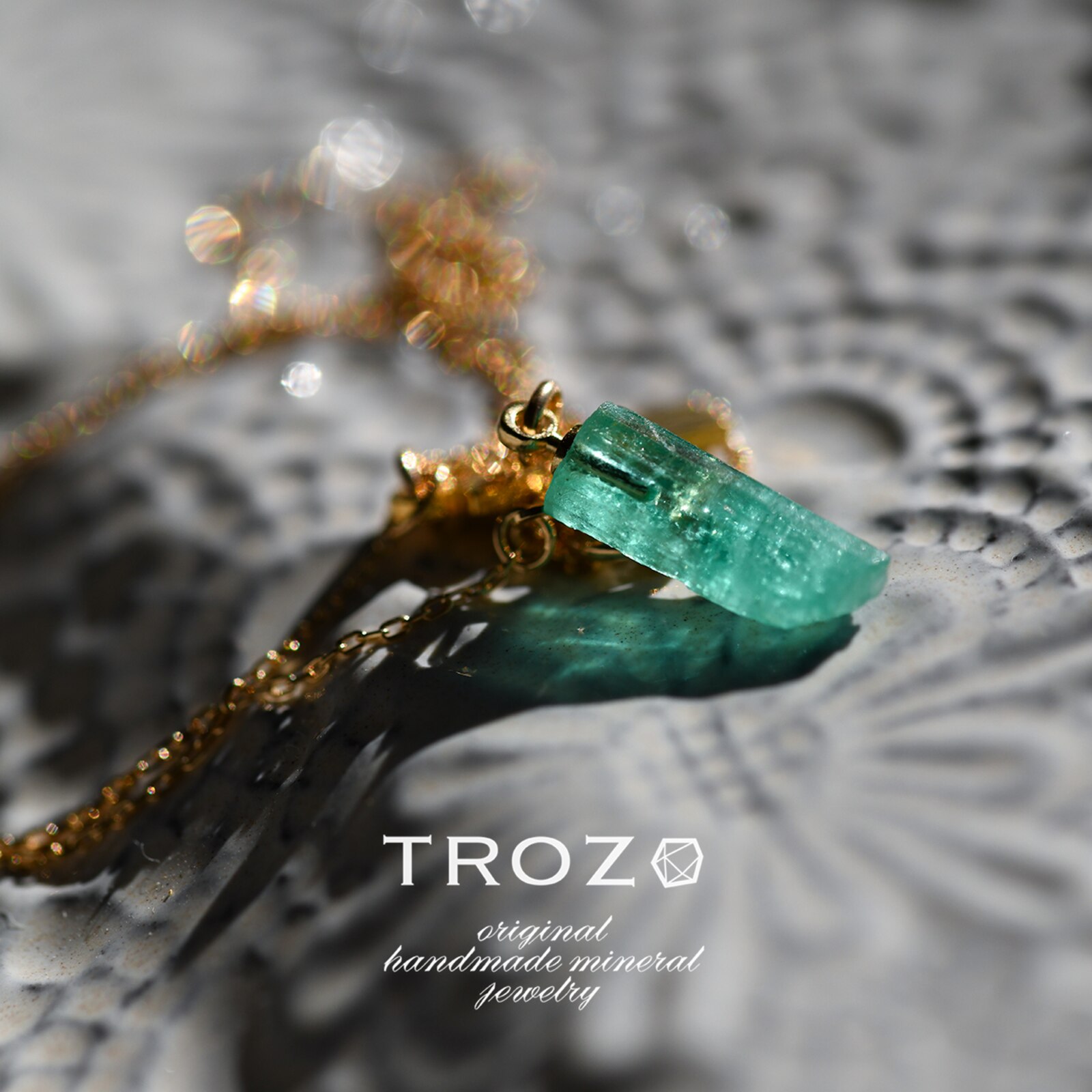
◆ Cleopatra’s mines — from Egypt, 4,000 years ago
The 20th century BC, the world’s oldest emerald mines.
Emerald’s history reaches back to the 20th century BC, some 4,000 years ago. Near Luxor in Egypt lie the “Cleopatra Emerald Mines”, the world’s oldest, and the queen owned mines of her own, loving emerald as a symbol of power and beauty. From the Middle Ages, Colombia became the world’s largest source, and the Muzo and Chivor mines yield emerald of the finest quality. Colombian material remains exceptional for its vivid green, followed by Zambia, Brazil and Zimbabwe among the leading sources.
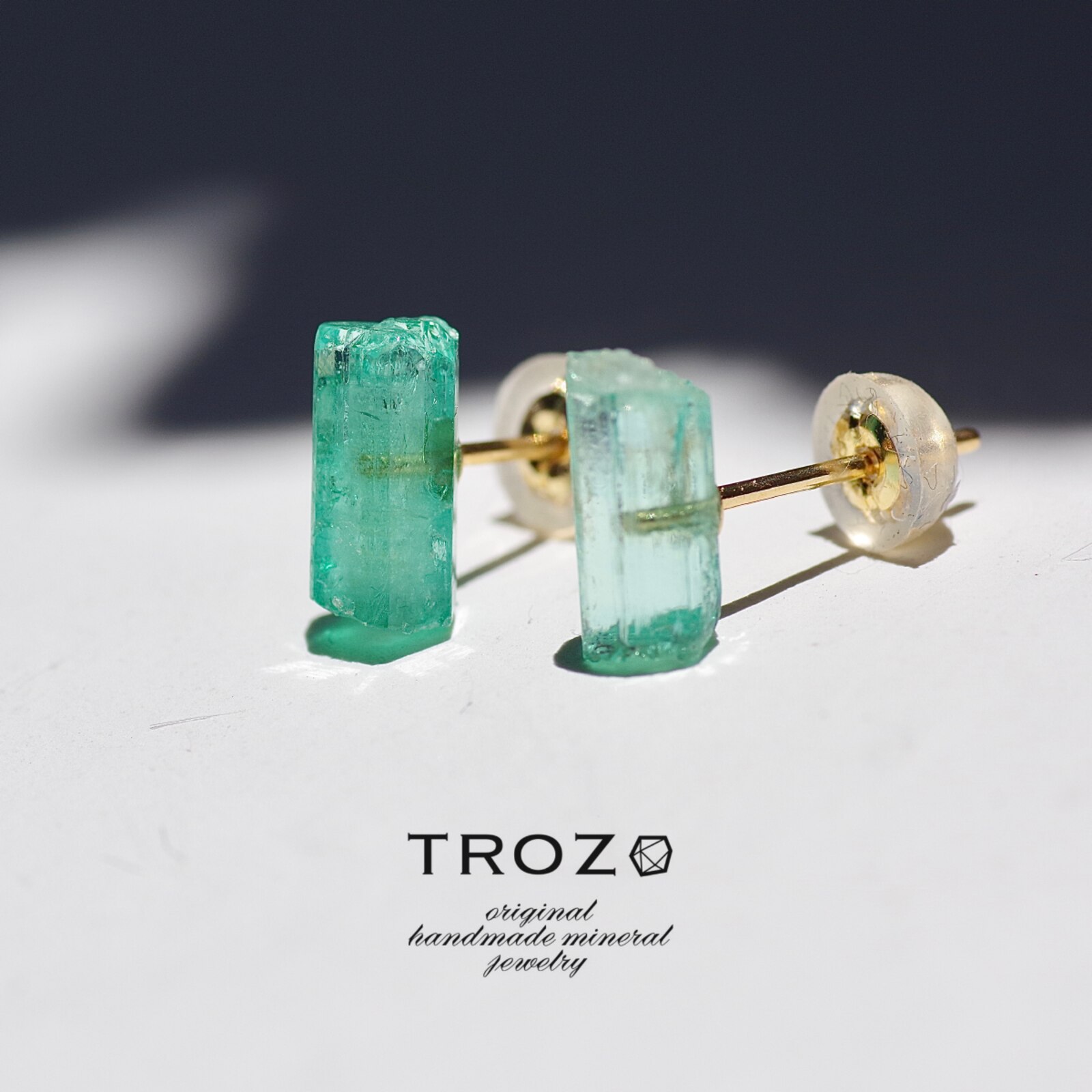
◆ Choosing raw emerald jewelry — cherishing the jardin
A stone to enjoy for its “inner garden” more than for clarity.
At Mohs 7.5–8 emerald is hard, yet because it is so rich in inclusions (the jardin) it can be prone to fissuring under a hard blow. The character of a raw stone turns on the depth of green, the position and quantity of the jardin, the natural six-sided form and the size. Clear stones are of course beautiful, but emerald’s true appeal is the “garden within the stone” — the landscape its inclusions create. A stone whose jardin shows vividly has a presence of its own, beyond mere transparency.
TROZO sets emerald without polishing away its character, letting the natural green and the jardin lead the design. We offer pieces for those who would like to choose the depth of green, the size and the inclusions from stock, as well as pieces where the meeting with the stone is left to chance. Because emerald can be sensitive to impact, taking it off for housework and sport and avoiding ultrasonic cleaners keeps its beauty longer.
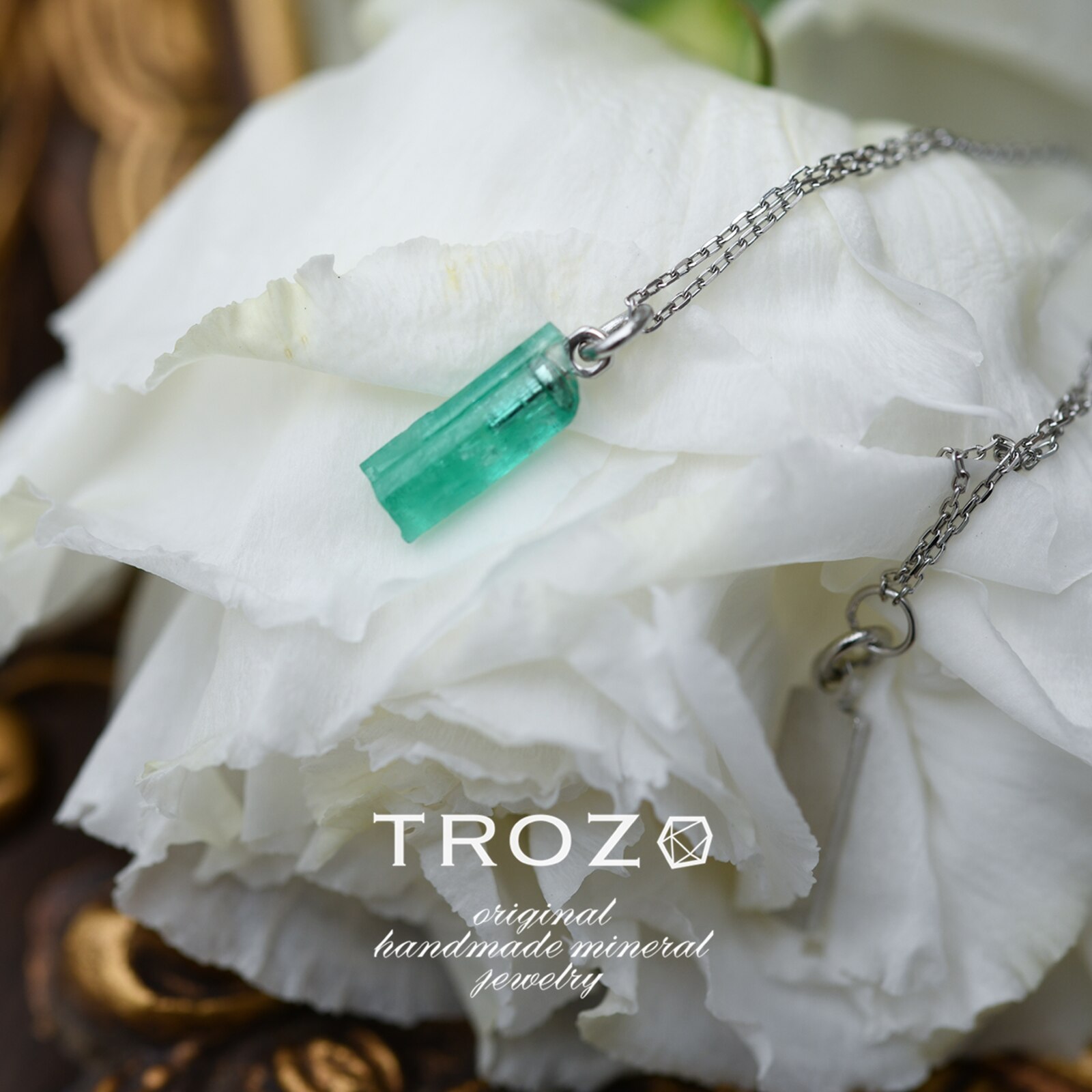
◆ Emerald Raw-Stone Jewelry
Handmade raw stone & mineral pieces — TROZO
◆ Frequently Asked Questions about Emerald
Q What does emerald symbolize?
Emerald is traditionally associated with happiness, good fortune, marital love, stability, hope, peace, clear thought and recovery. Loved from Cleopatra to today as a symbol of power, beauty and healing, it is May’s birthstone and the gift for a 55th “emerald” wedding anniversary.
Q What is the difference between emerald and aquamarine?
Both are members of the beryl family and share exactly the same formula, Be₃Al₂Si₆O₁₈. The difference is the trace element — emerald is green from chromium (Cr) and vanadium (V), while aquamarine is blue from iron (Fe). Think of them as siblings of one family in different colors.
Q How hard is emerald?
Its Mohs hardness is 7.5–8, hard among natural stones. But because it is rich in inclusions (the jardin), it is more prone to fissuring under impact than, say, diamond. Take it off for housework and sport, avoid ultrasonic cleaners and protect it from hard blows to keep its beauty longer.
Q What is a “jardin”?
*Jardin* is French for “garden”. It is the name given to the landscape of inclusions within an emerald, likened to a “garden within the stone”. What would be a flaw in another gem is cherished in emerald as the crystal’s character, a sign of natural origin, an “inner garden”. A perfectly clear emerald is extremely rare; almost every stone holds some jardin.
Q What is emerald “oiling”?
It is the treatment of soaking natural resin or cedarwood oil into the fissures and voids within the inclusions to soften their look and improve apparent clarity. A custom of long standing, it is applied to most emerald on the market. Untreated (“no oil”) stones are rare and can carry higher value.
Q Is Colombian emerald the best?
Colombian material (especially from the Muzo and Chivor mines) is generally considered the finest, with a deep, vivid green. It is followed by Zambian (a slightly bluish green), Brazilian (a calmer green) and Zimbabwean (small but clear). The ancient “Cleopatra mines” near Luxor in Egypt are also famed as the world’s oldest historical source.
Q What kinds of jewelry can emerald become?
As natural-stone jewelry, emerald is used for raw-stone earrings, necklaces, rings, brooches and ear cuffs. TROZO makes emerald jewelry that keeps the raw stone unpolished so its green and the jardin lead the design — both pieces you can choose by depth of green, size and inclusions from stock, and pieces where the meeting with the stone is left to chance.
EXPLORE THE SHOP
Explore the world of Emerald
Discover more pieces than we can show here at the TROZO shop.
Shop Emerald