
Malachite
Concentric bands of deep green, drawn by chemical oscillation.
Malachite is a hydrated copper carbonate, Cu₂(CO₃)(OH)₂, monoclinic, Mohs 3.5–4. Its concentric banding of bright and deep green recalls peacock feathers — its Japanese name means “peacock stone” — and the English name comes from the Greek *malache* (mallow). Forming in the oxidized zone of copper deposits, it occurs as botryoidal and stalactitic masses. From ancient Egyptian eye-paint pigment to the Malachite Room of the Hermitage, it is one of the green minerals humankind has known the longest.
◆ Malachite — Stone Meanings
- Protection from danger
- Intuition
- Transformation
- Peace of mind
- Focus
- Insight
- Warding off ill will
- Observation
◆ About Malachite
Malachite is a secondary mineral, Cu₂(CO₃)(OH)₂ (a hydrated copper carbonate). It is monoclinic, Mohs 3.5–4, SG 3.6–4.1. The bright-to-deep green comes from the divalent copper ion (Cu²⁺), with a pale-green streak. The Japanese name “peacock stone” reflects the way its concentric banding recalls peacock feathers, and the English “Malachite” comes from the Greek **μαλάχη (*malache*)** — likened to the green of the mallow leaf and recorded by Pliny as *molochitis*.
Malachite’s greatest appeal is its concentric banding (bands of bright and deep green). It forms in the oxidized zone of copper deposits, where needle-like crystals build up in radiating layers as the concentration of copper-bearing groundwater and the partial pressure of CO₂ vary periodically. Recent mineralogy reads this banding as a natural expression of chemical-oscillation reactions (a self-organizing phenomenon akin to the Belousov–Zhabotinsky reaction) and of Liesegang patterns (the concentric rings born of periodic diffusion and precipitation). Occurring as botryoidal, stalactitic, reniform and fibrous masses, a polished section reveals a natural geometry no two of which are alike.
Malachite is one of the green minerals humankind has used the longest. From around 4000 BC in ancient Egypt it was ground for green pigment (the eye-paint “udju”) and for ornament, and it appears in Pliny’s *Natural History* as *molochitis*. In medieval Europe it was prized as a charm to “guard the eye from the evil eye” and a protective stone for children. In 19th-century Russia, great masses from the Urals were used in architectural decoration, and the Malachite Room of the Hermitage in St Petersburg survives as the world’s largest example. The “Russian mosaic” technique developed at Yekaterinburg — joining thin slices to carry a continuous band — is still carried on as the highest level of the lapidary’s craft.
Malachite’s main sources are the Democratic Republic of the Congo (Katanga, today’s largest supply), Russia (the Urals, the famed 19th-century source), Zambia, Namibia (the Tsumeb mine), Morocco, Arizona in the USA (Bisbee, Morenci), Mexico and Australia. As a carbonate mineral it is sensitive to acid, ammonia, prolonged water and heat, so contact with sweat, vinegar and ammonia-based cleaners should be avoided. It can be worn as everyday jewelry, but storing it dry and wiping it after wear keeps the banded green that copper weaves beautiful for years.
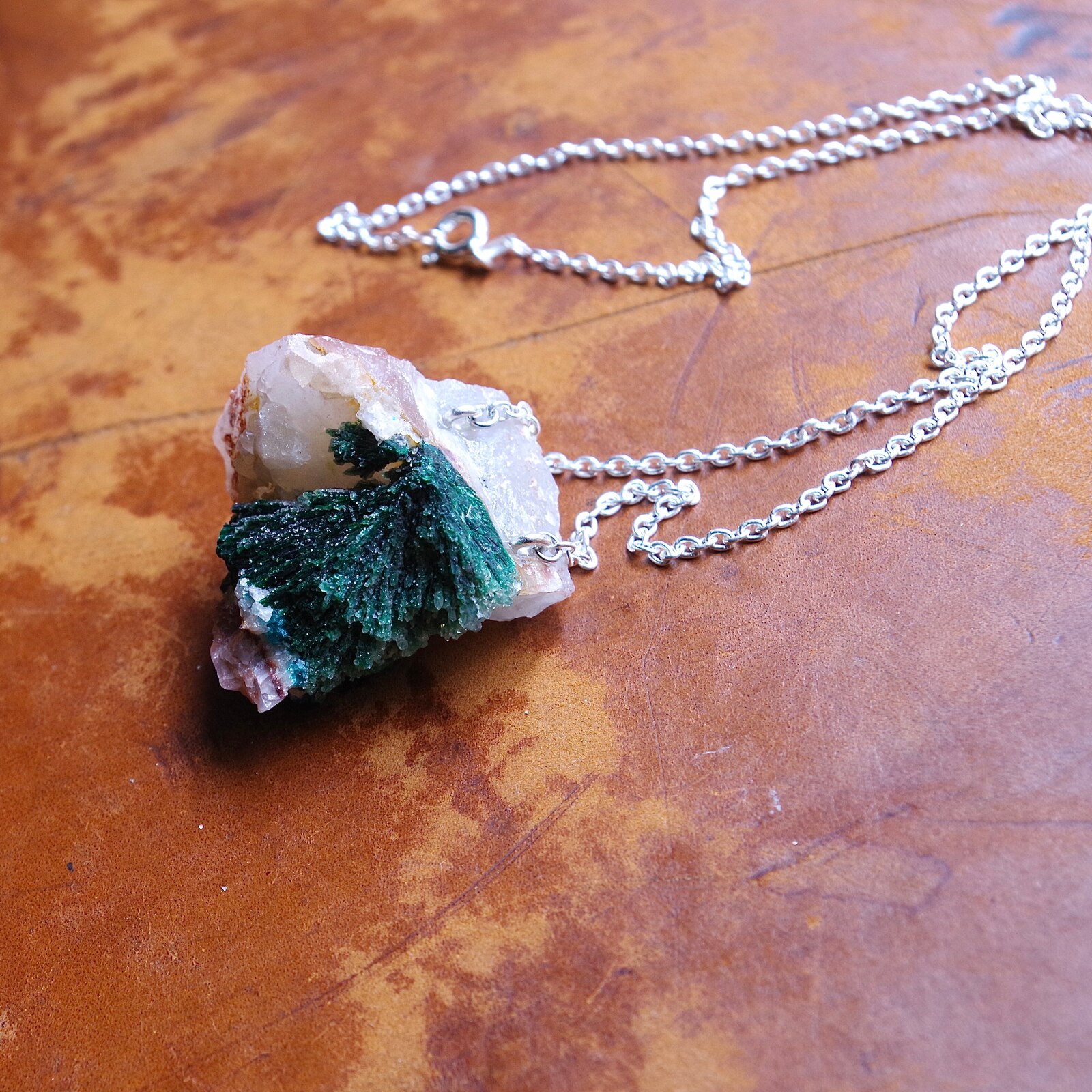
◆ Mineral Data
- English name
- Malachite (from the Greek *malache*, mallow)
- Chemical formula
- Cu₂(CO₃)(OH)₂ (hydrated copper carbonate)
- Mineral class
- Carbonate mineral (malachite group) — kin to azurite Cu₃(CO₃)₂(OH)₂ (secondary copper carbonates)
- Crystal system
- Monoclinic — occurs as botryoidal, stalactitic, reniform and fibrous masses
- Mohs hardness
- 3.5 – 4
- Specific gravity
- 3.6 – 4.1
- Main sources
- DR Congo (Katanga — today’s largest supply), Russia (the Urals — historic 19th-century source), Zambia, Namibia (Tsumeb), Morocco, USA (Arizona: Bisbee, Morenci), Mexico, Australia
- Color range
- Bright to deep green (from Cu²⁺), with concentric banding; pale-green streak
- Notable trait
- Concentric green banding — a natural geometry from chemical-oscillation deposition (akin to the Belousov–Zhabotinsky reaction). Often intergrown with azurite, of copper-deposit origin. Used by humankind since antiquity, from ancient Egyptian pigment to the Hermitage’s Malachite Room. As a carbonate, sensitive to acid, ammonia, prolonged water and heat
- Anniversary
- 13th wedding anniversary (in the British trade); a December birthstone in France
◆ Concentric banding — a geometry drawn by chemical oscillation
A periodic swing of copper-ion concentration, written into nature.
Malachite’s greatest appeal is its concentric banding of bright and deep green. It forms in the oxidized zone of copper deposits, where precipitation repeats as the concentration of Cu²⁺-bearing groundwater and the partial pressure of CO₂ swing periodically. Recent mineralogy reads this banding as a natural instance of chemical-oscillation reactions (a self-organizing phenomenon akin to the Belousov–Zhabotinsky reaction) or of Liesegang patterns (the concentric rings born of periodic diffusion and precipitation). Occurring as botryoidal, stalactitic, reniform and fibrous masses, the banding revealed in a polished section is a natural geometry no two of which are alike — among the natural stones most in harmony with the very thing raw-mineral jewelry seeks: that “every color and pattern is different”.
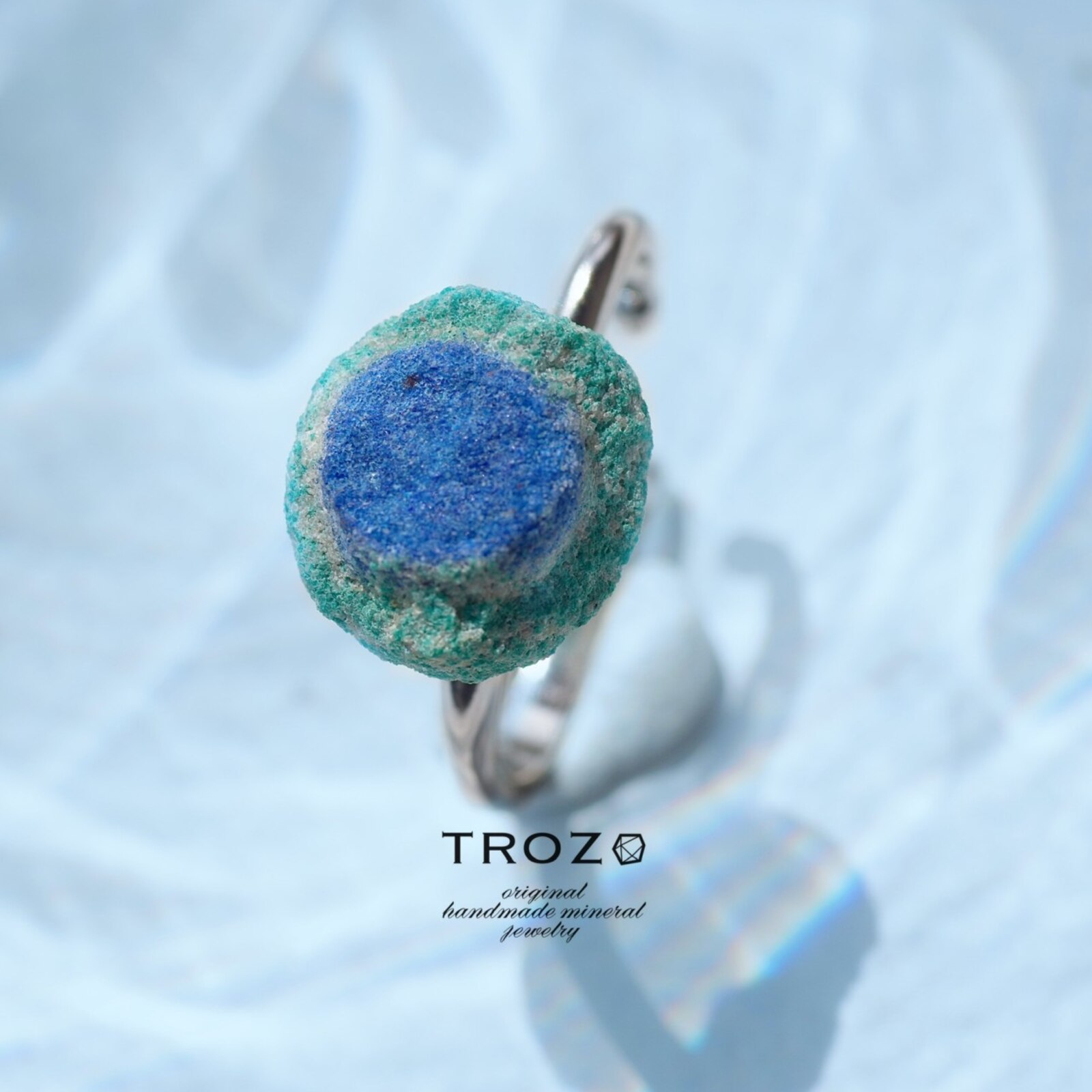
◆ From ancient Egypt to the Hermitage — malachite’s history of ornament
The green Pliny recorded and Catherine sheathed her walls in.
Malachite is one of the green minerals used in ornament and pigment since the earliest times. From around 4000 BC in ancient Egypt it was ground for green pigment (the eye-paint “udju”) and carved into ornament and tomb decoration. In ancient Rome it appears in Pliny’s *Natural History* as *molochitis*, recorded as a charm hung at the neck to guard children from the evil eye and danger. In 19th-century Russia, great masses from the Urals were used on a grand scale in architectural decoration — its summit the Malachite Room of the Hermitage in St Petersburg, a chamber sheathed in malachite from columns and fireplaces to vases and tabletops, showing the wealth of the 19th-century Russian court and the height of the lapidary’s craft. The “Russian mosaic” technique developed at Yekaterinburg — joining thin-cut slices to carry a continuous band — is still carried on as the highest level of the craft.
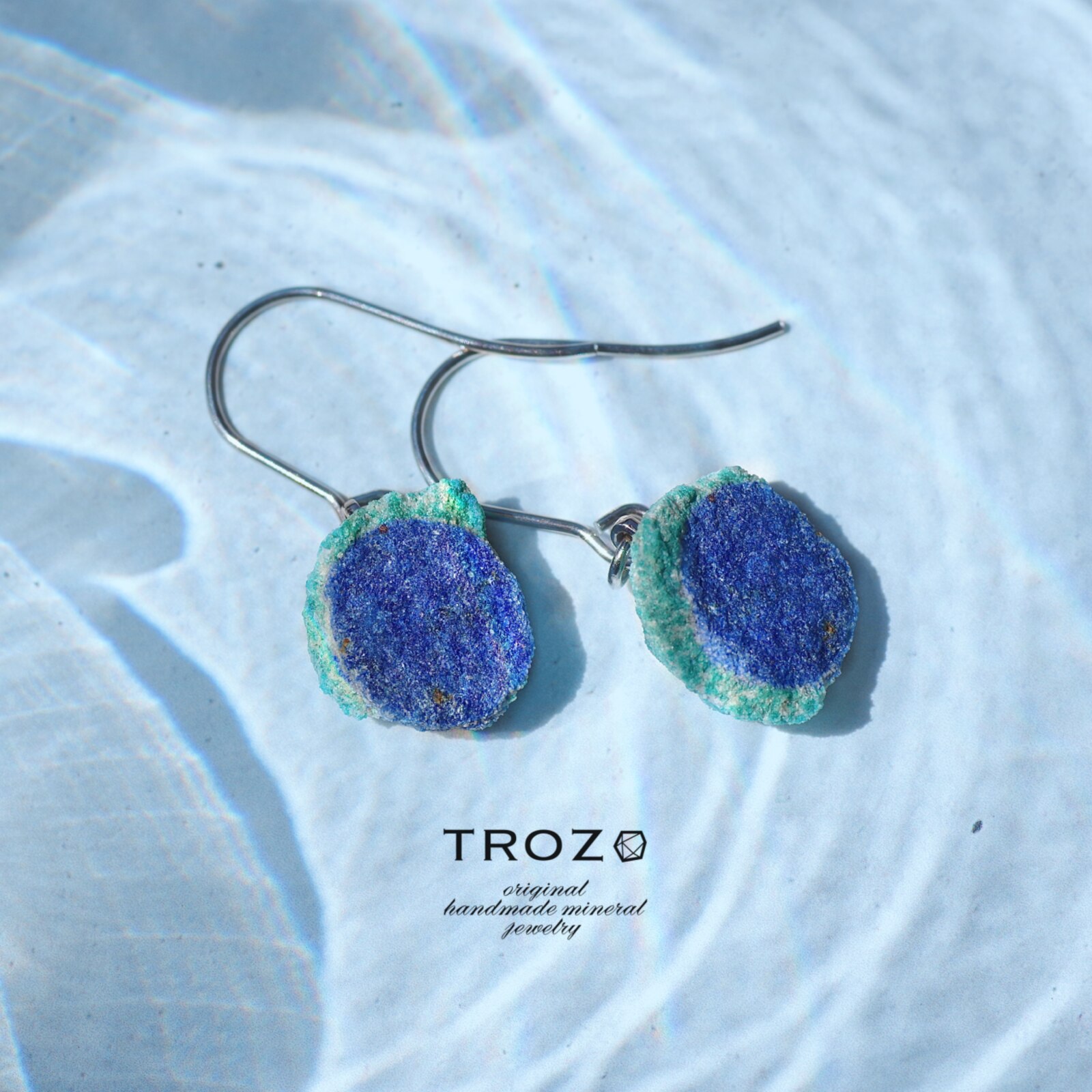
◆ Choosing raw malachite jewelry
Choose knowing the banding, the depth of color and the care it needs.
The pleasure of choosing raw malachite jewelry is the expression of banding and the depth of color, different in every piece. Congo (Katanga) material has crisp deep-green bands; Russian (Ural) material a finer, richer gradation; Namibian (Tsumeb) material a massive, deep color — the expression varies greatly by source. The form of the aggregate — massive, botryoidal, stalactitic, reniform — changes how it reads too, from the concentric bands of a polished section to the botryoidal cluster of a raw stone.
TROZO sets malachite with its natural crystal aggregate and banding intact. As a carbonate it is sensitive to acid, ammonia, prolonged water and heat, so please avoid storing it with sweat unwiped, contact with ammonia-based cleaners and ultrasonic cleaning. Storing it dry and wiping it after wear lets you enjoy this green natural stone, woven by copper, for years. (The dust of polishing carries a risk of copper toxicity, but a finished piece does not release copper through skin contact.) Enjoy the geometry of banding as raw-mineral jewelry, in the pieces TROZO makes.
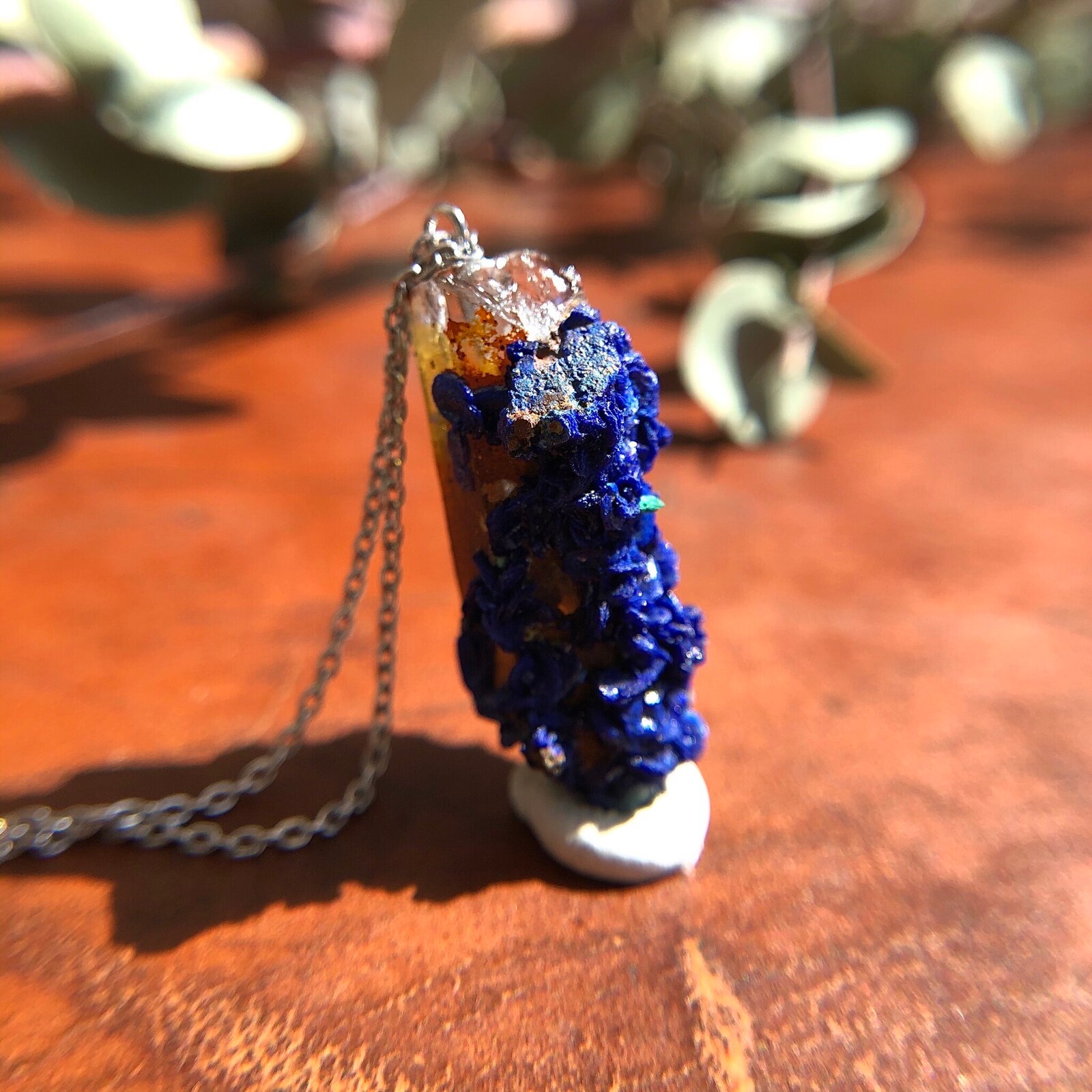
◆ Malachite Raw-Stone Jewelry
Handmade raw stone & mineral pieces — TROZO
◆ Frequently Asked Questions about Malachite
Q What does malachite symbolize?
Malachite is traditionally associated with protection from danger, intuition, transformation, peace of mind, focus, insight, the warding off of ill will and observation. Prized from its days as a charm and pigment in ancient Egypt as a stone to guard children from the evil eye, it is cherished today as a “stone that encourages change”.
Q Is malachite a birthstone?
Malachite is not a designated birthstone in Japan. In the British trade, however, it is the gift for a 13th wedding anniversary, and in France it is treated as a December birthstone. In Japan it is chosen as non-birthstone mineral jewelry by those drawn to the geometry of its banding and its deep green.
Q Why is malachite’s banding concentric?
Malachite’s concentric banding forms because, in the oxidized zone of a copper deposit, the concentration of Cu²⁺-bearing groundwater and the partial pressure of CO₂ swing periodically. As needle-like crystals precipitate in radiating layers, bands of light and dark appear. Recent mineralogy reads this as a natural instance of chemical-oscillation reactions (akin to the Belousov–Zhabotinsky reaction) and Liesegang patterns — a natural geometry shared across botryoidal, stalactitic and reniform forms.
Q How are malachite and azurite different, and related?
Malachite Cu₂(CO₃)(OH)₂ and azurite Cu₃(CO₃)₂(OH)₂ are kindred secondary copper carbonates that form in the oxidized zone of copper deposits. They differ only in the ratio of copper to carbonate and in their water content, malachite being deep green and azurite deep azure (from the French *azur*, blue). The two frequently intergrow, with rich variations of habit — co-crystallized “azurmalachite”, and azurite pseudomorphously replaced by malachite.
Q What care does malachite need?
As a carbonate, malachite Cu₂(CO₃)(OH)₂ is sensitive to acid, ammonia, prolonged water and heat. Avoid sweat (acidic), vinegar, lemon juice, ammonia-based cleaners, steam cleaners and ultrasonic cleaners. It can be worn as everyday jewelry, but wiping off sweat promptly with a soft cloth and storing it separately somewhere with little humidity keeps it beautiful longer. The dust of polishing carries a risk of copper toxicity, but a finished piece does not release significant copper through skin contact.
Q What kinds of jewelry can malachite become?
As natural-stone jewelry, malachite is used for raw-stone earrings, necklaces, rings and brooches. TROZO makes malachite jewelry that keeps the raw stone unpolished so its botryoidal clusters and banded aggregate lead the design — both pieces you can choose by banding and size from stock, and pieces where the meeting with the stone is left to chance. As raw-mineral jewelry, it is a natural stone that lets you wear the deep-green geometry and history that copper weaves.
Q Where does malachite come from?
The Democratic Republic of the Congo (Katanga, the Copperbelt) is today’s largest supply, accounting for most of the market. Historically the Urals of Russia were the finest 19th-century source — the Hermitage’s Malachite Room is built of Ural material. It is also found in Zambia, Namibia (the Tsumeb mine), Morocco, Arizona in the USA (Bisbee, Morenci), Mexico and Australia.
Q How can I tell imitation malachite?
Dyed howlite (a white, porous mineral dyed green) and plastic or resin imitations do circulate. Points to check, in combination: weight (genuine is heavy at SG ~3.9–4, plastic is light); banding (genuine is irregular and richly graded, dyed is too even); a fibrous crystal structure visible under a loupe (genuine only); and a coin-like copper smell (genuine only).
EXPLORE THE SHOP
Explore the world of Malachite
Discover more pieces than we can show here at the TROZO shop.
Shop Malachite