
Peridot
The sun stone that shines even in the dark. August’s birthstone, a young-grass green.
Peridot is the transparent young-grass-to-olive green gem; its mineral name is olivine, (Mg,Fe)₂SiO₄, orthorhombic, Mohs 6.5–7. Called the “sun stone” in ancient Egypt and believed to shine even in the dark, it was a talisman. Found within a pallasite meteorite that fell in Russia in 1972, it is a rare stone that bridges Earth and space.
Peridot is the August birthstone. See all August birthstones →
◆ Peridot — Stone Meanings
- Bonds of fate
- Marital love
- Happiness
- Harmony
- Hope
- Peace
- Serenity
- The power of the sun
◆ About Peridot
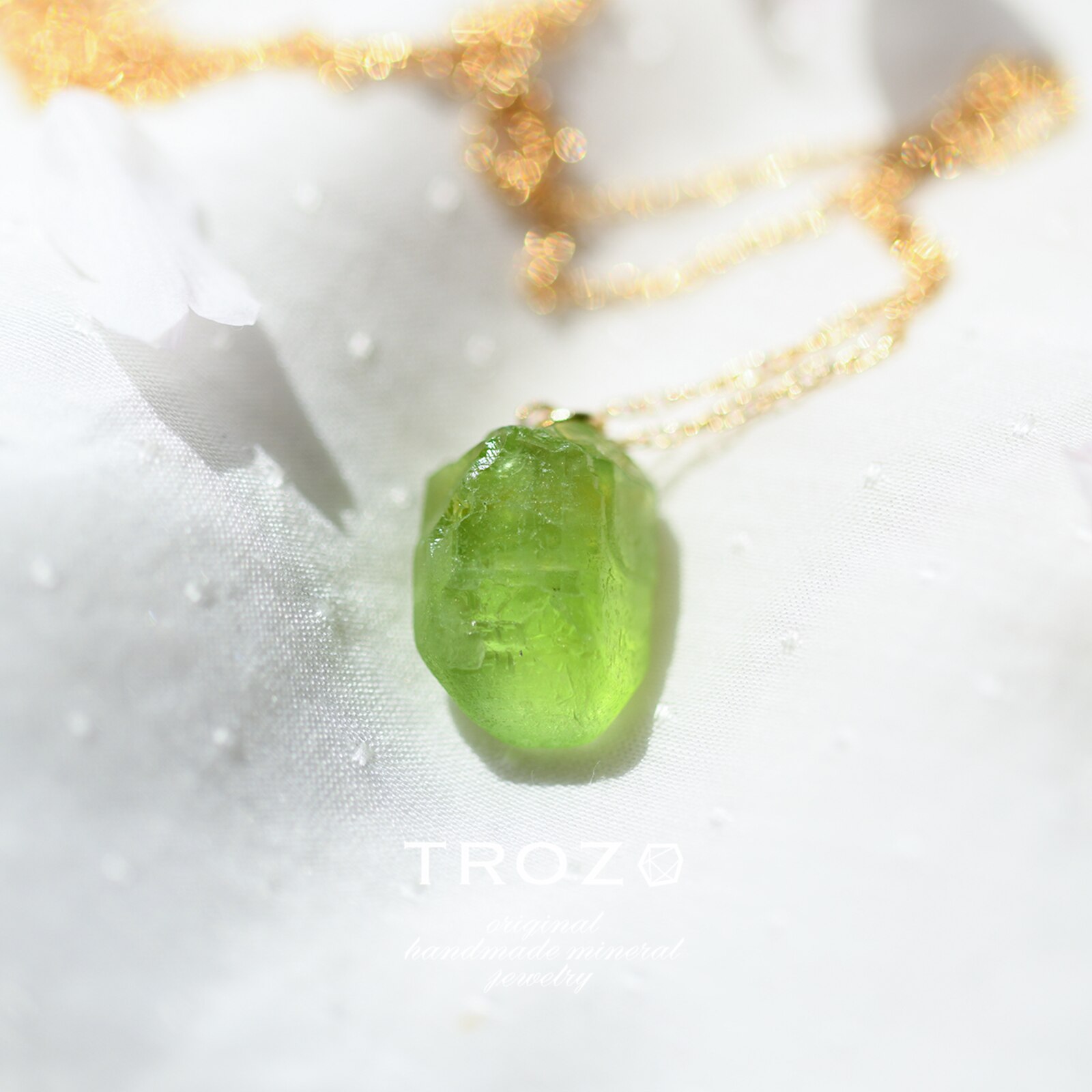
Peridot is the natural stone prized for its transparent young-grass-to-olive green. Its mineral name is olivine; “peridot” is the name it takes as a gem. The formula is (Mg,Fe)₂SiO₄ — a solid solution of magnesium-rich forsterite and iron-rich fayalite. It is orthorhombic, Mohs 6.5–7.
The olivine family is one of the principal minerals of the Earth’s mantle, the layer hundreds of kilometers beneath the crust. Peridot is a stone carried up from those depths to the surface by volcanism and mountain-building — a natural stone from inside the Earth. Its depth of color shifts with the amount of iron it holds, from pale young-grass to deep olive green.
In ancient Egypt it was called the “sun stone” and worn as a talisman believed to shine even in the dark. The island of Zabargad (St John’s Island) in the Red Sea was a major ancient source, and one theory holds that some of the “emeralds” Cleopatra loved were in fact peridot. Gem-quality olivine was formally recognized as “peridot” in 1904, and today it is cherished as August’s birthstone.
Peridot was also found within a pallasite (stony-iron) meteorite that fell in Russia in 1972. Both of the Earth’s mantle and arriving from space, it is a rare mineral that bridges Earth and the cosmos — from a 5,000-year-old Egyptian talisman to modern meteorite science.
◆ Mineral Data
- English name
- Peridot (gem name) / Olivine (mineral name)
- Chemical formula
- (Mg,Fe)₂SiO₄ — a solid solution of forsterite Mg₂SiO₄ and fayalite Fe₂SiO₄
- Mineral class
- Nesosilicate mineral, olivine family
- Crystal system
- Orthorhombic
- Mohs hardness
- 6.5 – 7
- Specific gravity
- 3.34
- Main sources
- Egypt (Zabargad / St John’s Island), USA (Hawaii, Arizona), Myanmar, Pakistan, China, Brazil, Australia, South Africa, Norway, Russia (pallasite meteorite)
- Color range
- Pale young-grass to olive green to deep green (shifting with iron content)
- Notable trait
- Called the “sun stone” in ancient Egypt, a talisman said to shine in the dark; also found in a pallasite meteorite that fell in Russia in 1972 — both of the Earth’s mantle and of space
- Birthstone
- August (formally recognized 1904)
◆ The olivine family — a young-grass green from deep in the Earth
A mantle mineral, a solid solution of forsterite and fayalite.
The olivine family, to which peridot belongs, is one of the principal minerals of the Earth’s mantle, the layer hundreds of kilometers beneath the crust. It is a solid solution of magnesium-rich forsterite Mg₂SiO₄ (greener) and iron-rich fayalite Fe₂SiO₄ (browner), and peridot is the magnesium-leaning, gem-quality material between them. Carried up from the depths by volcanism and mountain-building, it is truly “a natural stone from inside the Earth”.
◆ The sun stone, and the meteorite stone — from ancient Egypt to space
From a 5,000-year-old talisman to a 1972 meteorite.
In ancient Egypt it was called the “sun stone” and worn as a talisman believed to shine even in the dark. The island of Zabargad (St John’s Island) in the Red Sea was a major ancient source, and one theory holds that some of the “emeralds” Cleopatra loved were in fact peridot. Gem-quality olivine was formally recognized as “peridot” in 1904 and became cherished as August’s birthstone. Then, in 1972, crystals were found within a pallasite (stony-iron) meteorite that fell in Russia — and today peridot draws attention as a “gem that arrived from space”, a rare natural stone bridging Earth and the cosmos.
◆ Choosing raw peridot jewelry
Choose by the depth of the young-grass-to-olive green.
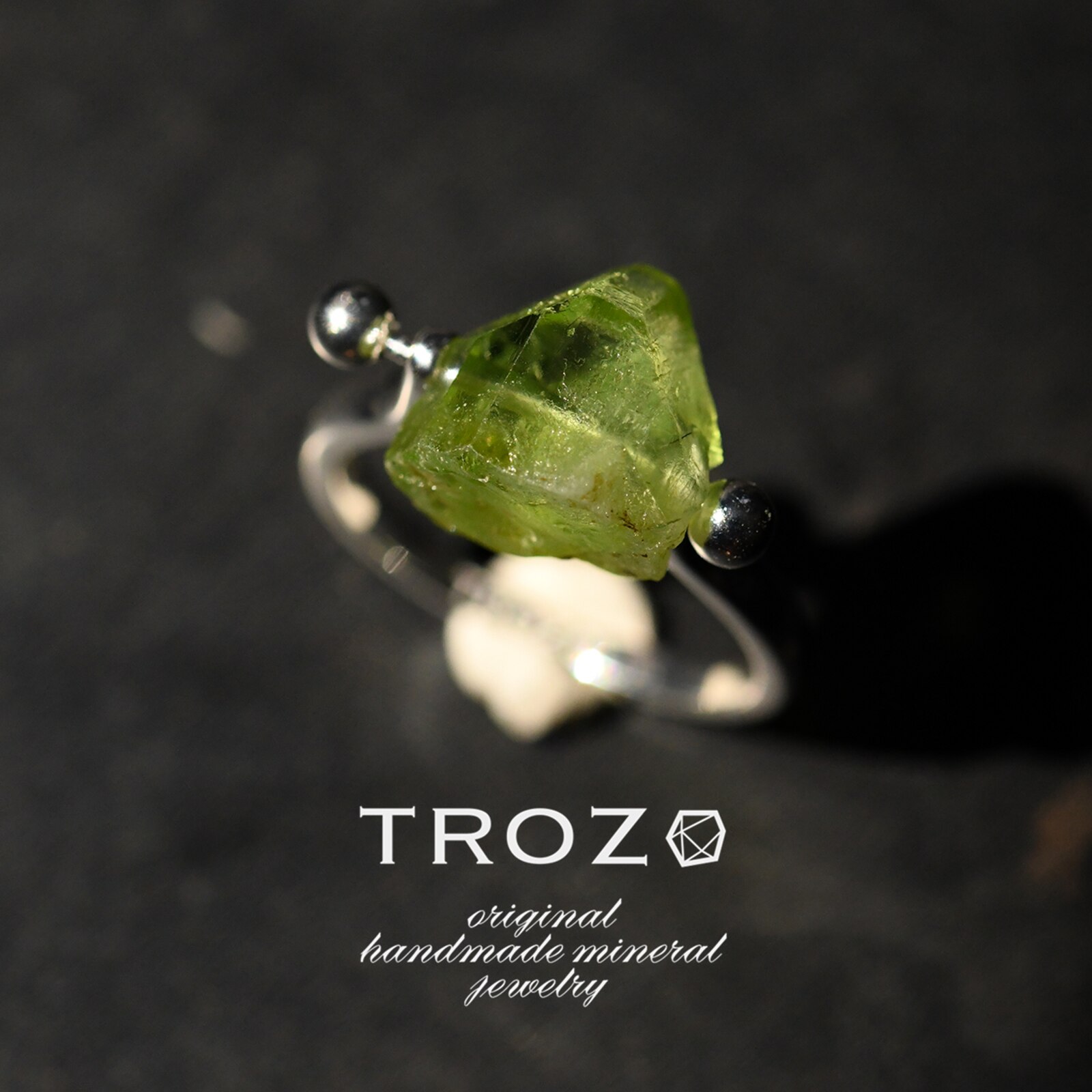
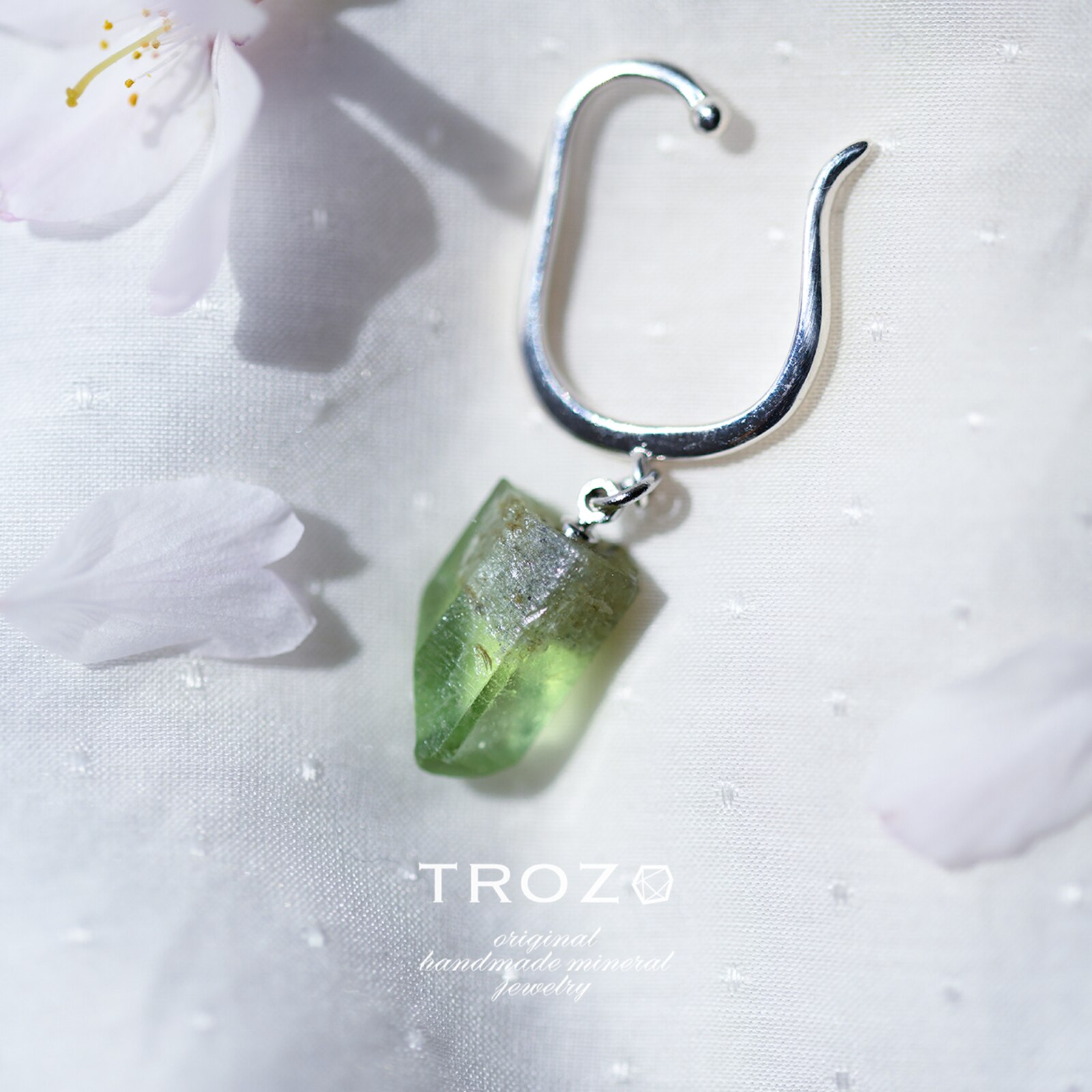
At Mohs 6.5–7 peridot has ample strength for everyday wear. The character of a raw stone turns on the depth of color (pale young-grass to deep olive green), the clarity, the sharpness of the crystal and the landscape of the inclusions. Zabargad material is a deep, dark green, Myanmar a vivid green, and Arizona (USA) a paler young-grass — the expression shifts by source. Deeper colors carry more presence and read a touch formal, while paler tones sit easily against the skin for everyday wear.
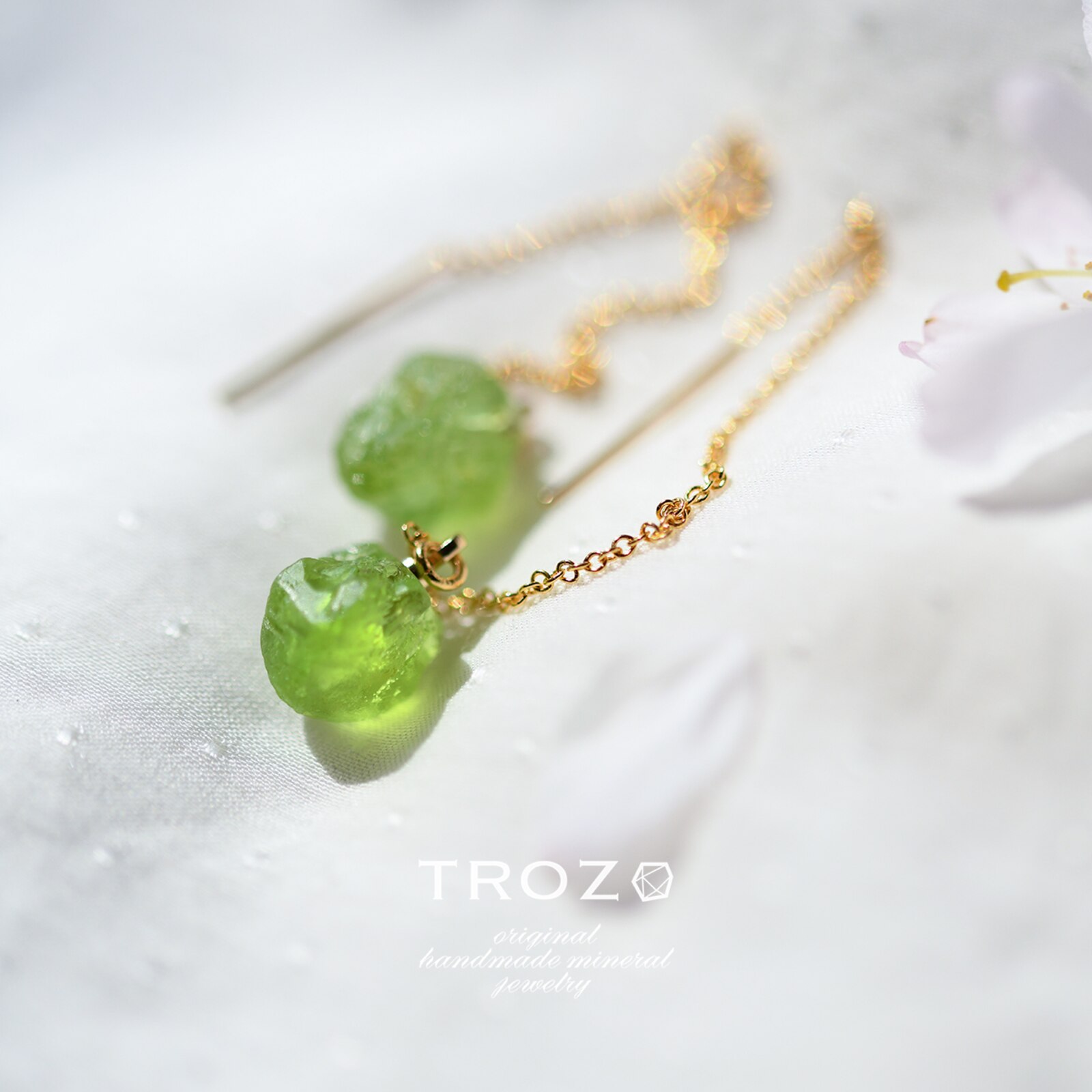
TROZO sets peridot without polishing away its character, letting the natural color and clarity lead the design. We offer pieces for those who would like to choose the depth of color and size from stock, as well as pieces where the meeting with the stone is left to chance. A calm young-grass green that suits everyday life in any season — the “sun stone” that has soothed people since ancient Egypt, as modern jewelry.
◆ Peridot Raw-Stone Jewelry
Handmade raw stone & mineral pieces — TROZO
◆ Frequently Asked Questions about Peridot
Q What does peridot symbolize?
Peridot is traditionally associated with bonds of fate, marital love, happiness, harmony, hope, peace, serenity and the power of the sun. Called the “sun stone” in ancient Egypt, a talisman to light the dark, it is cherished today as August’s birthstone.
Q What is the difference between peridot, olivine and forsterite?
They are names for the same family of minerals. “Olivine” is the mineral name, and “peridot” is the name it takes as a gem; gem-quality olivine was formally recognized as peridot in 1904. Forsterite (magnesium-rich) and fayalite (iron-rich) are the end-members whose solid solution makes up olivine.
Q How hard is peridot?
Its Mohs hardness is 6.5–7, with ample strength for everyday jewelry — just slightly softer than quartz (Mohs 7). Avoiding hard knocks and abrasion, and taking it off for bathing and sport, keeps its beauty longer.
Q Is there really peridot in meteorites?
Yes. Green peridot crystals were found within a pallasite (stony-iron) meteorite that fell in Russia in 1972. Gem-quality peridot from pallasites is called “pallasitic peridot” — a rare natural stone that is both of the Earth’s mantle and arrives from space.
Q Were Cleopatra’s emeralds actually peridot?
By one account, some of the “emeralds” Cleopatra loved were in fact peridot from the island of Zabargad (St John’s Island) in the Red Sea. Emerald and peridot were not precisely distinguished at the time, and green gems may have been conflated. Zabargad remains one of the world’s notable peridot sources today.
Q What kinds of jewelry can peridot become?
As natural-stone jewelry, peridot is used for raw-stone earrings, necklaces, rings, brooches and ear cuffs. TROZO makes peridot jewelry that keeps the raw stone unpolished so its color and clarity lead the design — both pieces you can choose by depth of color and size from stock, and pieces where the meeting with the stone is left to chance.
Q How does peridot differ by source?
Zabargad (St John’s Island) in the Red Sea, mined since ancient Egypt, gives a traditional deep green; Myanmar a vivid green; Arizona, USA (the San Carlos Apache reservation) a paler young-grass; and Pakistan stones of high clarity and transparency.
EXPLORE THE SHOP
Explore the world of Peridot
Discover more pieces than we can show here at the TROZO shop.
Shop Peridot