
Spinel
The truth of the Black Prince’s Ruby — a modern August birthstone.
Spinel (MgAl₂O₄) is an oxide mineral, isometric (cubic), Mohs 8. Its colors span red, pink, purple, blue, green, yellow, brown, colorless and black, and red spinel was long confused with ruby. Until the French crystallographer Romé de l’Isle distinguished it from ruby in 1783, many of the world’s royal “red gems” were in fact spinel — including the 140 ct Black Prince’s Ruby and the 361 ct Timur Ruby. It is a modern August birthstone.
Spinel is the August birthstone. See all August birthstones →
◆ Spinel — Stone Meanings
- Vitality
- Victory
- Passion
- Hope
- Courage
- Renewal
- Allure
- Trust
◆ About Spinel
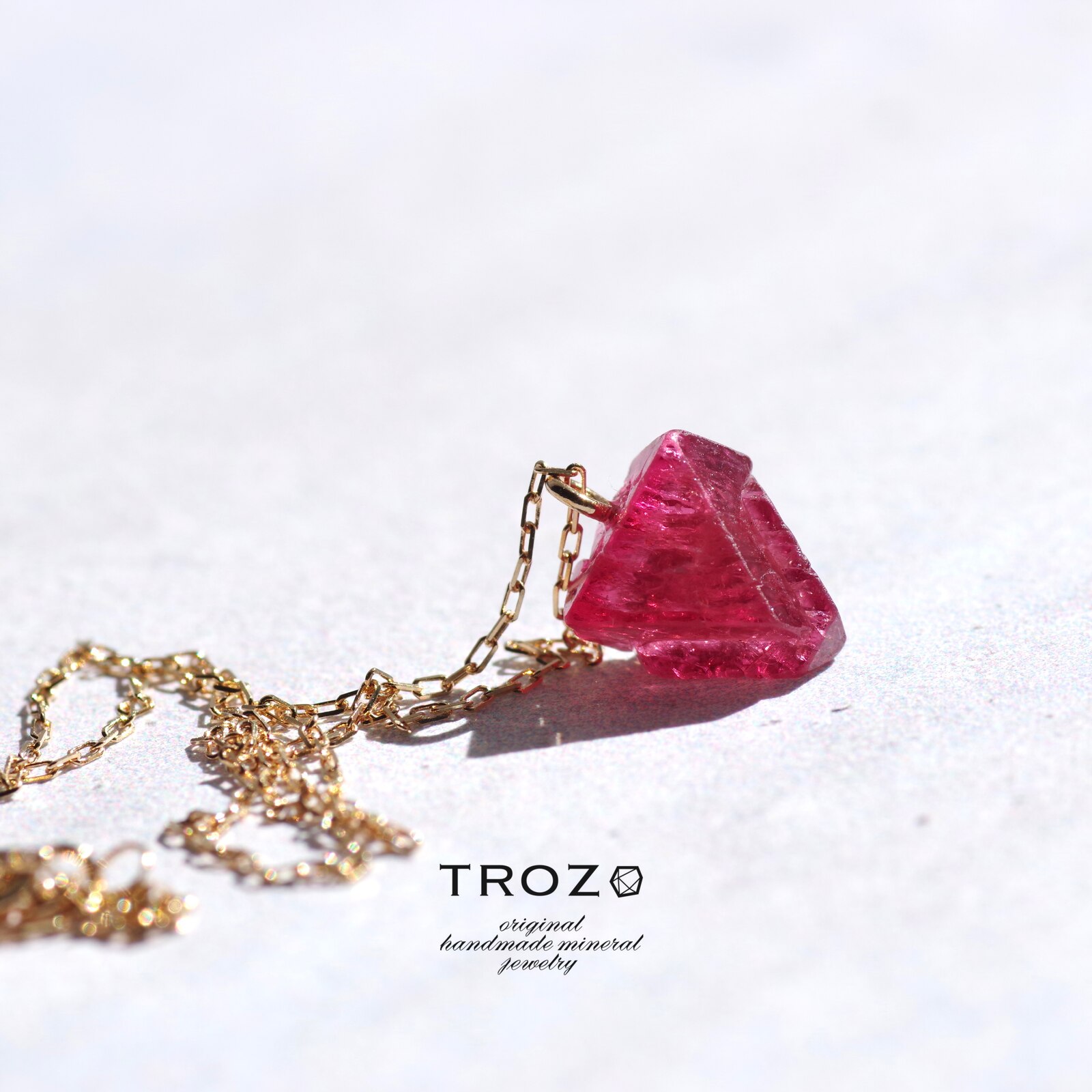
Spinel is an oxide mineral with the formula MgAl₂O₄. It is isometric (cubic), Mohs 8, with a specific gravity of around 3.60 and a glassy luster — gem quality with a refractive index near 1.71. The name comes from the Latin *spina* (“little thorn”), for the way its octahedral crystals come to a sharp point. “Spinel” is both a single mineral and the name of a group of cubic oxides (magnetite, chromite, hercynite and others).
Spinel’s colors are very varied — red, pink, purple, blue, green, yellow, brown, colorless and black. Red spinel in particular is so close to ruby in hardness, color and source (the same alluvial deposits of the Mogok region of Myanmar) that it long circulated undistinguished as “ruby”. It was the French crystallographer Jean-Baptiste Louis Romé de l’Isle who, in 1783, identified the two as separate minerals — the decisive clue being crystal structure: spinel is cubic, ruby trigonal.
The most famous “red gem that was really spinel” is the Black Prince’s Ruby — the 140 ct red stone set at the front of the cross on the Imperial State Crown of Britain, said to have been given to Edward the Black Prince by Pedro I of Castile in the 14th century. Another is the Timur Ruby — a 361 ct red gem of Mughal provenance, now set in a necklace of Queen Elizabeth II, one of the largest spinels in the world and engraved with the names of its owners. Both were shown by modern gemology to be red spinel.
Counted by color, spinel is loved today as a modern August birthstone. Among its prized varieties are Mahenge spinel (the hot pink of Tanzania), cobalt spinel (a vivid blue from Vietnam and Tanzania) and black spinel (popular as an alternative to jet) — a stone with a wide choice of color and type, ideal as a gift for those born in August.
◆ Mineral Data
- English name
- Spinel (from the Latin *spina*, “little thorn”)
- Chemical formula
- MgAl₂O₄ (an oxide of magnesium and aluminium)
- Mineral class
- Spinel group (oxide minerals) — relatives include magnetite, chromite and hercynite; spinel itself is cubic, with octahedral crystals
- Crystal system
- Isometric (cubic) — the decisive difference from ruby (trigonal)
- Mohs hardness
- 8
- Specific gravity
- 3.5 – 4.1 (about 3.60 for red)
- Main sources
- Myanmar (Mogok, the finest red spinel), Vietnam, Tanzania (Mahenge), Tajikistan (Pamir), Sri Lanka, Madagascar, Afghanistan, Pakistan, Nigeria, Australia
- Color range
- Red, pink, purple, blue, green, yellow, brown, colorless, black (red spinel long confused with ruby; black spinel traded as a jet alternative)
- Notable trait
- Until Romé de l’Isle distinguished it from ruby in 1783, many royal “red gems” were spinel. The Black Prince’s Ruby (140 ct) and Timur Ruby (361 ct) are red spinel. A modern August birthstone
- Birthstone
- August (modern addition; the main August stones are peridot and sardonyx)
◆ Spinel — the gem long confused with ruby
The same red, the same hardness, the same alluvial deposits.
Spinel is so close to ruby (corundum) in color, hardness and source — and so often found alongside it in the same alluvial deposits of the Mogok region of Myanmar — that until 1783 the two were not crystallographically distinguished, and it was long unknown that many of the world’s royal “red gems” were in fact spinel. The French crystallographer Jean-Baptiste Louis Romé de l’Isle identified them as separate minerals; the decisive clue was crystal structure — spinel forms cubic (isometric) octahedra, while ruby forms trigonal prisms, a fundamentally different symmetry. The compositions differ entirely too: MgAl₂O₄ for spinel, Al₂O₃ + Cr for ruby.
◆ The Black Prince’s Ruby and the Timur Ruby — the truth in the crown
The British Crown Jewels, in fact spinel.
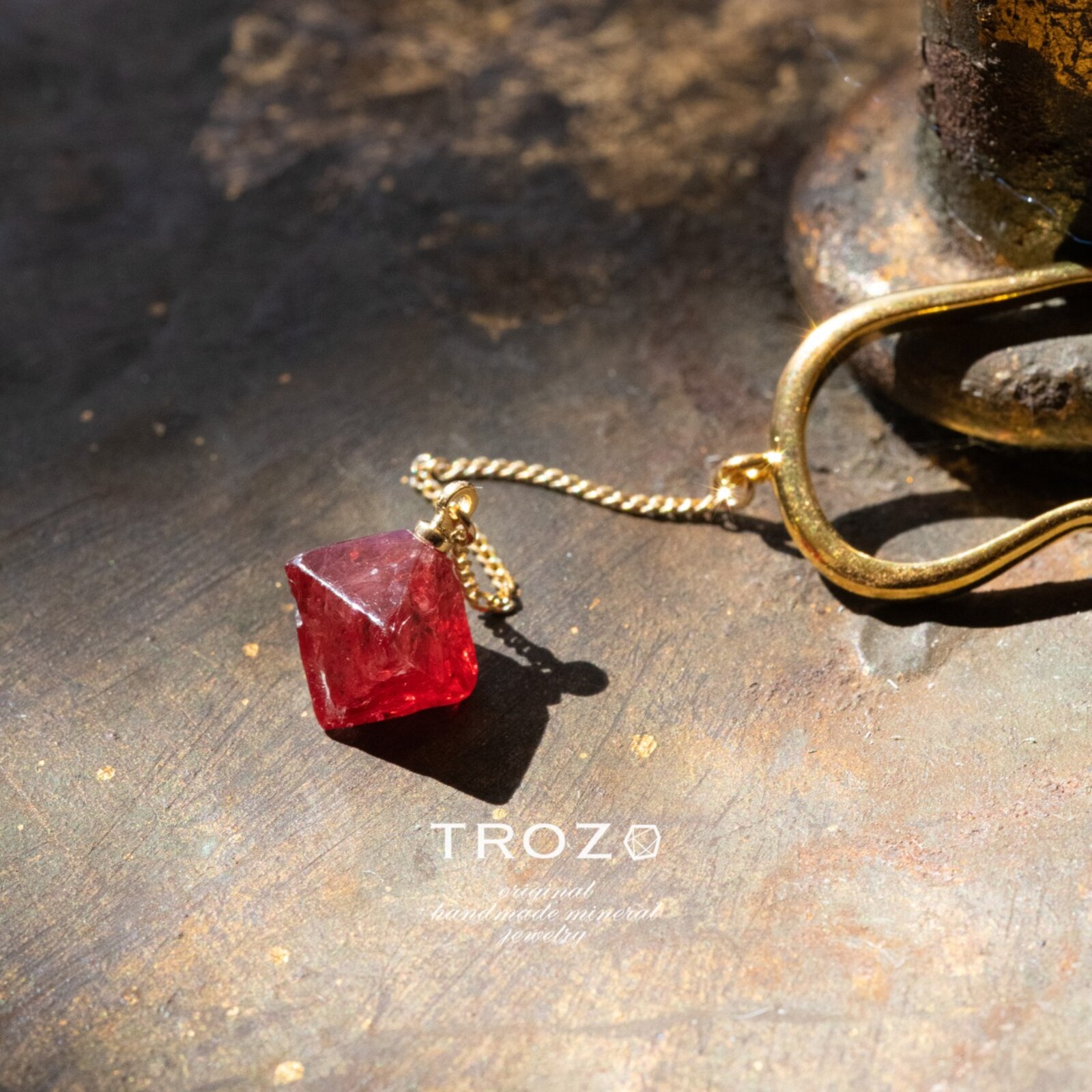
The Black Prince’s Ruby (140 ct), set at the front of the cross on the Imperial State Crown of Britain, is a red gem said to have been given to Edward the Black Prince by Pedro I of Castile in the 14th century — long treated as ruby, but shown by modern gemology to be red spinel. The other great example is the Timur Ruby (361 ct) — owned by the rulers of the Timurid and Mughal empires from the 14th to 18th centuries, engraved with their names, and one of the largest spinels in the world; taken from the Punjab by the British East India Company in 1849, it is now set in a necklace of Queen Elizabeth II. That so many of the “red gems” of royal history were spinel is the story no account of the stone can leave out.
◆ A modern August birthstone — a stone chosen by color
A summer gem alongside peridot and sardonyx.
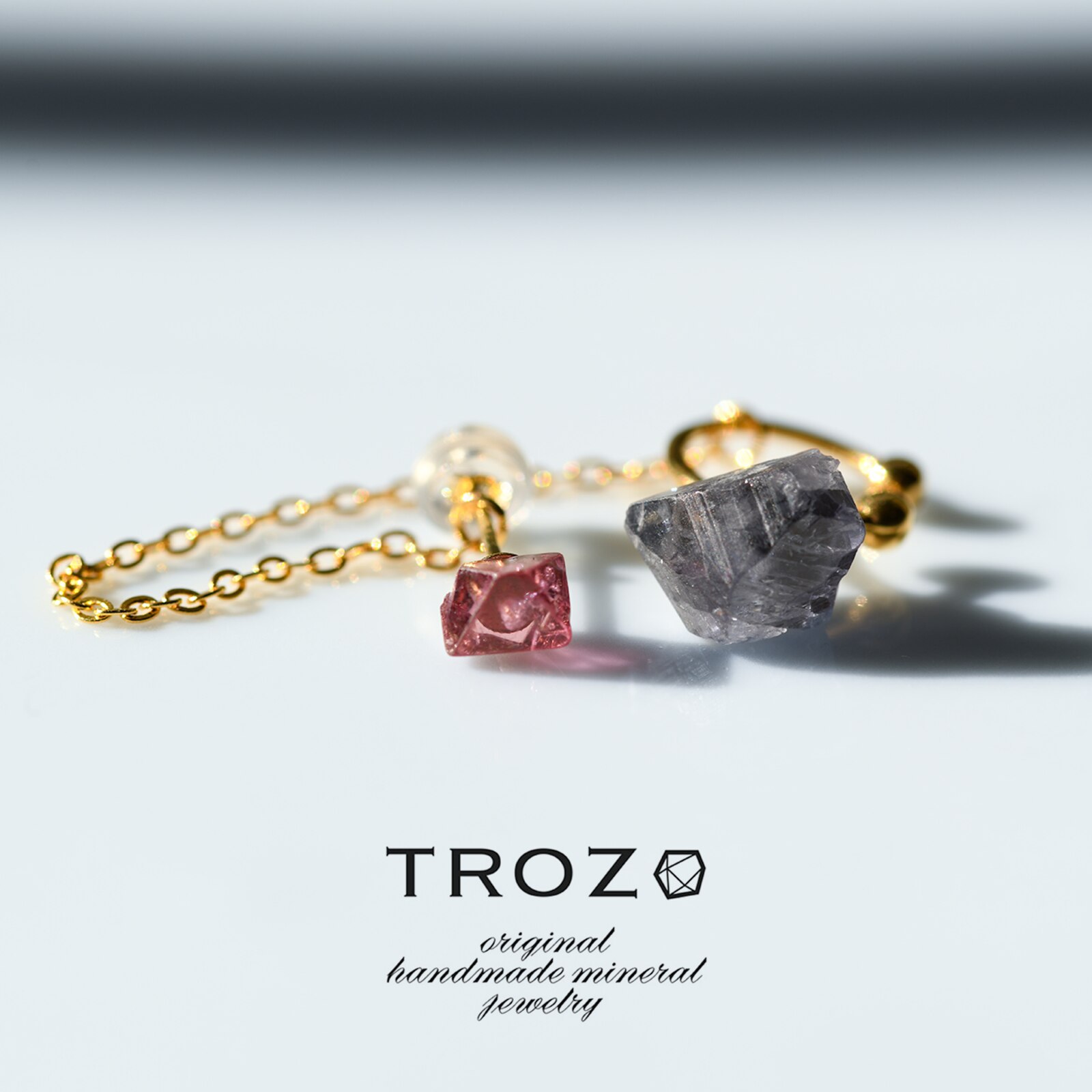
Spinel is loved today as a modern August birthstone, standing alongside the main August stones, peridot and sardonyx. Its colors are very varied — red, pink, purple, blue, green, yellow, brown, colorless and black — and among the most prized in today’s fine jewelry are Mahenge spinel (the hot pink of Tanzania), cobalt spinel (a vivid blue from Vietnam and Tanzania) and black spinel (popular as an alternative to jet).
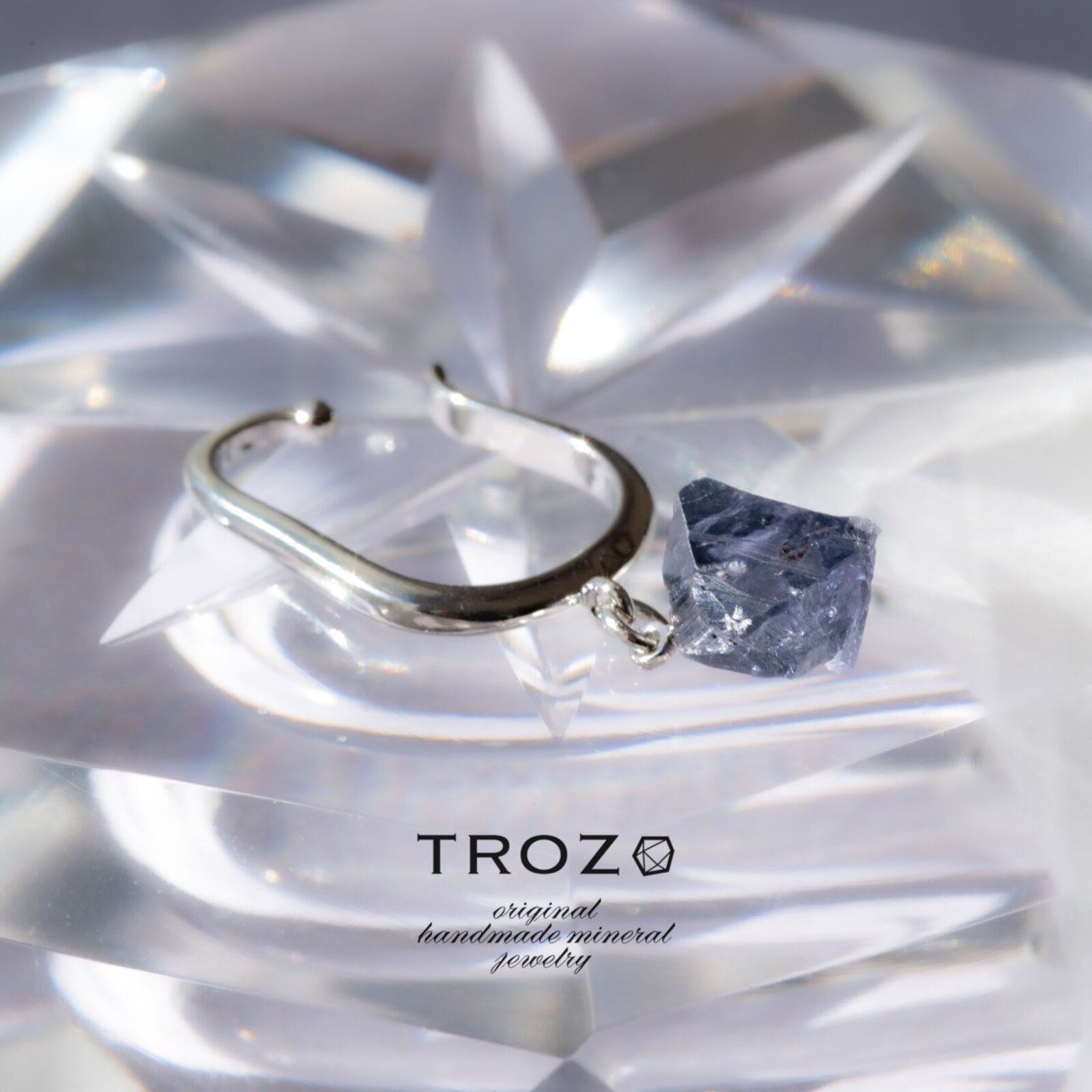
TROZO sets spinel without polishing away its character, letting the natural form of its cubic octahedral crystals lead the design. For a gift for those born in August, the choice is wide — passionate red spinel, gentle pink Mahenge, blue cobalt spinel, black spinel. We offer pieces for those who would like to choose color and form from stock, as well as pieces where the meeting with the stone is left to chance.
◆ Spinel Raw-Stone Jewelry
Handmade raw stone & mineral pieces — TROZO
◆ Frequently Asked Questions about Spinel
Q What does spinel symbolize?
Spinel is traditionally associated with vitality, victory, passion, hope, courage, renewal, allure and trust. The symbolism shifts by color — “passion and victory” for red spinel, “allure and trust” for black spinel.
Q What month’s birthstone is spinel?
It is a modern August birthstone, recognized alongside the main August stones, peridot and sardonyx. (In Japan it was formally added as an August birthstone in the gemstone-association revision of 2021.)
Q How do spinel and ruby differ?
They are different minerals in both composition and crystal system: spinel is MgAl₂O₄, cubic, in octahedral crystals, while ruby is Al₂O₃ + Cr, trigonal, in prismatic crystals. They are so alike in color, hardness and source that they were not distinguished until 1783, when Romé de l’Isle identified them as separate minerals by crystal structure. Many royal “rubies”, such as the Black Prince’s Ruby (140 ct) and the Timur Ruby (361 ct), are in fact red spinel.
Q How hard is spinel?
Its Mohs hardness is 8, very hard among natural stones — after diamond (10) and ruby and sapphire (9), level with topaz (8). It has ample durability for jewelry and everyday wear.
Q Are the Black Prince’s Ruby and Timur Ruby really spinel?
Yes. The Black Prince’s Ruby (140 ct) is the red gem at the front of the cross on the Imperial State Crown of Britain, said to have been given to Edward the Black Prince by Pedro I of Castile in the 14th century. The Timur Ruby (361 ct) is of Mughal provenance and now set in a necklace of Queen Elizabeth II. Both were long treated as ruby but shown by modern gemology to be red spinel — a historic misnomer from the days before spinel and ruby were distinguished, in 1783.
Q What are red, black, Mahenge and cobalt spinel?
They are leading color varieties of spinel. Red spinel is the red material (with the history of confusion with ruby); Mahenge spinel is the hot pink of Mahenge, Tanzania (one of today’s finest spinels); cobalt spinel is a vivid blue from Vietnam and Tanzania (cobalt-bearing); and black spinel is opaque black (popular as a jet alternative). Value and popularity vary widely by color.
Q Where does spinel come from?
Myanmar (Mogok) is known for the finest red spinel, with further material from Vietnam (cobalt spinel), Tanzania (Mahenge) (hot pink), Tajikistan (Pamir), Sri Lanka, Madagascar, Afghanistan, Pakistan, Nigeria and Australia.
EXPLORE THE SHOP
Explore the world of Spinel
Discover more pieces than we can show here at the TROZO shop.
Shop Spinel