
Garnet
A deep red like pomegranate seeds. January’s birthstone, a stone of life.
Garnet is the name for a family of more than a dozen minerals, general formula X₃Y₂(SiO₄)₃. The element it holds gives a rich range of color — deep-red almandine, red pyrope, orange spessartine, green-to-yellow grossular, vivid-green demantoid and more. Isometric, Mohs 6.5–7.5. January’s birthstone, it has been loved for over 5,000 years.
Garnet is the January birthstone. See all January birthstones →
◆ Garnet — Stone Meanings
- Fruition
- Truth
- Friendship
- Fidelity
- Vitality
- Passion
- Victory
- Devotion
◆ About Garnet
Garnet is not a single mineral but the name for a family of more than a dozen. Its general formula is X₃Y₂(SiO₄)₃, with Ca, Mg, Fe²⁺ or Mn at X and Al, Fe³⁺ or Cr at Y; the combination changes both color and properties. The main species are almandine (deep red), pyrope (red), spessartine (orange), grossular (green to yellow), andradite (demantoid is vivid green) and uvarovite (green).
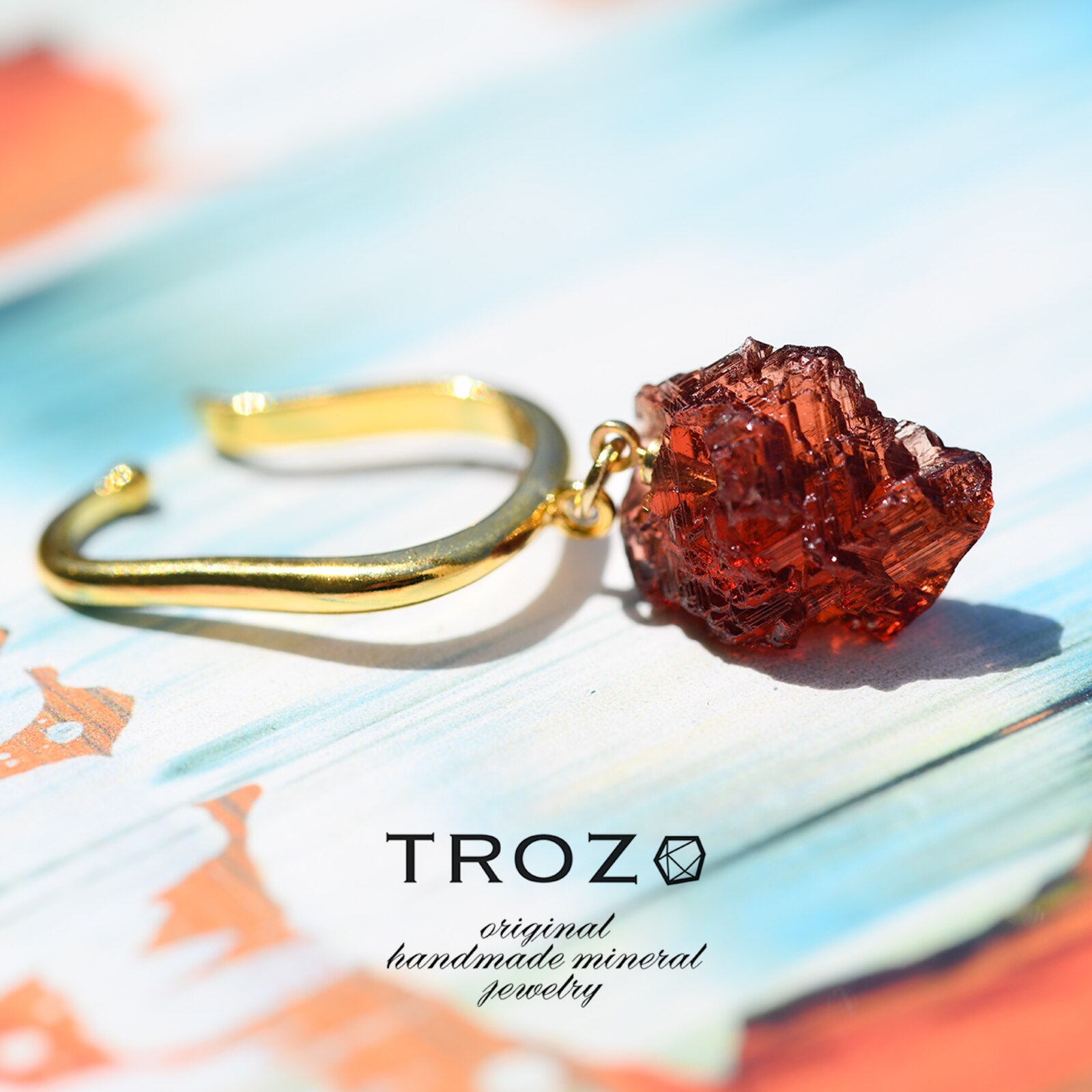
It crystallizes in the isometric (cubic) system. It often grows naturally into beautiful polyhedra — rhombic dodecahedra and trapezohedra — so well-formed raw crystals can be had without any cutting, a rare quality among stones. Its Mohs hardness ranges 6.5–7.5 and its specific gravity 3.1–4.3 by species, each with its own character.
The name “Garnet” comes from the Latin *granatum* (pomegranate), for the way the color and clustering of the crystals recall pomegranate seeds. Loved for over 5,000 years, it appears in the Old Testament as the stone lighting Noah’s Ark and was used in the burial goods of ancient Egyptian kings — one of humankind’s oldest jewelry minerals.
Its associations include fruition, truth, friendship, fidelity and vitality. January’s birthstone and the gift for an 18th wedding anniversary, it is also a classic charm for those setting out into a new year.
◆ Mineral Data
- English name
- Garnet
- Chemical formula
- General formula X₃Y₂(SiO₄)₃ (almandine Fe₃Al₂(SiO₄)₃ / pyrope Mg₃Al₂(SiO₄)₃ / spessartine Mn₃Al₂(SiO₄)₃ and others)
- Mineral class
- Garnet family (nesosilicates) — more than a dozen species
- Crystal system
- Isometric (natural rhombic dodecahedra and trapezohedra)
- Mohs hardness
- 6.5 – 7.5 (varies by species)
- Specific gravity
- 3.1 – 4.3 (varies by species)
- Main sources
- India, Madagascar, Mozambique, Tanzania, Kenya, Sri Lanka, Nigeria, Namibia, Mali, Russia and others
- Color range
- Deep red (almandine), red (pyrope), orange (spessartine), green to yellow (grossular), vivid green (demantoid), purple-red (rhodolite) and more
- Notable trait
- The name comes from the Latin granatum (pomegranate); one of the few minerals that grow naturally into well-formed polyhedra
- Birthstone
- January
◆ The garnet family — one name, more than ten species
The element it holds creates the spectrum of color.
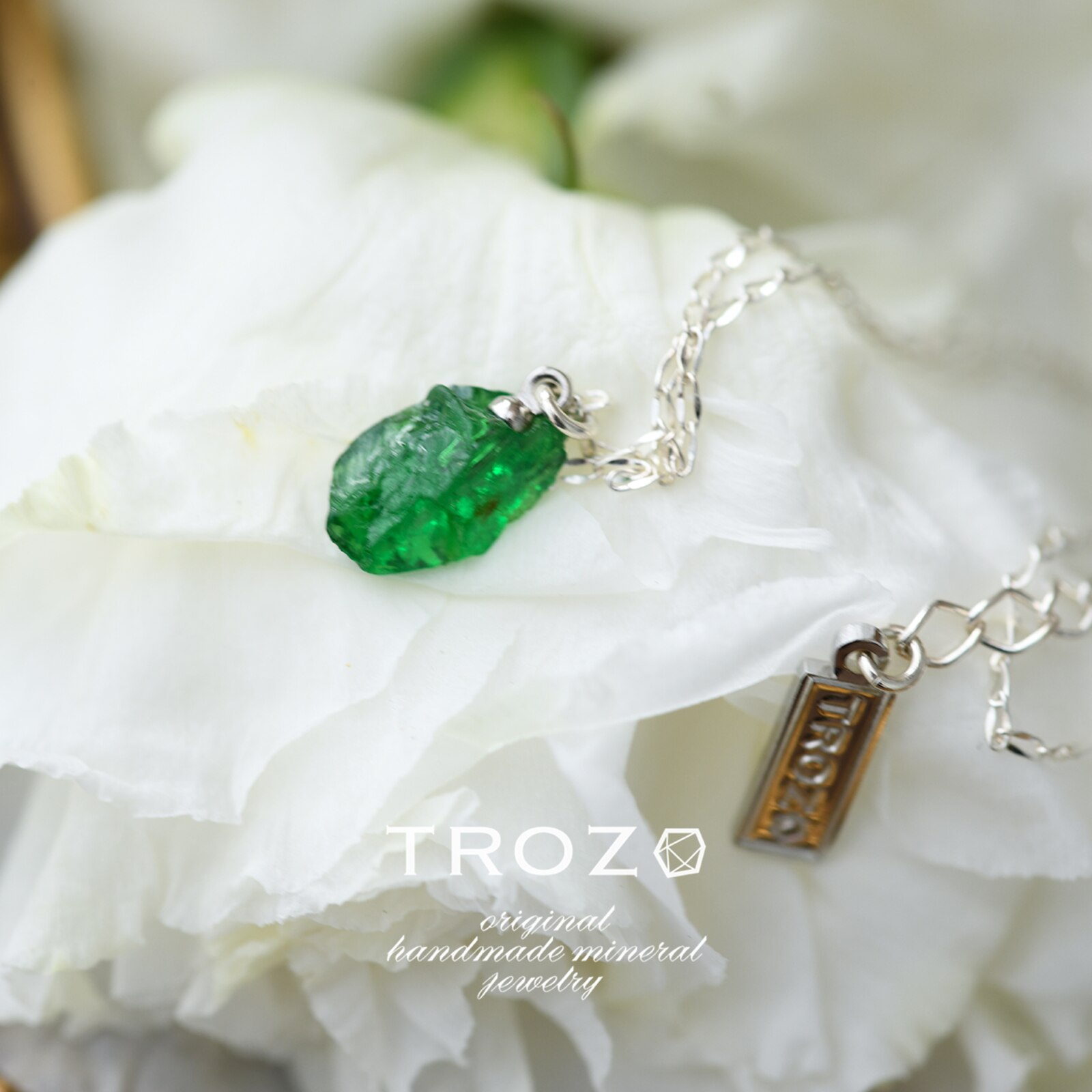
Garnet is not a single mineral but the name for a family of more than a dozen. Which elements sit at X and Y in the general formula X₃Y₂(SiO₄)₃ changes both color and properties: deep-red almandine (iron + aluminium), red pyrope (magnesium + aluminium), orange spessartine (manganese + aluminium), green-to-yellow grossular (calcium + aluminium), vivid-green demantoid (an andradite, calcium + iron) and purple-red rhodolite (between almandine and pyrope). A whole world of color lives within the single name “garnet”.
◆ 5,000 years of history — the stone that lit Noah’s Ark
From the Old Testament to the tombs of Egyptian kings.
Garnet is one of humankind’s oldest jewelry minerals, loved for over 5,000 years. It appears in the Old Testament as the stone lighting the way of Noah’s Ark, and garnet has been found in the burial goods of ancient Egyptian kings. In ancient Rome red garnet was used for signet stones, and in medieval Europe it was worn as a warrior’s charm and a stone to stanch bleeding. The name comes from the Latin *granatum* (pomegranate), for the way the color and clustering of the crystals recall pomegranate seeds — a name of long lineage.
◆ Choosing raw garnet jewelry
Choose by color, species and the beauty of the natural form.
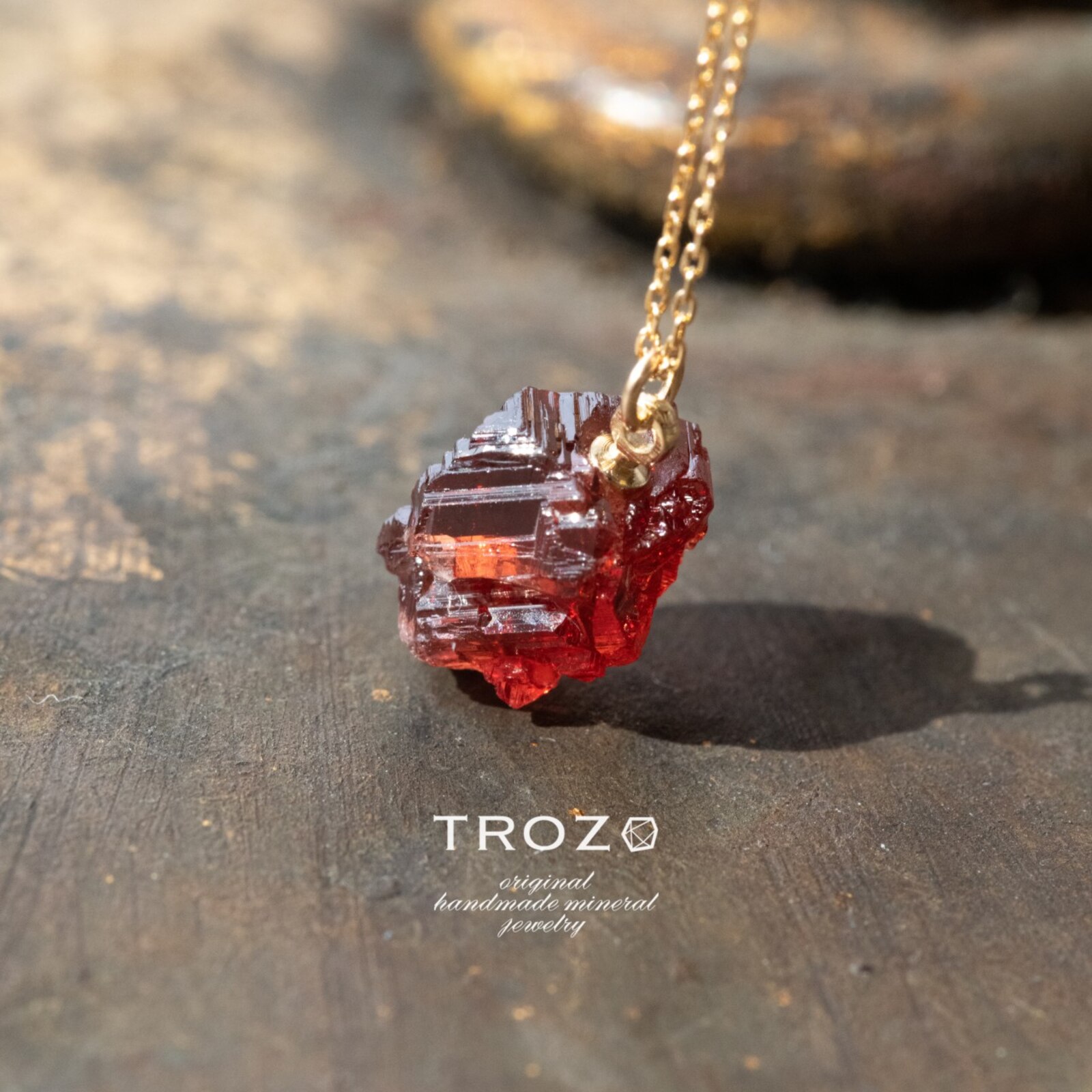
At Mohs 6.5–7.5 garnet is hard, with ample strength for everyday wear and well suited to raw-stone jewelry. Its great appeal is the well-formed natural crystal — rhombic dodecahedra and trapezohedra that grow without any cutting. The colors span deep red, red, orange and green by species, each with the character of its source, and you can enjoy everything from highly clear stones to slightly cloudy ones that keep the crystal’s expression.
TROZO sets garnet without polishing away its character, letting the natural color and the beauty of the natural form lead the design. We offer pieces for those who would like to choose color, species and size from stock, as well as pieces where the meeting with the stone is left to chance — a stone to keep for years, as a gift for those born in January or a charm for new beginnings.
◆ Garnet Raw-Stone Jewelry
Handmade raw stone & mineral pieces — TROZO
◆ Frequently Asked Questions about Garnet
Q What does garnet symbolize?
Garnet is traditionally associated with fruition, truth, friendship, fidelity, vitality, passion, victory and devotion. Loved for over 5,000 years as a “stone that brings fruition” and a symbol of friendship, it is January’s birthstone and the gift for an 18th wedding anniversary.
Q What types of garnet are there?
Garnet is the name for a family of more than a dozen species. The main ones are deep-red almandine (iron + aluminium), red pyrope (magnesium + aluminium), orange spessartine (manganese + aluminium), green-to-yellow grossular (calcium + aluminium), vivid-green demantoid (an andradite) and purple-red rhodolite — each with its own composition and color, a rich spectrum within one name.
Q How hard is garnet?
Its Mohs hardness ranges 6.5–7.5 by species — about 7–7.5 for almandine and pyrope and 6.5–7.5 for grossular. All are hard among natural stones, with ample strength for everyday jewelry.
Q Why is it called “garnet”?
The name comes from the Latin *granatum* (pomegranate), for the way the deep-red color and clustering of the crystals recall pomegranate seeds. It is one of the oldest jewelry minerals, and the pomegranate likeness runs through its names in many languages.
Q What kinds of jewelry can garnet become?
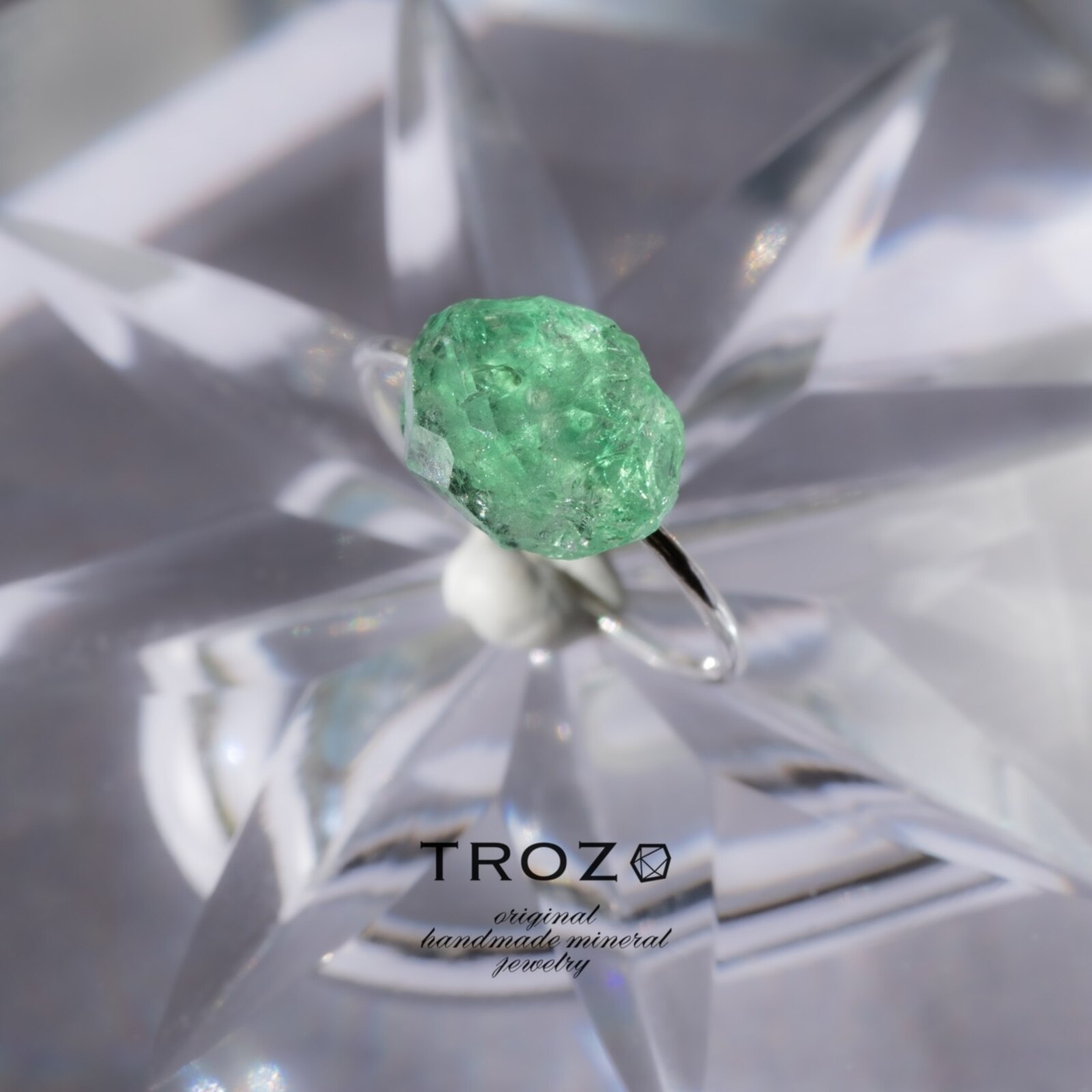
As natural-stone jewelry, garnet is used for raw-stone earrings, necklaces, rings, brooches and ear cuffs. TROZO makes garnet jewelry that keeps the raw stone unpolished so its color and the beauty of its natural form (rhombic dodecahedra and trapezohedra) lead the design — both pieces you can choose by color, species and size from stock, and pieces where the meeting with the stone is left to chance.
Q Where does garnet come from?
It is found across the world — India, Madagascar, Mozambique, Tanzania, Kenya, Sri Lanka, Nigeria, Namibia, Mali and Russia. The main source varies by species: pyrope from Czechia and South Africa, demantoid from Russia and Namibia, spessartine from Namibia and Nigeria, rhodolite from India and Sri Lanka.
Q Can I wear it even if I wasn’t born in January?
Of course. Birthstones are a modern custom assigning a meaning to each month, with no traditional or religious obligation. Garnet carries universal associations — fruition, truth, friendship, vitality — so anyone can wear it, born in January or not, as a symbol of new beginnings or of a bond with someone dear.
EXPLORE THE SHOP
Explore the world of Garnet
Discover more pieces than we can show here at the TROZO shop.
Shop Garnet