
Pyrite
A perfect cube nature makes — a raw mineral whose name means “fire”.
Pyrite (fool’s gold) is a sulfide mineral, FeS₂, isometric (cubic), Mohs 6–6.5. Its great distinction is that nature grows it into perfect cubes — geometric raw stones that look as if machined, the natural cubes of Navajún, Spain being especially prized by collectors. With a brassy metallic luster, it earned the name “fool’s gold” and was mistaken for gold time and again in the gold-rush age. The name “Pyrite” is from the Greek *pyr* (fire), for the sparks it strikes — used since antiquity as a fire-starter and later in crystal-radio detectors.
◆ Pyrite — Stone Meanings
- Integrity
- Growth
- Good fortune
- Dignity
- Decisiveness
- Confidence
- Victory
- Guardianship
◆ About Pyrite
Pyrite (fool’s gold) is a sulfide mineral, FeS₂ (iron disulfide). It is isometric (cubic), Mohs 6–6.5, SG 4.95–5.10, with a greenish-black streak and a brassy-to-pale-yellow metallic luster. Its Japanese name, “yellow iron ore”, reflects its color and makeup, and the English “Pyrite” is from the Greek *pyr* (fire) — a name the ancients gave it for the way it strikes sparks when struck with a hammer, marking the bond of fire and humankind.
Pyrite’s greatest appeal is the geometrically perfect crystal form nature makes. The classic is the perfect cube, and the natural cubes of Navajún, Spain in particular are first-class pieces prized as exceptional by collectors the world over. It also forms the octahedron and the pyritohedron (twelve pentagonal faces), polyhedra rare in nature, with a look as if machined. The brilliance of its natural crystal faces is what makes pyrite shine when set as jewelry.
Pyrite’s brassy color has been mistaken for gold time and again, earning the English byname “fool’s gold”. But gold and pyrite are quite different in hardness, specific gravity and streak — gold is soft (Mohs 2.5–3), heavy (SG 19) and gold-streaked, while pyrite is hard and lighter (Mohs 6–6.5, SG 5) and greenish-black-streaked. Historically it was used since antiquity as a fire-starter (striker), and in modern times its semiconducting property put it into crystal-radio detectors — a mineral bound to humankind in both industry and ornament.
Pyrite’s main sources are Peru (the Huanzala mine in Huánuco, the Racracancha mine in Pasco), Spain (Navajún, the world-famed source of perfect cubes), and further the USA, Italy, Norway, Greece, Slovakia and Japan. At Mohs 6–6.5 it is fairly hard, but as a sulfide its surface can oxidize and lose luster in humid conditions. Storing it somewhere with little humidity and wiping it dry after wear is the basis for keeping the brilliance of the raw stone.
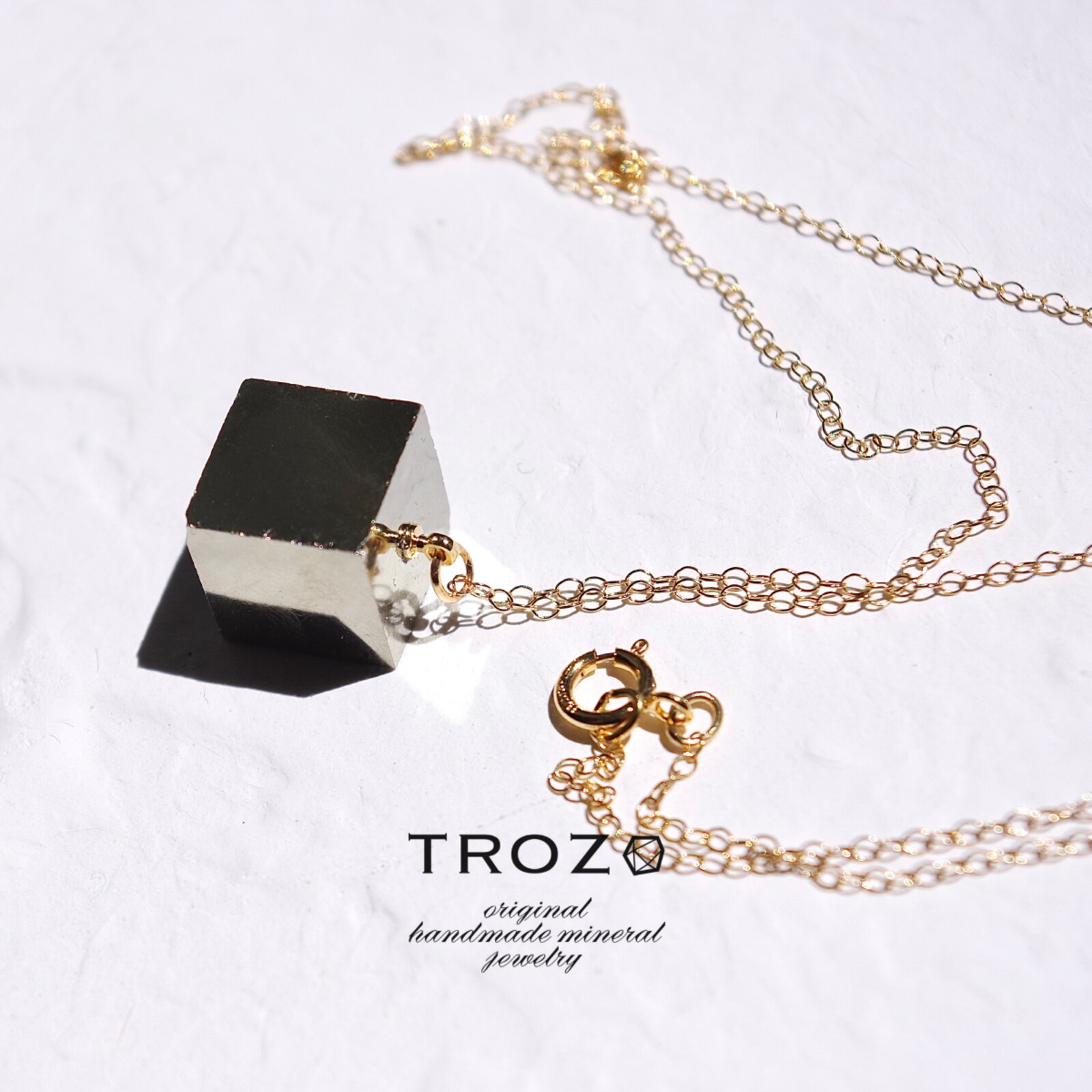
◆ Mineral Data
- English name
- Pyrite (from the Greek *pyr*, fire) / fool’s gold
- Chemical formula
- FeS₂ (iron disulfide)
- Mineral class
- Sulfide mineral (pyrite group) — kin to cobaltite, ullmannite and others
- Crystal system
- Isometric (cubic) — perfect cubes, octahedra, pyritohedra
- Mohs hardness
- 6 – 6.5
- Specific gravity
- 4.95 – 5.10
- Main sources
- Peru (the Huanzala mine, Huánuco; the Racracancha mine, Pasco), Spain (Navajún — the world-famed source of perfect cubes), USA, Italy, Norway, Greece, Slovakia, Japan
- Color range
- Brassy to pale-yellow metallic luster; greenish-black streak
- Notable trait
- Perfect cubes nature makes (Navajún, Spain the most prized). Strikes sparks when struck — used since antiquity as a fire-starter, and later in crystal-radio detectors. The history of being mistaken for gold as “fool’s gold”. As a sulfide, watch for oxidation (surface luster dulls in humid conditions)
- Birthstone
- Not a designated birthstone, but enduringly popular with mineral collectors and in the healing-stone community
◆ A perfect cube — a geometry nature makes
A natural raw stone of the cubic system, as if machined.
Pyrite’s greatest appeal is the geometrically perfect crystal form nature makes. As a mineral of the isometric (cubic) system, pyrite forms the perfect cube, the octahedron and the pyritohedron (twelve pentagonal faces), polyhedra rare in nature. The perfect cubes of Navajún, Spain in particular have straight edges and a mirror luster as if carved, first-class pieces prized as exceptional by collectors the world over. Each crystal shows a form “too well-formed to be a raw stone” — among the natural stones most in harmony with what raw-mineral jewelry seeks.
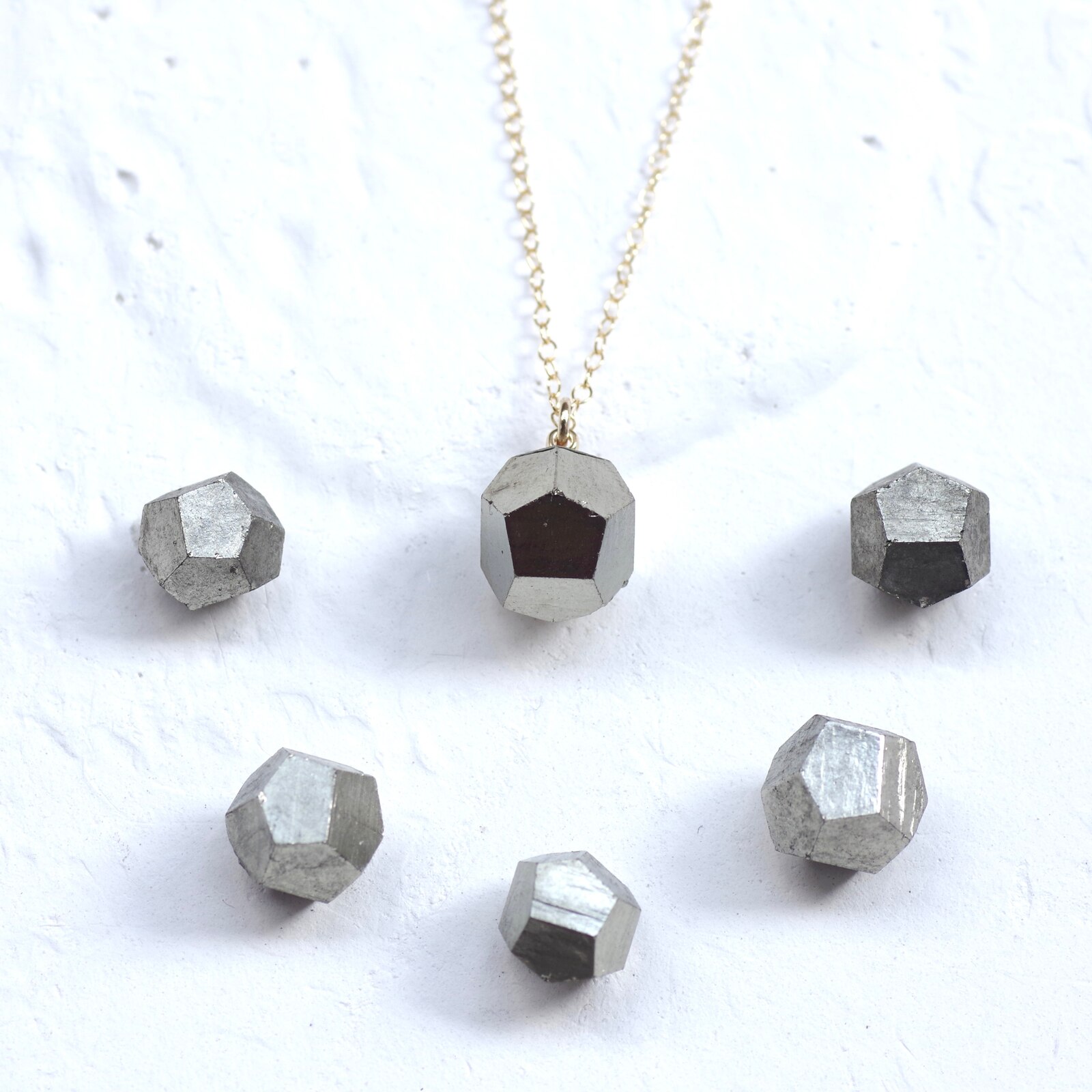
◆ The root “fire” and fool’s gold — naming and history
Strike it for sparks; polish it for a glint mistaken for gold.
The name pyrite comes from the **Greek *pyr* (fire). The ancients gave it for the way the mineral strikes sparks when struck with a hammer, and pyrite was indeed used across the world since antiquity as a fire-starter (striker). Its brassy metallic luster, so like gold, earned it the English byname “fool’s gold”, and in the gold-rush age it tricked many a prospector into asking “is this gold?” (in fact it is easily told apart by hardness, specific gravity and streak). In modern times its semiconducting property put it into the detector of the crystal radio** — a mineral bound to humankind in industry and ornament, science and mystery alike.
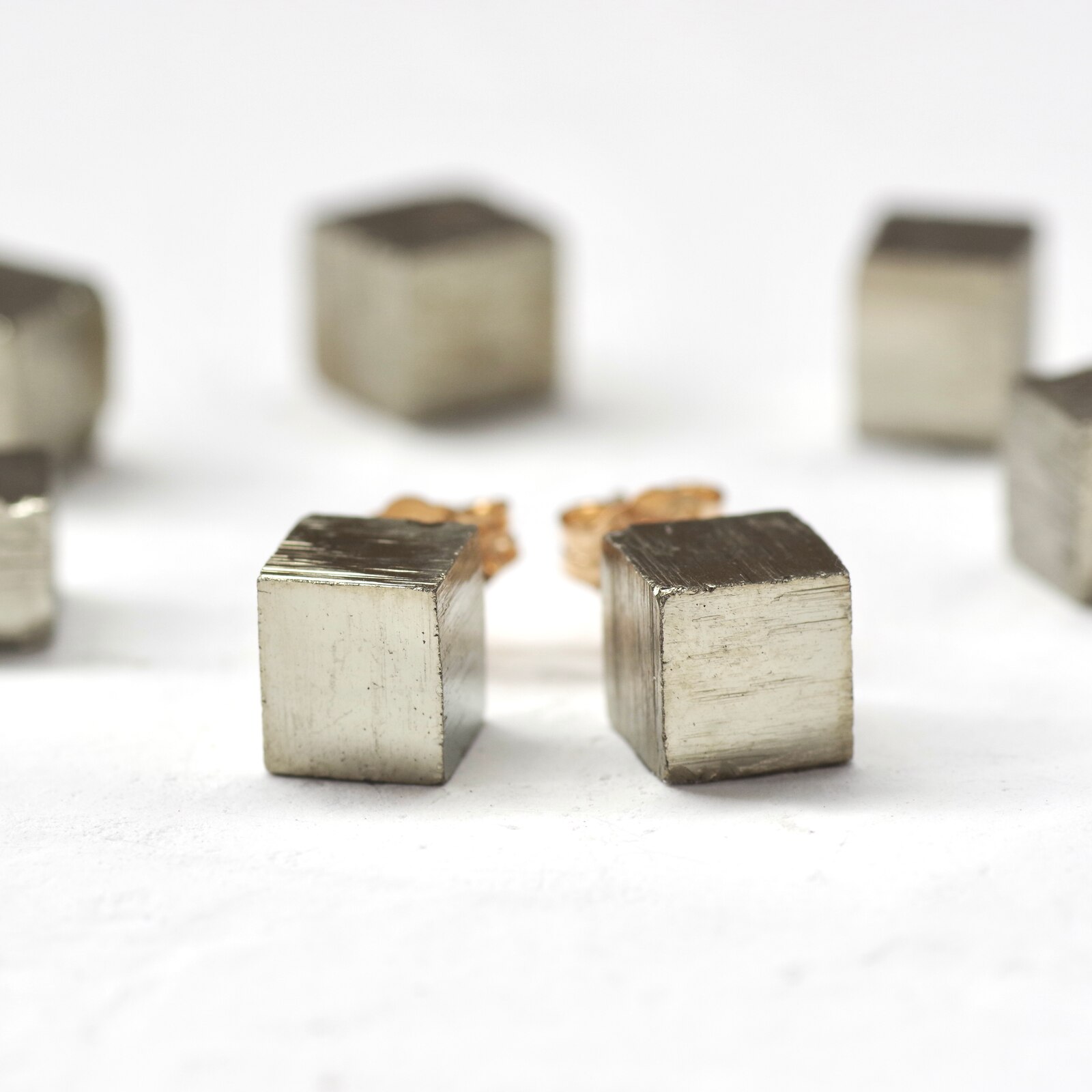
◆ Choosing raw pyrite jewelry
Choose knowing the crystal form, the source and how to keep its luster.
The pleasure of choosing raw pyrite jewelry is that its character parts greatly by crystal form and source. Beyond the exceptional perfect cubes of Navajún, Spain, there are the massive and spherical concretions of Peru, the octahedra of Elba in Italy, and the pyritohedra of the USA — the crystal’s look clearly differing by source. The common thread is a brassy-to-pale-yellow metallic luster, and jewelry that keeps the natural crystal faces gives off “the brilliance of the mineral itself”, unlike a polished stone.
TROZO sets pyrite without polishing away its character, letting the natural crystal form and metallic luster lead the design. As a sulfide, its surface can oxidize and lose luster in humid conditions, so storing it somewhere with little humidity and wiping it dry after wear is the secret to keeping it beautiful. Wear the geometric crystal beauty of raw stone, in the natural-stone jewelry TROZO makes.
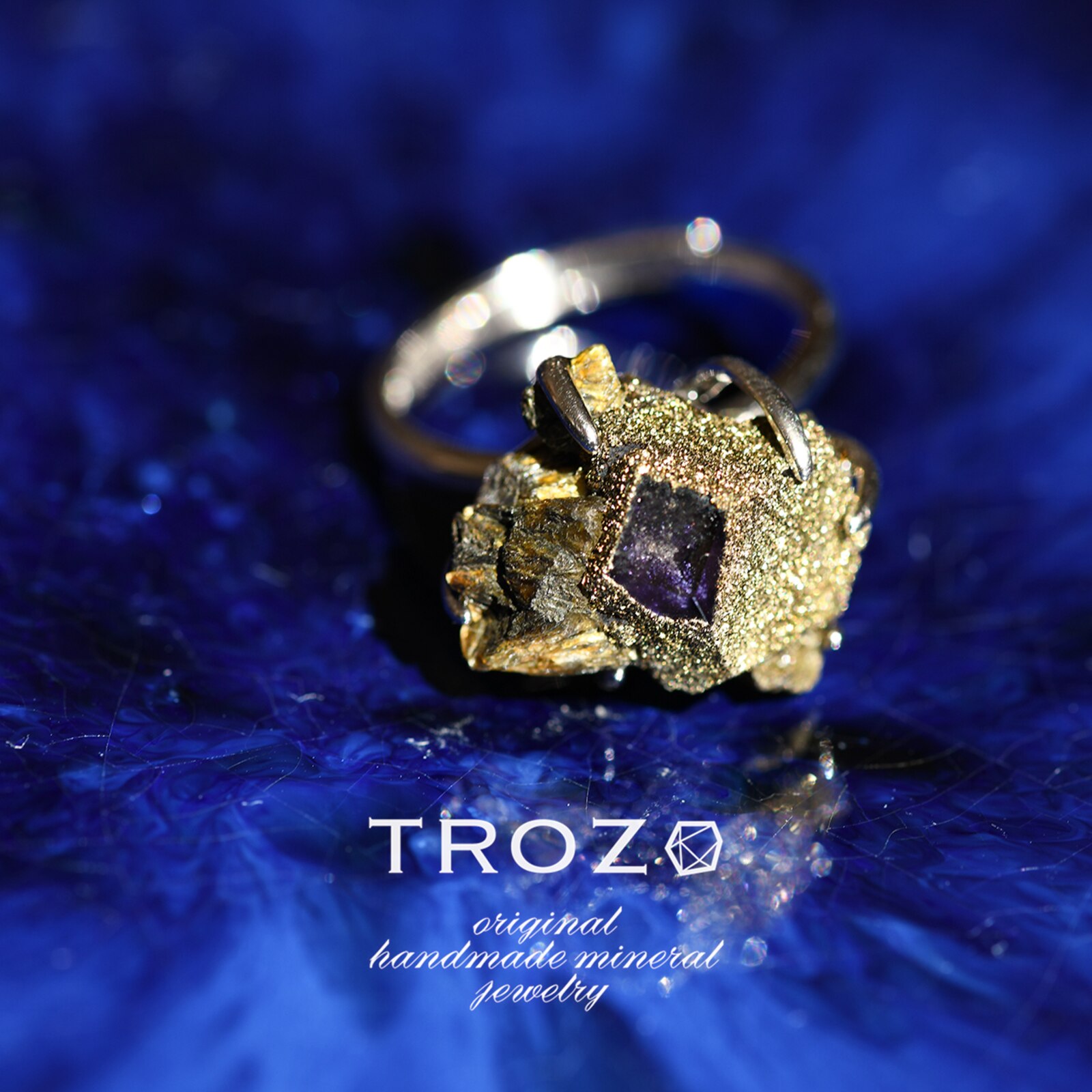
◆ Pyrite Raw-Stone Jewelry
Handmade raw stone & mineral pieces — TROZO
◆ Frequently Asked Questions about Pyrite
Q What does pyrite symbolize?
Pyrite (yellow iron ore) is traditionally associated with integrity, growth, good fortune, dignity, decisiveness, confidence, victory and guardianship. From its brassy, gold-like glint and its history with humankind in fire-starters and crystal radios, it is cherished as a symbol of decisiveness, confidence and guardianship.
Q What month’s birthstone is pyrite?
Pyrite has no birthstone designation. But it is a natural stone with a strong following among mineral collectors and in the crystal world, and its natural perfect cubes in particular are prized worldwide. It is chosen as non-birthstone mineral jewelry by those who seek crystal beauty or are looking for raw-mineral jewelry.
Q Why is pyrite called “fool’s gold”?
Its brassy-to-pale-yellow metallic luster is so like gold that it earned the English name “fool’s gold”. In the gold-rush age, prospectors mistook pyrite for gold time and again. In fact it is easily told apart: gold is Mohs 2.5–3 (soft), SG 19 (heavy), gold-streaked, while pyrite is Mohs 6–6.5 (hard), SG 5 (lighter), greenish-black-streaked.
Q Why are pyrite crystals cubic?
Pyrite is a mineral of the isometric (cubic) system, and the symmetry of its crystal axes naturally forms polyhedra such as the perfect cube, the octahedron and the pyritohedron (twelve pentagonal faces). The natural perfect cubes of Navajún, Spain in particular have straight edges and a mirror luster as if carved, first-class pieces prized as exceptional by collectors the world over.
Q What is the link between pyrite and fire-starting?
The name pyrite is from the Greek pyr (fire), given for the way it strikes sparks when struck with a hammer or with iron. It was indeed used across the world since antiquity as a fire-starter (striker). In modern times its semiconducting property also put it into the detector of the crystal radio — a mineral bound to humankind in both science and ornament.
Q How hard is pyrite, and what care does it need?
Its Mohs hardness is 6–6.5, fairly hard among natural stones, but as a sulfide its surface can oxidize and lose luster in humid conditions. Store it separately somewhere with little humidity and wipe it dry with a soft cloth after wear to keep it beautiful longer; it is safest to keep it from sweat, moisture and direct sun.
Q Where does pyrite come from?
Peru (the Huanzala mine in Huánuco, the Racracancha mine in Pasco) is famous as a world source, and Spain (Navajún) is the source of natural perfect cubes. It is also found in the USA, Italy (Elba), Norway, Greece, Slovakia and Japan. The crystal form (cube / octahedron / pyritohedron / massive) varies by source.
EXPLORE THE SHOP
Explore the world of Pyrite
Discover more pieces than we can show here at the TROZO shop.
Shop Pyrite