
Topaz
The sunlight of imperial topaz. November’s birthstone, a stone of many colors.
Topaz is an aluminium silicate containing fluorine and hydroxyl, Al₂SiO₄(F,OH)₂ — orthorhombic, Mohs 8, approaching diamond in hardness. Its name traces to the Greek *topazos* (“to seek”), and in ancient Egypt it was prized as an incarnation of the sun god Ra. From the finest orange “imperial topaz” to blue, pink and colorless, it comes in many colors — November’s birthstone.
Topaz is the November birthstone. See all November birthstones →
◆ Topaz — Stone Meanings
- Friendship
- Hope
- Sincerity
- Integrity
- Intellect
- Growth of ability
- Prosperity
- Victory
◆ About Topaz
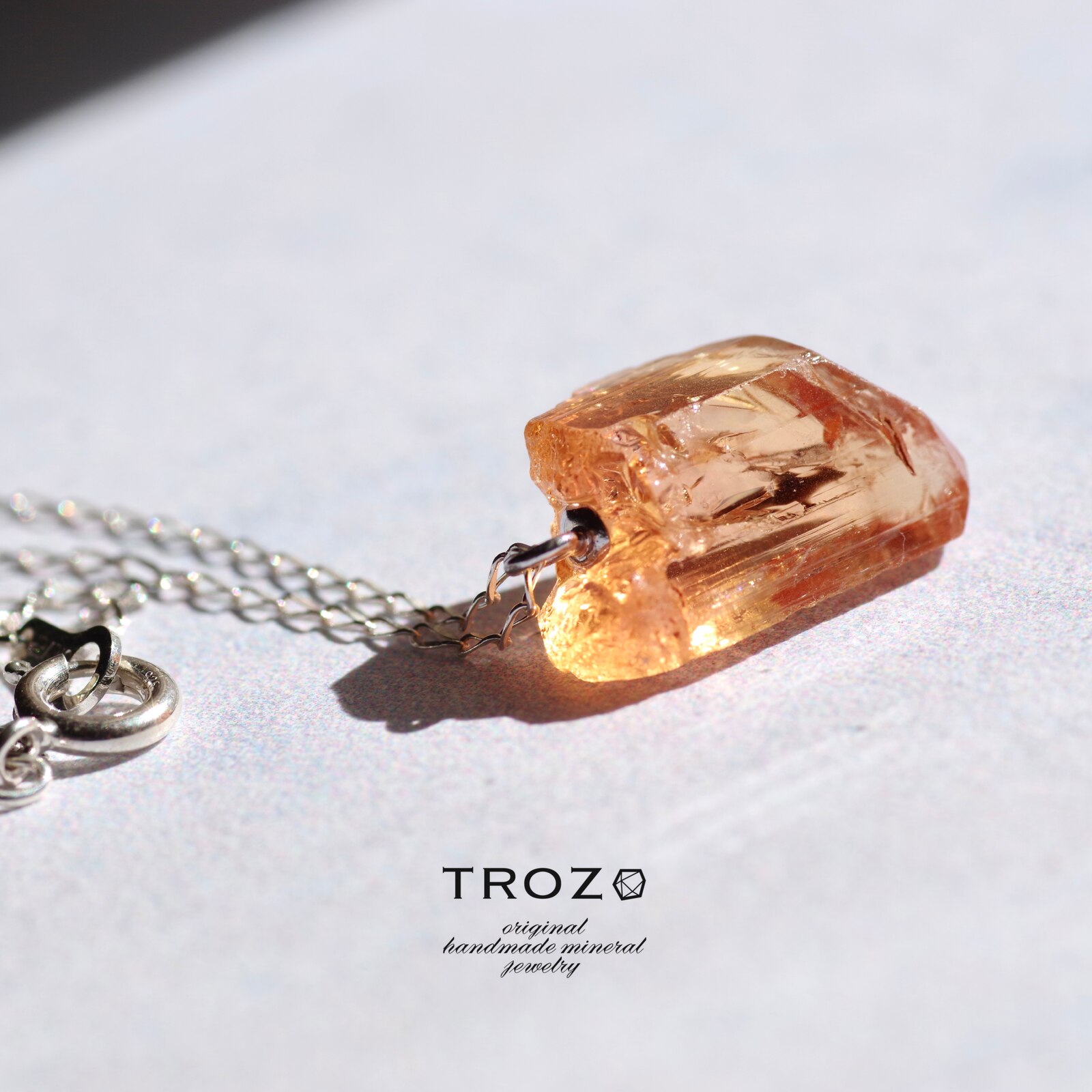
Topaz is an aluminium silicate containing fluorine and hydroxyl. Its formula is Al₂SiO₄(F,OH)₂, and it divides into two kinds — an “F-type” (Al₂SiO₄F₂) with fluorine as the main component and an “OH-type” (Al₂SiO₄(OH)₂) with hydroxyl — a slightly special mineral. It is orthorhombic and Mohs 8, hard enough to follow diamond and corundum.
The origin of the name “Topaz” is debated — the Greek *topazos* (“to seek”), the Sanskrit *tapas* (“fire”), or the island of Topazios in the Red Sea. In ancient Egypt a beautiful orange topaz was held an incarnation of the sun god Ra and treasured as a sacred symbol.
Topaz’s finest quality is the orange-red “imperial topaz” — an OH-type crystal from Ouro Preto, Brazil. Resistant to fading even under long light exposure, it stands apart and trades at high prices; a deeper orange-red of the same line is called “sherry topaz”. The widely traded “blue topaz” (sky / Swiss / London blue), by contrast, is mostly colorless topaz turned blue by irradiation and heat, and most pink topaz is colored by coating or heat treatment.
Its associations include friendship, hope, sincerity and the growth of one’s abilities. It is November’s birthstone and the gift for a 16th wedding anniversary. Topaz’s great appeal is how many colors gather in a single mineral — a raw stone rich in the pleasure of choosing.
◆ Mineral Data
- English name
- Topaz
- Chemical formula
- Al₂SiO₄(F,OH)₂ — an F-type Al₂SiO₄F₂ and an OH-type Al₂SiO₄(OH)₂
- Mineral class
- Nesosilicate mineral
- Crystal system
- Orthorhombic
- Mohs hardness
- 8 (among the hardest natural stones, after diamond)
- Specific gravity
- F-type 3.56 / OH-type 3.53
- Main sources
- Brazil (Ouro Preto — main source of imperial topaz), USA (Utah), Russia, Afghanistan, Sri Lanka, Czechia, Nigeria, Pakistan, Germany, Norway, Mexico, Australia, Japan (Mt. Tanakami in Shiga and others)
- Color range
- Orange (imperial, sherry), blue (sky / Swiss / London), pink, yellow, colorless (silver topaz), red (rare)
- Notable trait
- OH-type crystals are the finest “imperial topaz”, resistant to fading; most blue and pink topaz on the market is heat-, irradiation- or coating-treated; has perfect cleavage and breaks readily along a crystal axis
- Birthstone
- November (16th wedding anniversary)
◆ F-type and OH-type — why there are two kinds of topaz
Fluorine or hydroxyl — it changes both properties and color.
Topaz’s formula Al₂SiO₄(F,OH)₂ comes in two kinds: an “F-type” (Al₂SiO₄F₂) with fluorine as the main component and an “OH-type” (Al₂SiO₄(OH)₂) with hydroxyl. Even the specific gravity differs slightly — 3.56 for F-type, 3.53 for OH-type. The key point is that OH-type crystals resist fading even under long light exposure. The orange-red OH-type from Ouro Preto, Brazil is called “imperial topaz” and stands apart as the finest quality. F-type crystals fade more easily, so keeping them out of direct sun is the rule. Both are Mohs 8 and hard, but topaz has perfect cleavage and so breaks readily along a crystal axis.
◆ From the sun god Ra to November’s birthstone — a story of many colors
From ancient Egypt to blue topaz.
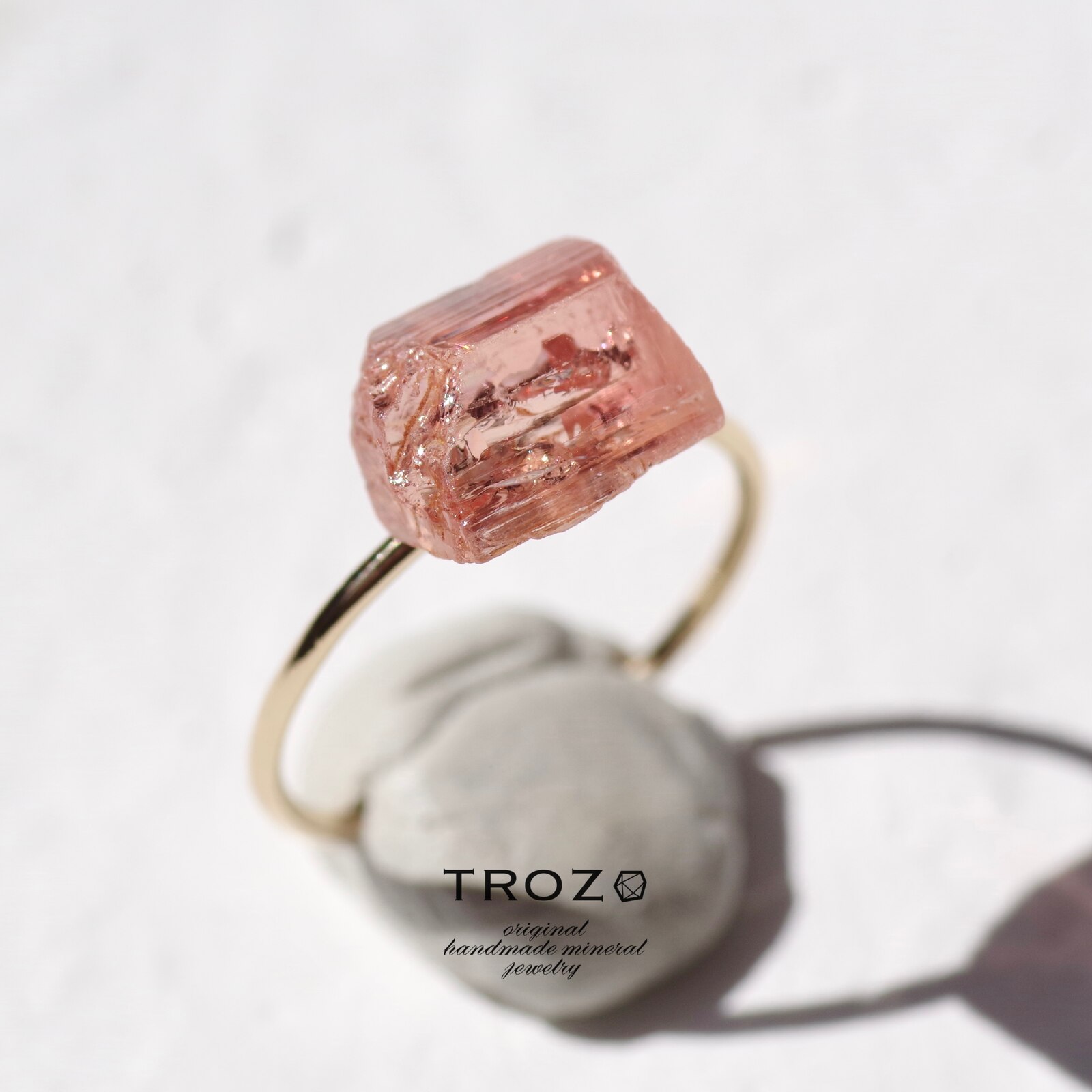
The name Topaz is variously traced to the Greek *topazos* (“to seek”), the Sanskrit *tapas* (“fire”) and the island of Topazios in the Red Sea — each from an ancient story. In ancient Egypt a beautiful orange topaz was held sacred as an incarnation of the sun god Ra. Modern topaz comes in many colors: the finest OH-type Brazilian “imperial topaz” (orange-red), the deeper “sherry topaz”, the three blues (sky, Swiss, London), pink topaz, yellow, colorless (silver topaz) and the rare red topaz. Most of the blues and pinks are colorless topaz colored by heat, irradiation or coating (a long-standing custom that does not diminish value).
◆ Choosing raw topaz jewelry — enjoying the range of color
Choose by color, type and source.
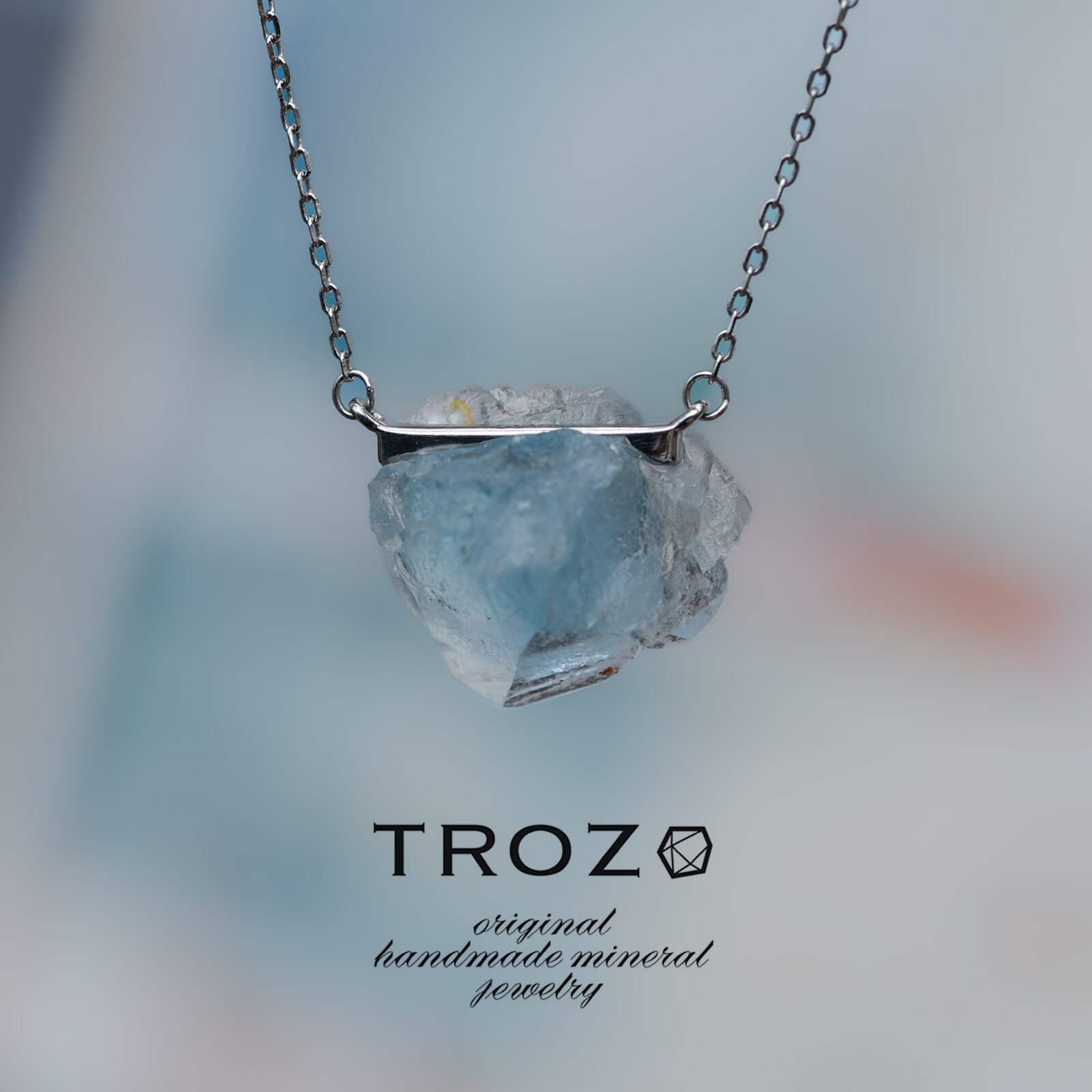
At Mohs 8 topaz follows diamond and corundum in hardness, with ample strength for everyday wear — though, with its perfect cleavage, it needs care against a hard blow along the crystal axis. The character of a raw stone turns on its color (orange / blue / pink / colorless), its clarity, the natural form (the sharp orthorhombic prism) and the size. For the finest, look to OH-type “imperial topaz” (Brazil); for freshness, “blue topaz”; for charm, “pink topaz” — a richness of choice to suit the occasion and your taste.
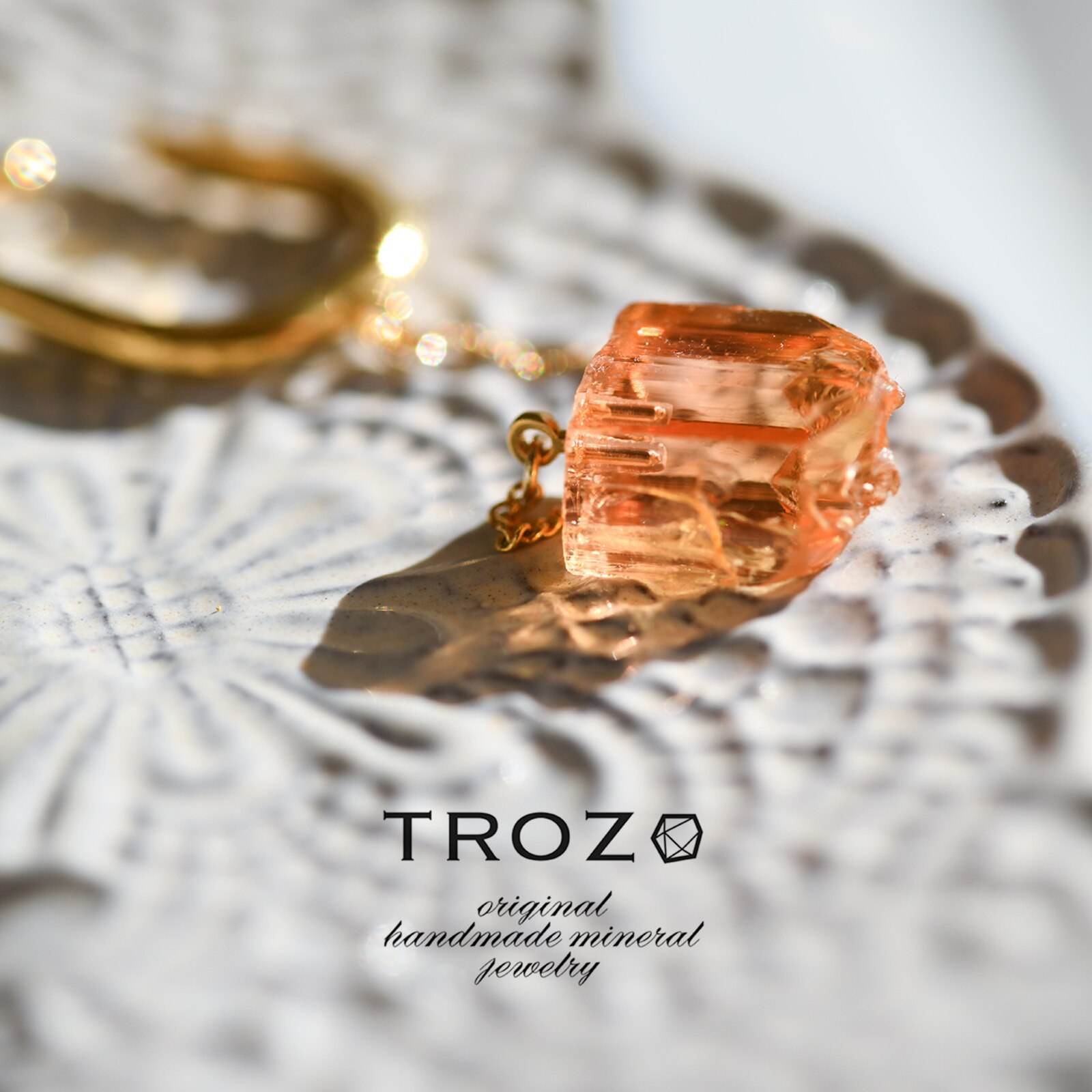
TROZO sets topaz without polishing away its character, letting the natural color and clarity lead the design. We offer pieces for those who would like to choose color, size and type from stock, as well as pieces where the meeting with the stone is left to chance. Because F-type material fades more easily, keeping it out of long spells of direct sun preserves its beauty longer.
◆ Topaz Raw-Stone Jewelry
Handmade raw stone & mineral pieces — TROZO
◆ Frequently Asked Questions about Topaz
Q What does topaz symbolize?
Topaz is traditionally associated with friendship, hope, sincerity, integrity, intellect, the growth of one’s abilities, prosperity and victory. Loved in ancient Egypt as an incarnation of the sun god Ra, it is November’s birthstone and the gift for a 16th wedding anniversary.
Q What is the difference between F-type and OH-type?
Topaz’s formula Al₂SiO₄(F,OH)₂ comes in an F-type (fluorine main, SG 3.56) and an OH-type (hydroxyl main, SG 3.53). The key difference is fading: OH-type resists fading even under long light exposure, and the orange-red OH-type from Ouro Preto, Brazil is the finest quality, called “imperial topaz”. F-type fades more easily and should be kept out of direct sun.
Q What is imperial topaz?
It is an OH-type crystal, the orange-red topaz from Ouro Preto, Brazil. Resistant to fading even under long light exposure, it stands apart as topaz’s finest quality and trades at high prices. “Sherry topaz” (a deeper orange-red) is a near relative.
Q Is blue topaz natural in color?
Most blue topaz on the market (sky, Swiss and London blue) is colorless topaz turned blue by irradiation and heat. Natural-color blue topaz exists but is extremely rare and seldom seen on the market. The treatment is a long-standing custom and does not diminish value.
Q How hard is topaz?
Its Mohs hardness is 8, following diamond (10) and corundum (9) among natural minerals. It has ample strength for everyday jewelry, but topaz has a “perfect cleavage” and breaks readily along a crystal axis, so take care with hard blows.
Q Where does topaz come from?
It is found across the world — Brazil (especially Ouro Preto, the main source of imperial topaz), the USA (Utah, the state gem), Russia, Afghanistan, Sri Lanka, Czechia, Nigeria, Pakistan, Germany, Norway, Mexico and Australia. In Japan it was once found at Mt. Tanakami in Shiga, among other places.
Q What kinds of jewelry can topaz become?
As natural-stone jewelry, topaz is used for raw-stone earrings, necklaces, rings, brooches and ear cuffs. TROZO makes topaz jewelry that keeps the raw stone unpolished so its color and clarity lead the design — both pieces you can choose by color and size from stock, and pieces where the meeting with the stone is left to chance.
EXPLORE THE SHOP
Explore the world of Topaz
Discover more pieces than we can show here at the TROZO shop.
Shop Topaz