
Citrine
The sun stone, the merchant’s stone. November’s birthstone, a stone that calls prosperity.
Citrine is the golden variety of quartz (SiO₂, trigonal, Mohs 7). Its yellow comes from trace iron and natural radiation; natural citrine is very scarce, and most on the market is amethyst or smoky quartz turned golden by heat. Loved since ancient Greece as a “stone that holds the sun’s energy” and in medieval Europe as the “merchant’s stone”, it is cherished as November’s birthstone and a symbol of prosperity.
Citrine is the November birthstone. See all November birthstones →
◆ Citrine — Stone Meanings
- Friendship
- Hope
- Prosperity
- Success
- Wealth
- Happiness
- Sociability
- Confidence
◆ About Citrine
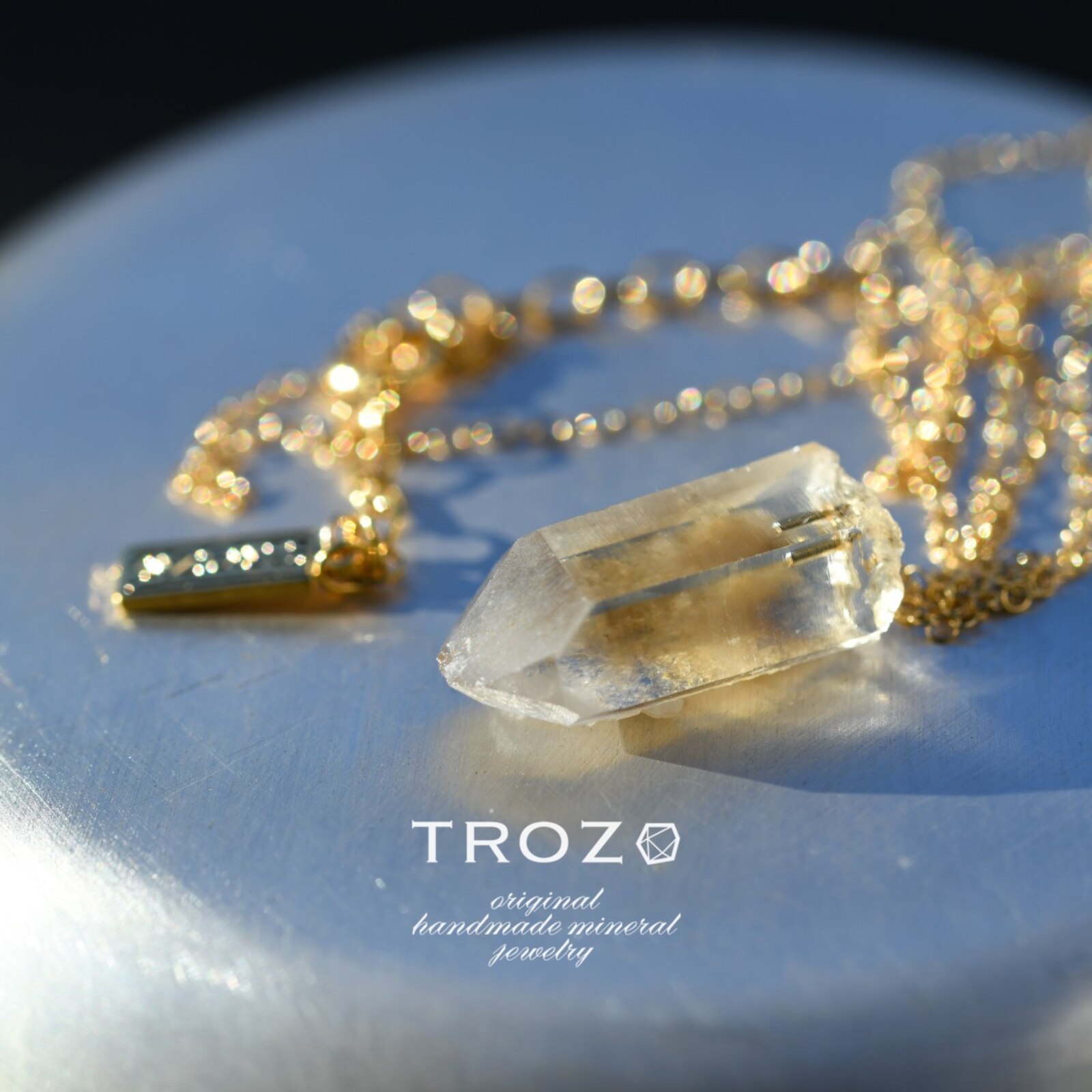
Citrine is the golden-yellow variety of quartz. Its formula is SiO₂ (silicon dioxide) and, like quartz, it is a Mohs 7 mineral of the trigonal system. The yellow comes from trace iron (Fe³⁺) and natural radiation acting together — a color center, the same mechanism that gives amethyst its purple.
Natural citrine is very scarce, and most on the market is amethyst or smoky quartz heated to around 500 °C to turn it golden. This is a long-standing custom that does not diminish value, and the heated material has its own beautiful golden glow. Ametrine — amethyst and citrine within a single crystal (famously from the Anahí mine in Bolivia) — is another fascinating member of the quartz family.
The name “Citrine” comes from the French *citron* (lemon), for its likeness to the yellow of that Indian-origin citrus. Its history reaches back to ancient Greece, where it served as an ornament. In medieval Europe it was a charm to ward off gloom and negativity as a “stone that holds the sun’s energy”, and among merchants it became the “merchant’s stone”, a charm for prosperity in trade — beloved to this day.
Its associations include friendship, hope, prosperity, success, wealth and confidence. November’s birthstone (alongside topaz) and a symbol of prosperity and good fortune, citrine is a sun-colored raw stone all its own.
◆ Mineral Data
- English name
- Citrine
- Chemical formula
- SiO₂ (silicon dioxide — the golden variety of quartz)
- Mineral class
- Silicate mineral, quartz family
- Crystal system
- Trigonal
- Mohs hardness
- 7
- Specific gravity
- 2.6 – 2.65
- Main sources
- Brazil (Rio Grande do Sul — main source of natural citrine), Madagascar, Russia, USA, Spain, Bolivia (ametrine, Anahí mine)
- Color range
- Pale yellow to deep golden, sherry (toward orange); ametrine (citrine + amethyst combined)
- Notable trait
- Natural citrine is rare; most market material is amethyst or smoky quartz heated to about 500 °C. The “sun stone” and “merchant’s stone”, a symbol of prosperity since antiquity
- Birthstone
- November (alongside topaz)
◆ Natural vs heat-treated — citrine and the iron ion
Natural is rare; most on the market is heat-treated amethyst.
Citrine’s yellow comes from trace iron (Fe³⁺) within the crystal acting with natural radiation — the same color-center mechanism that gives amethyst its purple, the same iron but a different kind of color center. Natural citrine is very scarce, and most on the market is amethyst or smoky quartz heated to around 500 °C to turn it golden (a long-standing custom). Ametrine — amethyst and citrine within a single crystal — also exists, known since the 1970s as a rare variety found only at the Anahí mine in Bolivia.
◆ The sun stone, the merchant’s stone — from ancient Greece to a trader’s charm
Citrine’s story of prosperity.
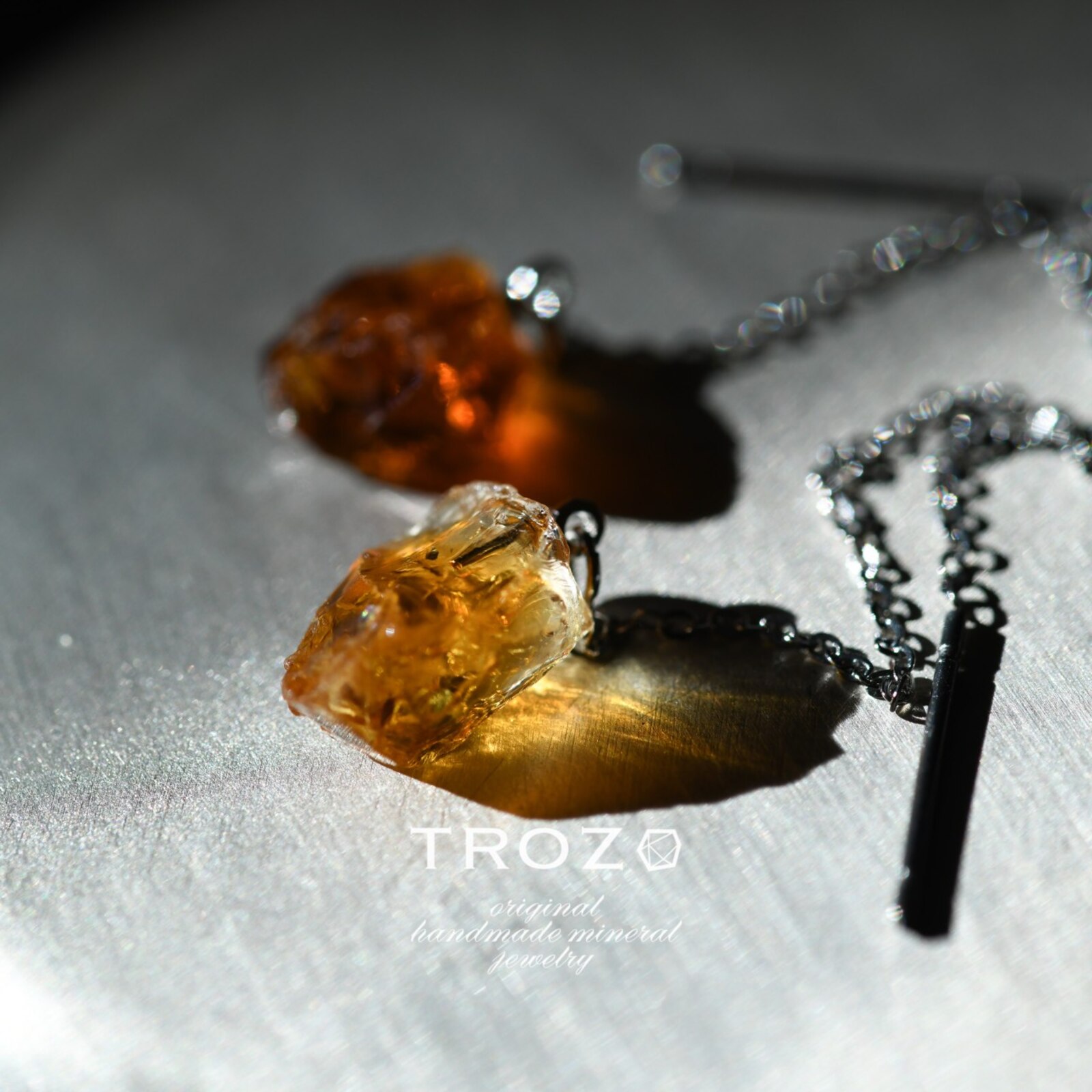
The name “Citrine” comes from the French *citron* (lemon) — a bright sun-colored stone named for its likeness to the yellow of the Indian-origin citrus. Its history reaches back to ancient Greece, where it served as an ornament. In medieval Europe it was a charm to ward off gloom and negative feeling as a “stone that holds the sun’s energy”, and among merchants it became the “merchant’s stone”, believed to draw wealth, prosperity and success. Within its bright golden glow lives the long human story of a “symbol of the sun and prosperity”.
◆ Choosing raw citrine jewelry
Choose by depth of yellow, source and clarity.
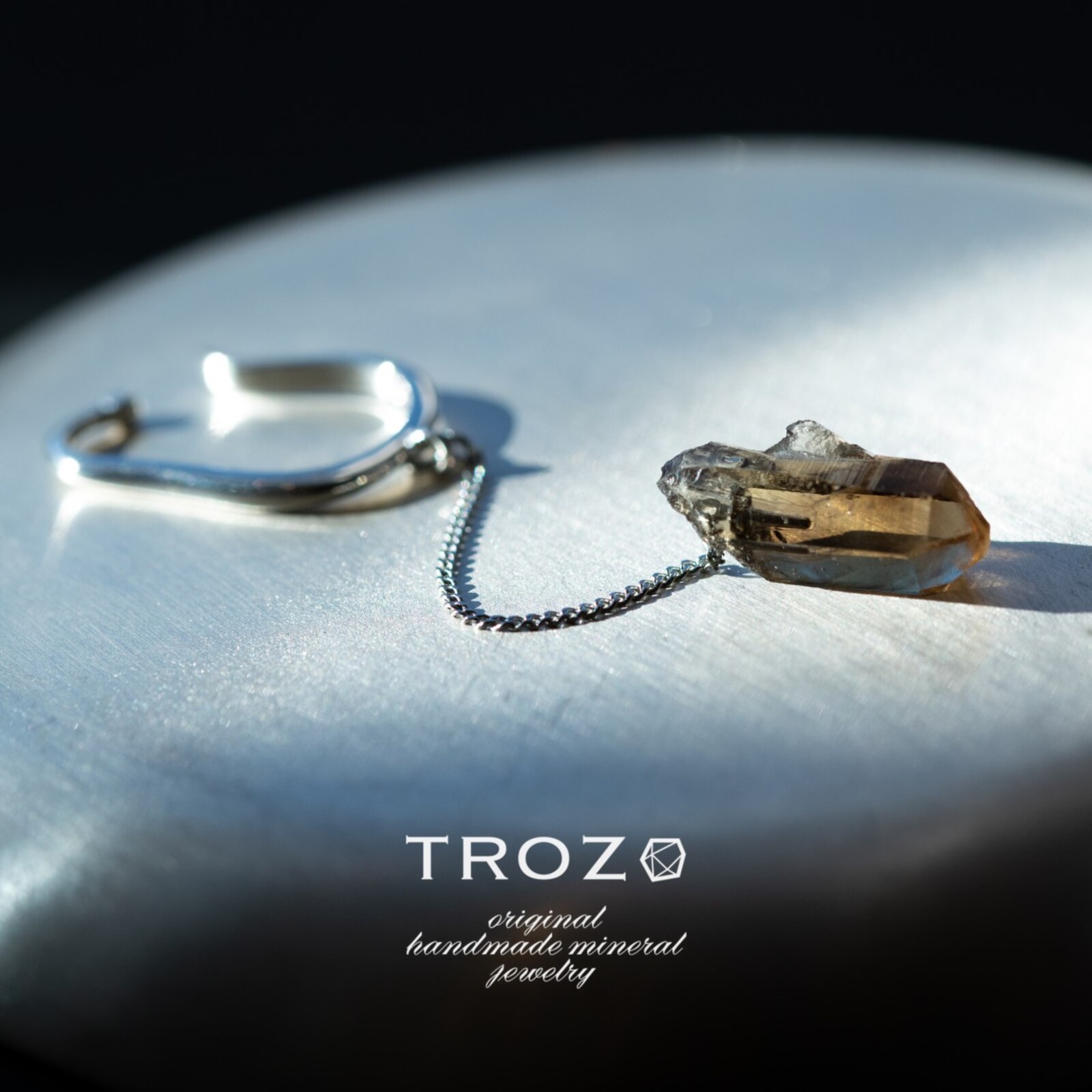
At Mohs 7 citrine is hard, with ample strength for everyday wear. The character of a raw stone turns on the depth of yellow (pale lemon to deep golden to sherry-orange), the clarity, the natural six-sided form and the landscape of the inclusions. Bright tones read casual, deep golden reads a touch formal, and sherry tones suit autumn dress. Ametrine (amethyst and citrine combined) is the rare choice of two colors in a single crystal.
TROZO sets citrine without polishing away its character, letting the natural golden landscape and inclusions lead the design. We offer pieces for those who would like to choose color and size from stock, as well as pieces where the meeting with the stone is left to chance — a symbol of prosperity, the “sun stone” and the “merchant’s stone”, to carry as an everyday charm.
◆ Citrine Raw-Stone Jewelry
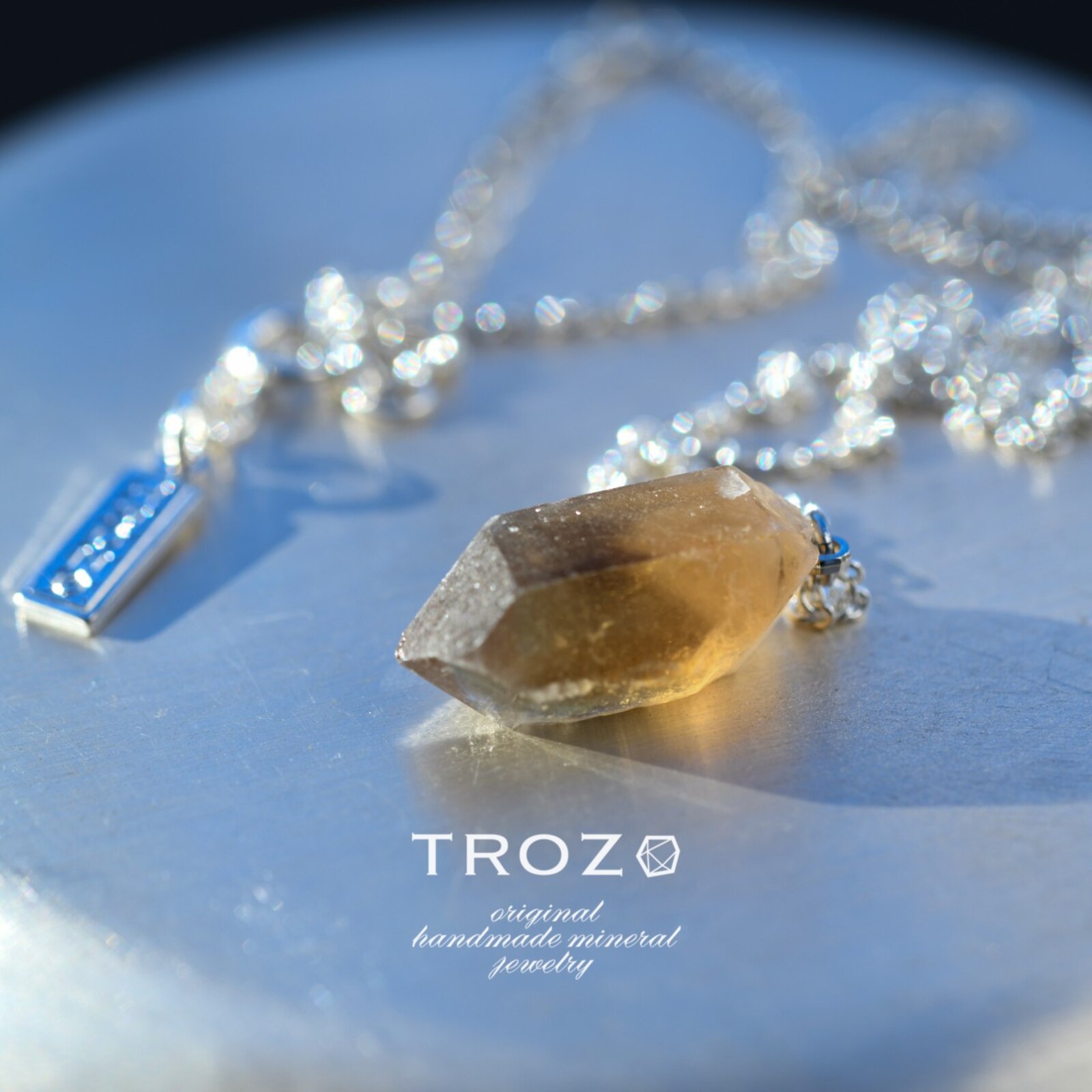
Handmade raw stone & mineral pieces — TROZO
◆ Frequently Asked Questions about Citrine
Q What does citrine symbolize?
Citrine is traditionally associated with friendship, hope, prosperity, success, wealth, happiness, sociability and confidence. Loved in medieval Europe as the “merchant’s stone”, a charm for prosperity in trade, it is cherished today as November’s birthstone (alongside topaz) and a symbol of wealth and prosperity.
Q Are citrine and amethyst the same mineral?
Yes — both are exactly the same quartz (SiO₂). They differ only in color, and both come from trace iron (Fe³⁺): a different kind of color center makes amethyst purple and citrine yellow. Ametrine (from the Anahí mine in Bolivia) is the rare variety that holds both within a single crystal.
Q What is the difference between natural and heat-treated citrine?
Natural citrine is very scarce, and most on the market is amethyst or smoky quartz heated to around 500 °C to turn it golden. Heated material tends toward a more even, vivid orange, while natural stones tend to keep color variation and per-crystal character — though the two are often hard to tell apart. As heated material is the long-standing norm, it does not diminish value.
Q How hard is citrine?
Its Mohs hardness is 7, the same as the quartz family. That is hard among natural stones and minerals, with ample strength for everyday jewelry.
Q What is ametrine?
Ametrine is the rare natural stone in which amethyst (purple) and citrine (yellow) coexist within a single crystal — its name is a blend of “amethyst” and “citrine”. Found only at the Anahí mine in Bolivia, it began reaching the market in the 1970s, and its appeal is the wonder of seeing the boundary of purple and gold within one stone.
Q Isn’t November’s birthstone topaz?
Topaz is the traditional November birthstone, but citrine is also widely recognized for November. With topaz tending to be rarer and pricier, citrine has long been cherished as a more accessible choice — “topaz or citrine, either one” is the modern reading for those born in November.
EXPLORE THE SHOP
Explore the world of Citrine
Discover more pieces than we can show here at the TROZO shop.
Shop Citrine