
Tourmaline
The stone of a hundred colors, the glow of Paraíba. October’s birthstone, a many-colored gem.
Tourmaline is a group of more than fifteen minerals. The representative elbaite is Na(Li,Al)₃Al₆(BO₃)₃Si₆O₁₈(OH)₄, trigonal, Mohs 7–7.5. Its great distinction is the widest range of color of any gem — from colorless to black, with two colors (bicolor) or three (party-color) in a single crystal, and the pink-center, green-rim “watermelon”. Paraíba tourmaline, found in Brazil in 1989, is one of the world’s three rarest gems. It is October’s birthstone (with opal).
Tourmaline is the October birthstone. See all October birthstones →
◆ Tourmaline — Stone Meanings
- Hope
- Patience
- Joy
- Ease
- Friendship
- Truth
- Victory
- Many colors
◆ About Tourmaline
Tourmaline is not a single mineral but a group of more than fifteen — the “tourmaline group”. The representative elbaite (lithium tourmaline) has the formula Na(Li,Al)₃Al₆(BO₃)₃Si₆O₁₈(OH)₄; it is trigonal, Mohs 7–7.5. Its members include elbaite (lithium-bearing), dravite (magnesium), schorl (iron, black) and liddicoatite, and the elements they hold change both color and properties greatly.
The English name “Tourmaline” comes from the Sinhalese (Sri Lankan) *turmali* (“stone of mixed colors”). It was brought to the West by Dutch traders in the 15th century and gathered popularity in jewelry from the 20th century — a relatively new gem name. Its piezoelectricity (becoming charged under pressure) and pyroelectricity (becoming charged with temperature change) are unusual electrical properties for a mineral.
Tourmaline’s greatest appeal is the widest range of color of any gemstone. Colorless, purple, blue, green, yellow, brown, red, pink and black — it is said to have “a hundred colors”. More than that, a single crystal can hold several: “bicolor tourmaline” (two colors), “party-color tourmaline” (three or more) and especially the pink-center, green-rim “watermelon tourmaline”, prized as a natural form unique to raw stone.
Paraíba tourmaline, found in Paraíba, Brazil in 1989, holds copper (Cu) for a neon blue-to-turquoise of stunning vividness, prized as one of the world’s three rarest gems alongside padparadscha sapphire and alexandrite. October’s birthstone (with opal) and the gift for a 38th wedding anniversary, tourmaline is a raw mineral rich in the story of color.
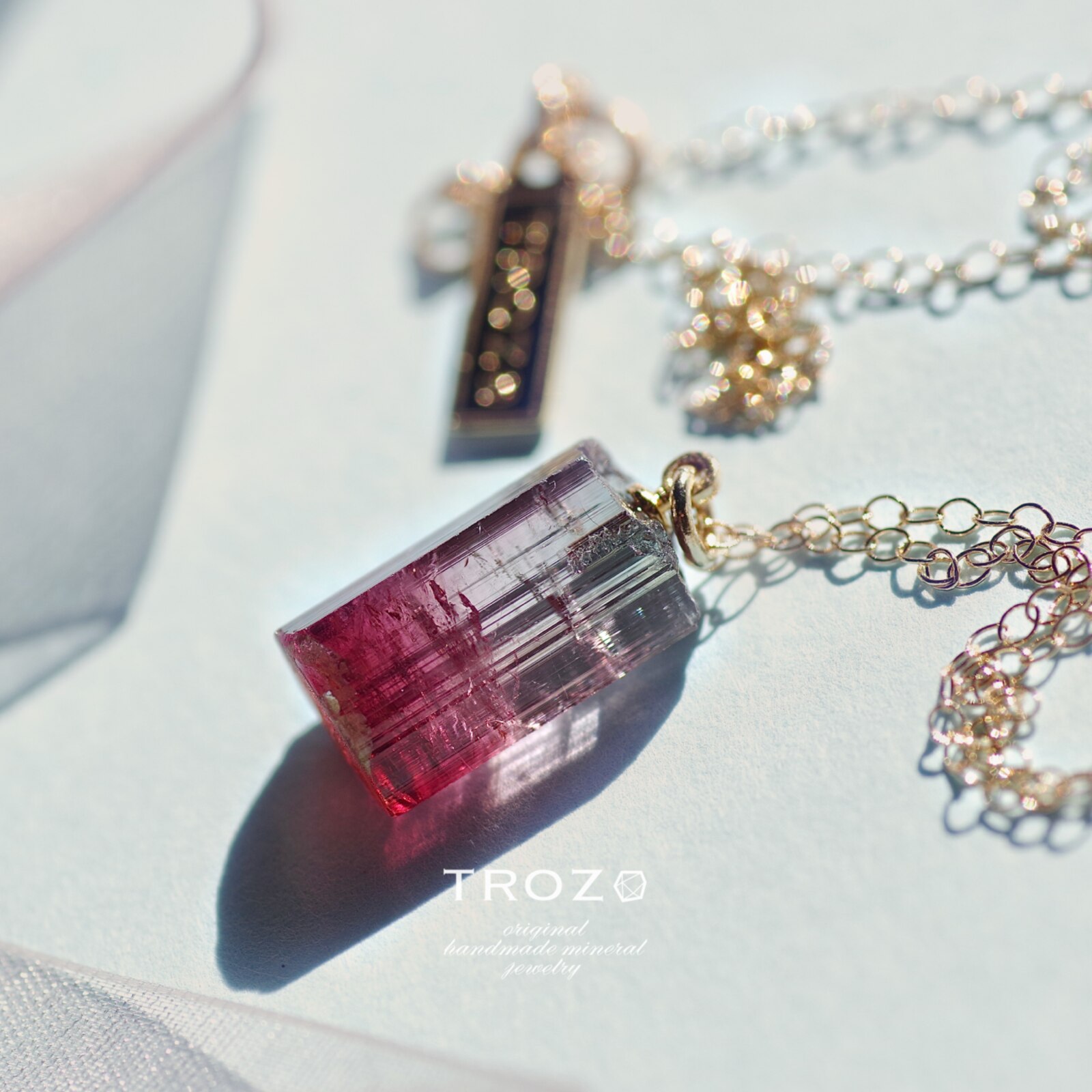
◆ Mineral Data
- English name
- Tourmaline (tourmaline group)
- Chemical formula
- Na(Li,Al)₃Al₆(BO₃)₃Si₆O₁₈(OH)₄ (elbaite); members vary as Na→Ca, Al→Mg or Fe
- Mineral class
- Tourmaline group (15+ species) — chiefly elbaite (lithium, most traded), dravite (magnesium), schorl (iron, black), liddicoatite
- Crystal system
- Trigonal
- Mohs hardness
- 7 – 7.5
- Specific gravity
- 3.0 – 3.3
- Main sources
- Brazil (largest source, including Paraíba), Afghanistan, Mozambique, Nigeria, Pakistan, USA (California, Maine), Sri Lanka, Russia
- Color range
- Colorless, purple, blue, green, yellow, brown, red, pink, black, plus bicolor, party-color and watermelon (pink center, green rim); copper-bearing Paraíba is a neon blue and one of the three rarest gems
- Notable trait
- Piezoelectric (charged under pressure) and pyroelectric (charged with temperature change) — the source of its name in Japanese, “electric stone”. The most varied of gems in color (“a hundred colors”)
- Birthstone
- October (with opal; 38th wedding anniversary)
◆ The tourmaline group — a gathering of more than fifteen minerals
One name, more than a dozen minerals.
Tourmaline is not a single mineral but the “tourmaline group” of more than fifteen members. The representative formula, Na(Li,Al)₃Al₆(BO₃)₃Si₆O₁₈(OH)₄, belongs to elbaite (lithium tourmaline), the most traded as a gem. Others — magnesium-bearing dravite, iron-bearing schorl (black) and liddicoatite — change color and properties greatly with the elements they hold. What they share is the trigonal crystal, Mohs 7–7.5, and the unusual piezoelectric and pyroelectric properties that gave the stone its Japanese name, “electric stone”.
◆ The stone of a hundred colors — Paraíba tourmaline and watermelon
The summit of Paraíba, and the watermelon nature paints.
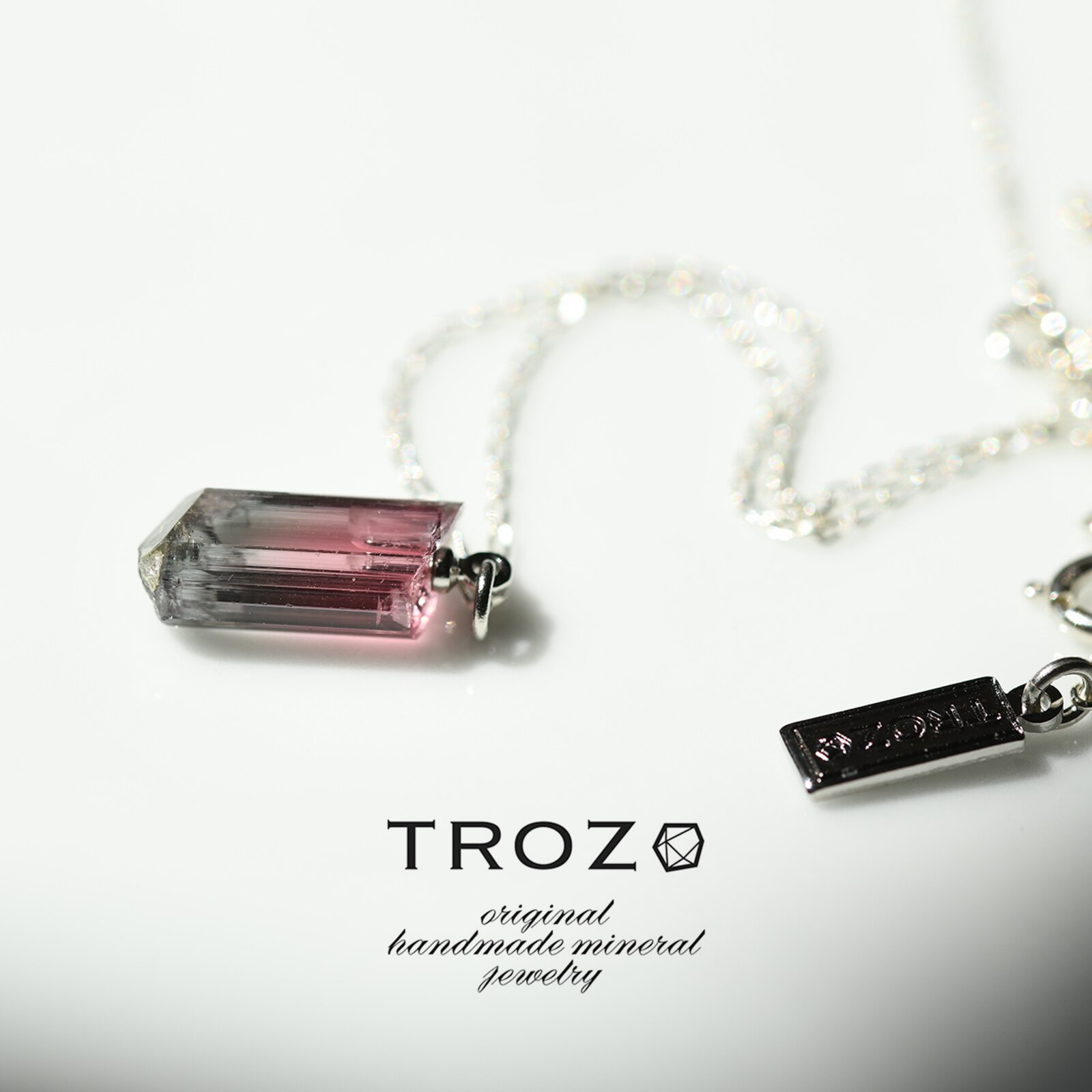
Tourmaline’s greatest appeal is the widest range of color of any gem — colorless, purple, blue, green, yellow, brown, red, pink and black, “a hundred colors” in all. In a class of its own is Paraíba tourmaline, found in Paraíba, Brazil in 1989: its copper (Cu) content gives a neon blue-to-turquoise of a vividness no other gem can match, and it is prized as one of the world’s three rarest gems, alongside padparadscha sapphire and alexandrite, the very summit of fine jewelry. Brazilian material is the finest, with recent material from Mozambique and Nigeria. And then there are the multi-colored stones that symbolize tourmaline’s richness — “bicolor” (two colors), “party-color” (three or more), and the pink-center, green-rim “watermelon tourmaline” — a story of color only tourmaline tells, prized as a natural form unique to raw stone.
◆ Choosing raw tourmaline jewelry
Choose by color, type and the natural form of the crystal.
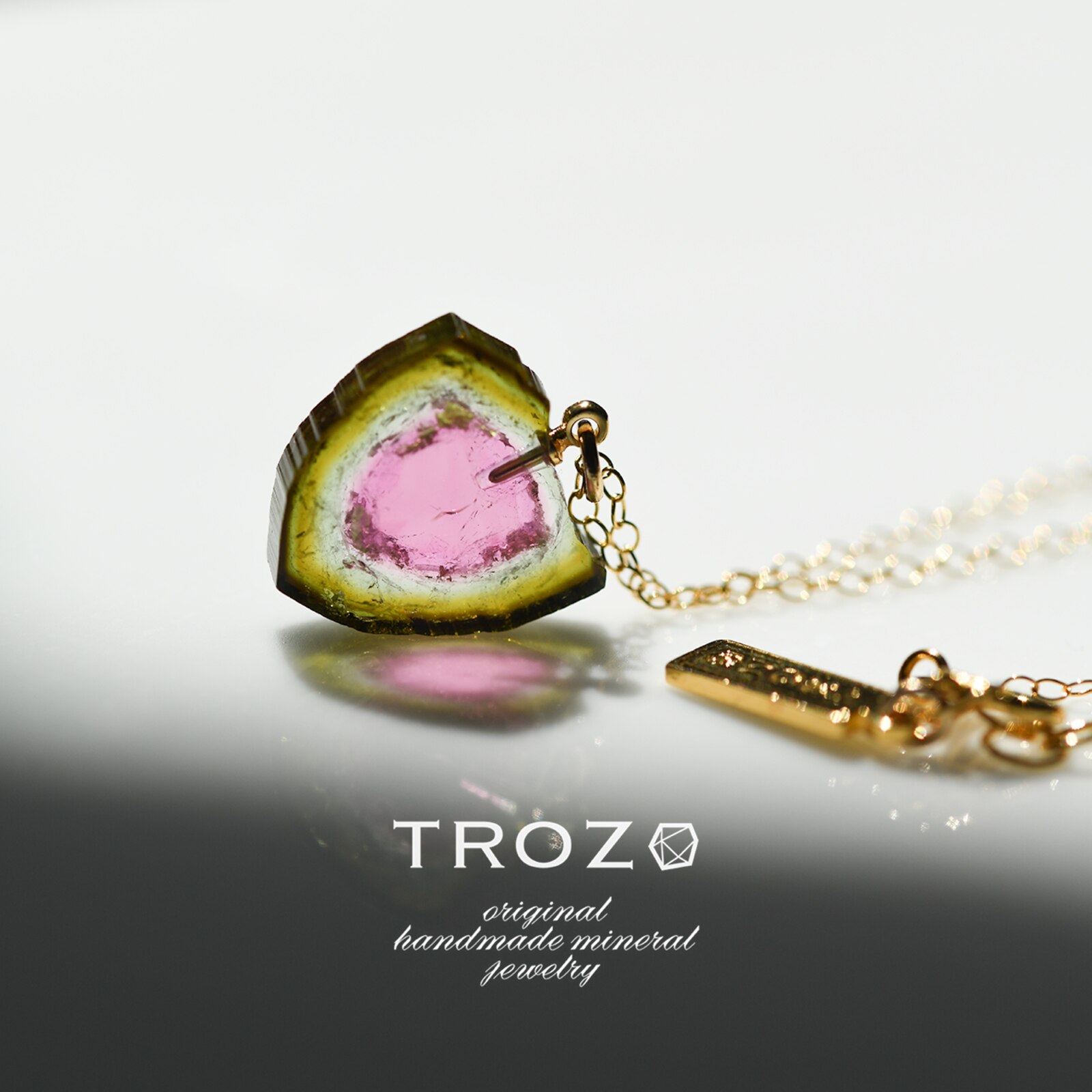
At Mohs 7–7.5 tourmaline is hard, with ample strength for everyday wear. Raw-stone jewelry varies greatly in character by color (from single colors through bicolor to watermelon), the natural form (the trigonal, long prismatic crystal), the clarity and the landscape of the inclusions. To wear the “electric stone”, with its rare piezoelectric and pyroelectric properties, in everyday jewelry — true to the name *turmali* (“stone of mixed colors”), it is a stone to enjoy for the story of its color.
TROZO sets tourmaline without polishing away its character, letting the natural color and the form of the crystal lead the design. We offer pieces for those who would like to choose color, size and type from stock, as well as pieces where the meeting with the stone is left to chance. Choose a single favorite from the hundred colors, or enjoy the drama of several — that wealth of choice is the appeal of raw tourmaline.
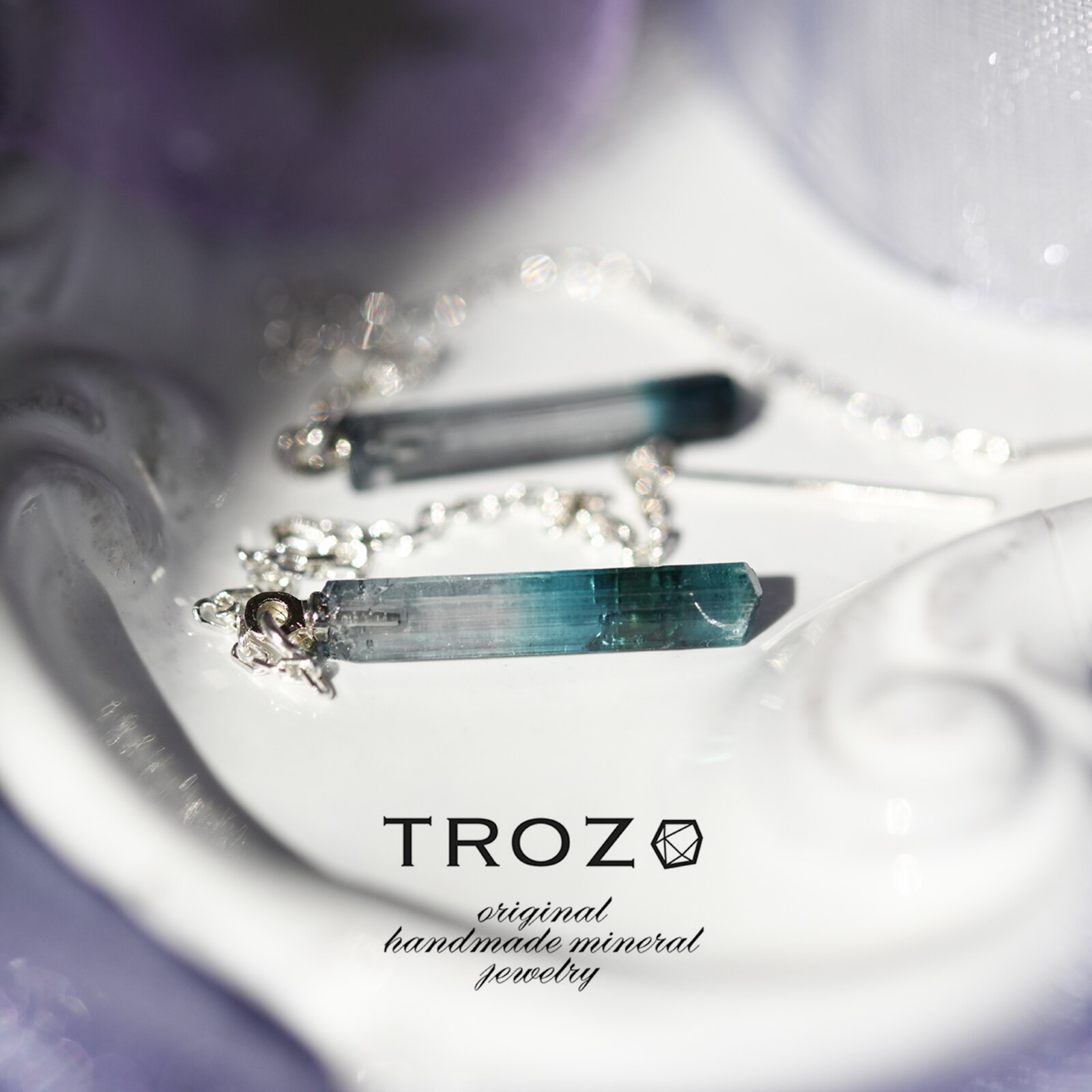
◆ Tourmaline Raw-Stone Jewelry
Handmade raw stone & mineral pieces — TROZO
◆ Frequently Asked Questions about Tourmaline
Q What does tourmaline symbolize?
Tourmaline is traditionally associated with hope, patience, joy, ease, friendship, truth, victory and many colors. It is October’s birthstone (with opal) and the gift for a 38th wedding anniversary.
Q What is the “electric stone”, and does it really emit negative ions?
Tourmaline’s Japanese name, “electric stone”, comes from its real piezoelectric (charged under pressure) and pyroelectric (charged with temperature change) properties. Separately, products that bind tourmaline powder in resin are marketed as constantly emitting “negative ions” with health benefits, but there are reports that such effects have not been confirmed scientifically. Please note that a mineral having piezoelectric and pyroelectric properties is a separate matter from any proven health effect.
Q How hard is tourmaline?
Its Mohs hardness is 7–7.5, hard among natural stones — as hard as or harder than quartz (7), with ample strength for everyday jewelry.
Q What is Paraíba tourmaline?
It is a special copper-bearing (Cu) tourmaline found in Paraíba, Brazil in 1989. Its stunning neon blue-to-turquoise makes it one of the world’s three rarest gems, alongside padparadscha sapphire and alexandrite. Brazilian material is the finest, with recent mining in Mozambique and Nigeria — a peak of fine jewelry that trades at high prices even within the tourmaline group.
Q What is watermelon tourmaline?
It is a multi-colored tourmaline with a pink (or red) center and a green rim within a single crystal, named because a cross-section resembles the flesh of a watermelon. It symbolizes tourmaline’s rich range of color and is prized as a natural form unique to raw stone.
Q Where does tourmaline come from?
Brazil is the world’s largest source, and Paraíba state also yields Paraíba tourmaline. It is also found in Afghanistan, Mozambique, Nigeria, Tanzania (East Africa), Pakistan, the USA (California, Maine), Sri Lanka and Russia.
Q What kinds of jewelry can tourmaline become?
As natural-stone jewelry, tourmaline is used for raw-stone earrings, necklaces, rings, brooches and ear cuffs. TROZO makes tourmaline jewelry that keeps the raw stone unpolished so its color and natural form lead the design — both pieces you can choose by color, size and type from stock, and pieces where the meeting with the stone is left to chance.
EXPLORE THE SHOP
Explore the world of Tourmaline
Discover more pieces than we can show here at the TROZO shop.
Shop Tourmaline