
Labradorite
A stone that changes face with the angle of view — the play of color called labradorescence.
Labradorite is a plagioclase feldspar prized for labradorescence: flashes of blue, green and gold that shift with the angle of view. The body color is gray to black, and the rainbow light that dwells in it comes from light interfering within thin internal crystal layers.
◆ Labradorite — Stone Meanings
- Stone of the moon and sun
- Stone of attraction
- Longing
- Memory
- Harmony
- Intuition
- Change
- Awakening
◆ About Labradorite
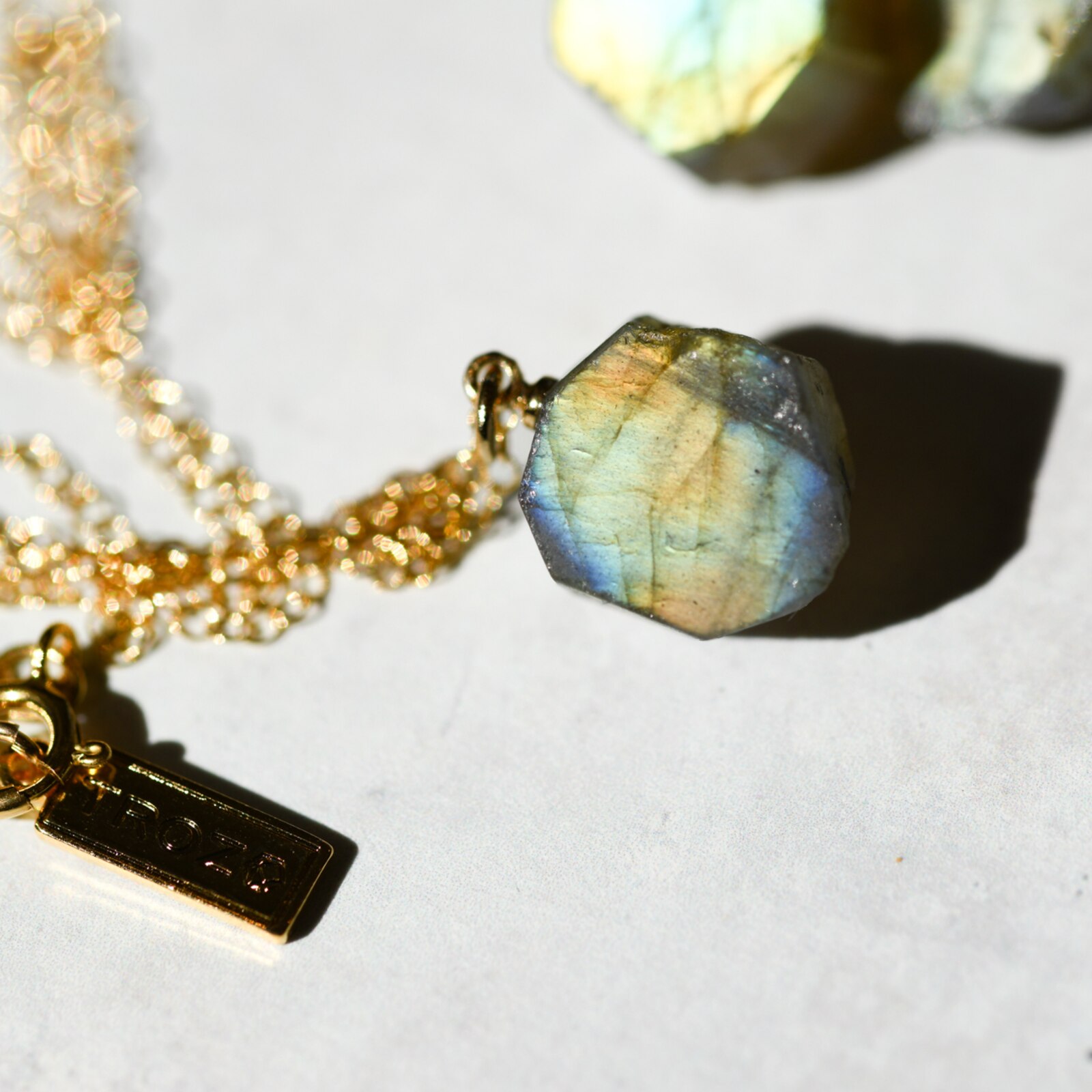
Labradorite is a natural stone whose greatest appeal is labradorescence — flashes of blue, green and gold, sometimes orange or violet, that shift with the angle of view. Hold it to the light and it changes face each time, like a small universe of a stone.
Nicknamed the “stone of the moon and sun” and a “stone of attraction”, it is associated with longing, memory, harmony, intuition, change and awakening. It has been cherished as a gift for life’s turning points and for those setting out on something new.
The play of color shifts greatly against the body color — a soft glow over grayer stone, a strong flash over near-black, a different drama of light by source. Even among stones called labradorite, no two hold the same scene.
The flash of blue, the glint of green, the warmth of gold: turn it in your hand and another color surfaces. A raw stone of light and movement, it quietly speaks.
◆ Mineral Data
- English name
- Labradorite
- Chemical formula
- (Ca, Na)(Al, Si)₄O₈
- Mineral class
- Plagioclase feldspar
- Crystal system
- Triclinic
- Mohs hardness
- 6 – 6.5
- Specific gravity
- 2.68 – 2.72
- Main sources
- Canada (Labrador coast), Madagascar, Finland, Mexico, USA, Russia and others
- Color range
- Gray to black body, with a play of blue, green, gold, orange and violet
- Notable trait
- A play of color called labradorescence; first found in Canada in 1770
- Birthstone
- August (varies by organization)
◆ Light and angle make labradorescence
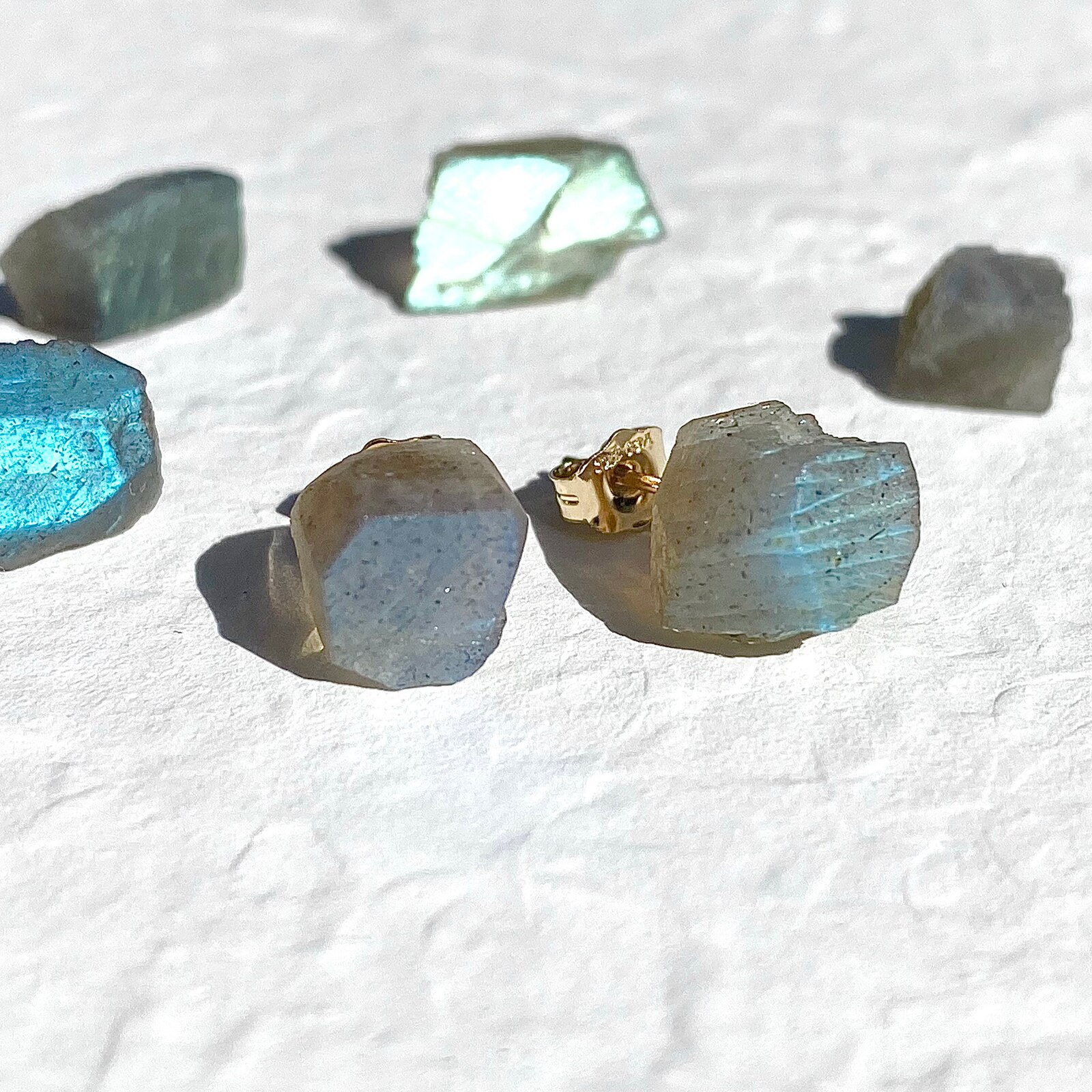
The flash of blue and gold is light interfering within internal crystal layers.
The blue and gold that run across labradorite as you change the angle come from labradorescence — thin internal crystal layers reflecting and interfering with light. Because the same stone shifts with the light source, the angle and the viewer’s own movement, it is the type of natural stone in which the character of raw stone comes most alive.
◆ A relatively new mineral, discovered in Canada
Found on the Labrador coast in 1770.
Led by the Labrador coast of Canada that gave it its name, labradorite is mined in Madagascar, Finland, Mexico, the USA and Russia. Madagascan material has a strong blue flash, while Finnish material (spectrolite) is known for a play of color across the full spectrum in every direction. Even in the raw, the way it reads differs greatly by source.
◆ Choosing raw labradorite jewelry
Body color and how the light enters change the drama of the play of color.
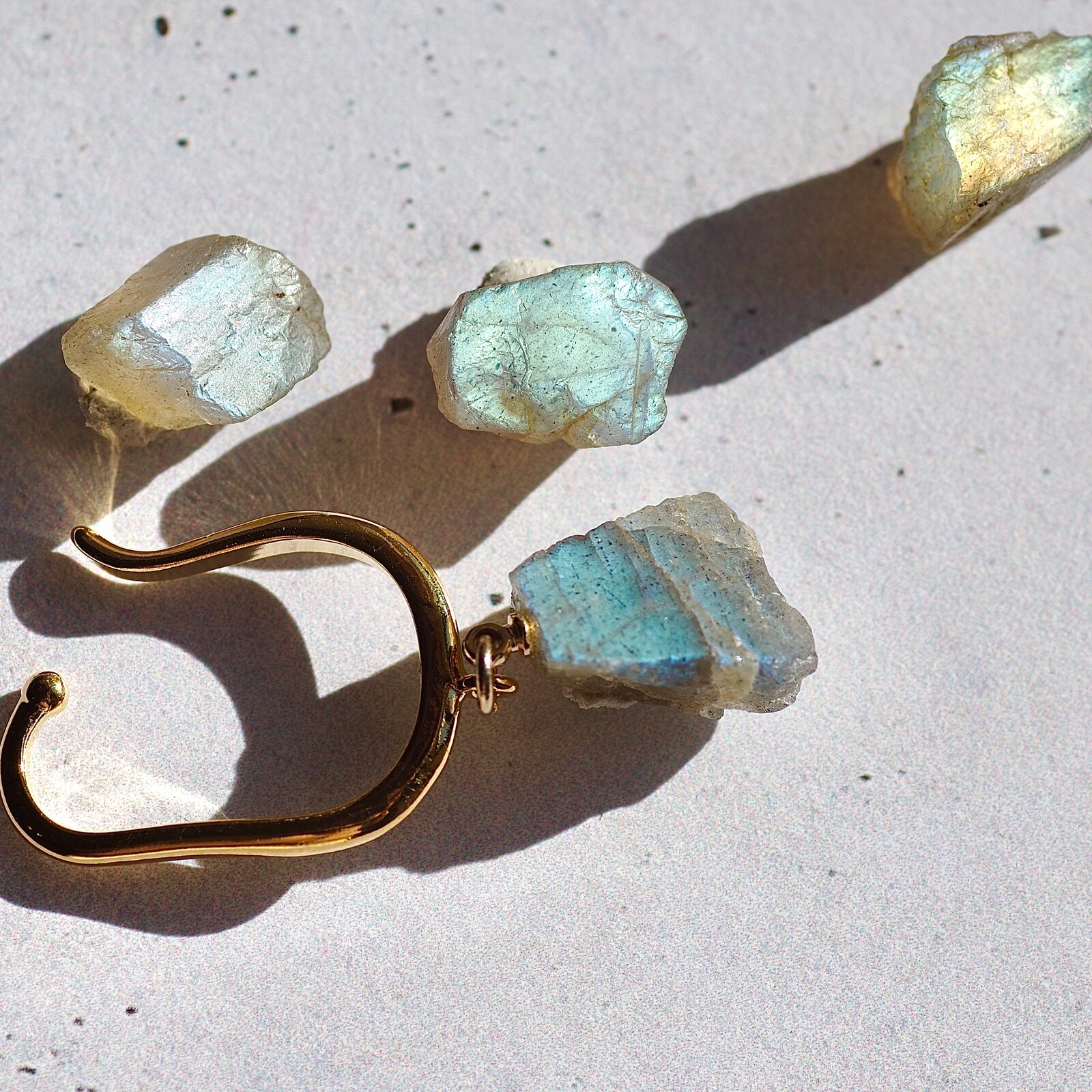
At Mohs 6–6.5 labradorite has the hardness to stand up to everyday wear. To enjoy it in jewelry, look for a stone whose play of color shows well under indoor lighting or daylight. The nearer the body color is to true black, the more the play of color stands out in contrast; a lighter gray reads softer and gentler. A single stone added to a simple outfit becomes an accent that changes face each time the light moves.
TROZO chooses raw labradorite in which the balance of body color and play of color shows well, and sets it unpolished. We offer pieces for those who would like to check the way the light enters for themselves, as well as pieces where the meeting with the stone is left to chance.
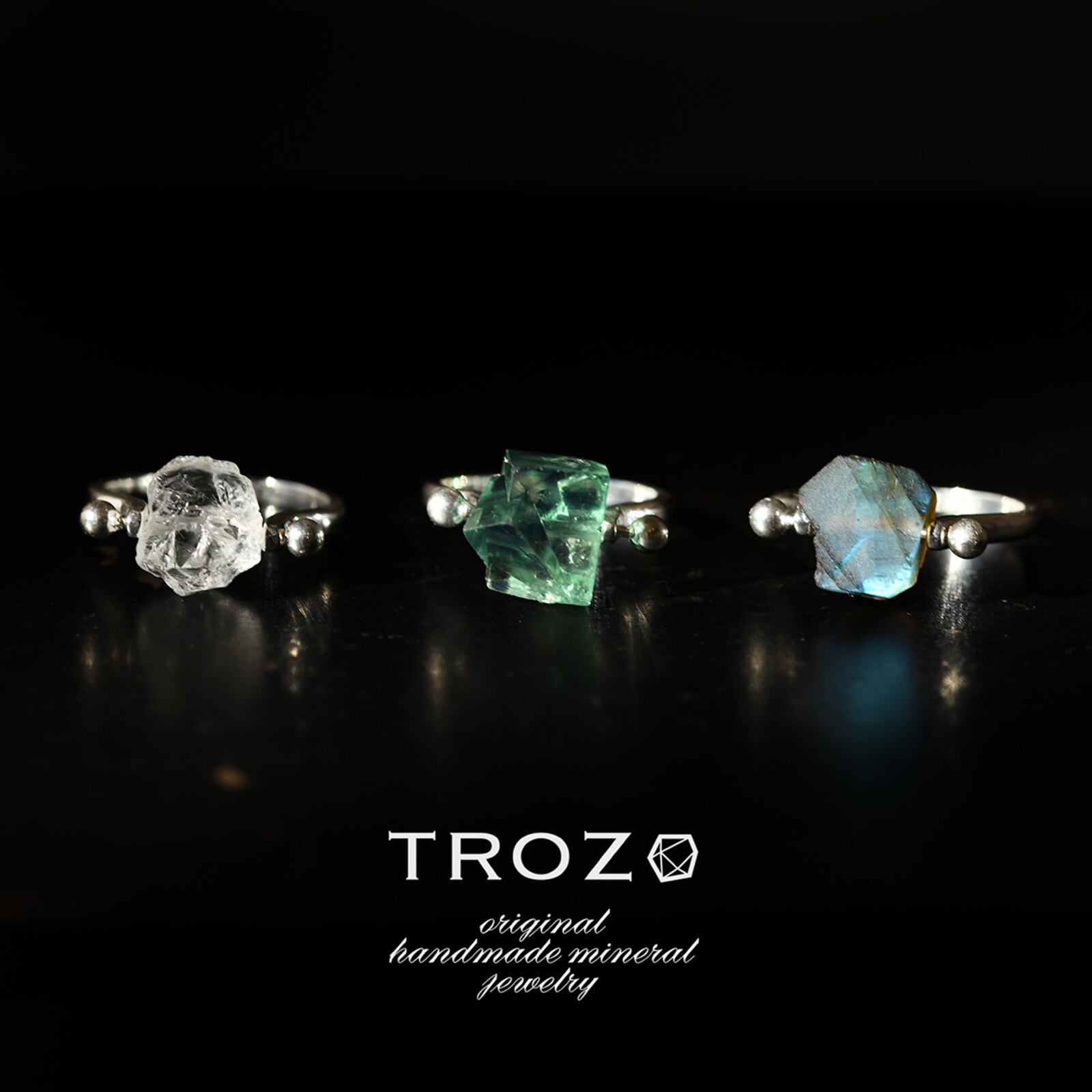
◆ Labradorite Raw-Stone Jewelry
Handmade raw stone & mineral pieces — TROZO
◆ Frequently Asked Questions about Labradorite
Q What does labradorite symbolize?
Nicknamed the “stone of the moon and sun” and a “stone of attraction”, labradorite is traditionally associated with longing, memory, harmony, intuition, change and awakening. It has been cherished for life’s turning points and as a gift in natural-stone jewelry.
Q How hard is labradorite?
Its Mohs hardness is 6–6.5, which holds up reasonably well to everyday wear. Even so, avoiding knocks and strong abrasion, and taking it off for housework and bathing, keeps its beauty longer.
Q What is labradorescence (the play of color)?
It is the effect in which thin internal crystal layers reflect and interfere with light to produce flashes of blue, green, gold, orange and violet. The colors you see change with the angle and the light source, and it is considered labradorite’s greatest appeal.
Q Where does labradorite come from?
It is found in Canada (the Labrador coast), Madagascar, Finland, Mexico, the USA and Russia, among others. Madagascan material has a strong blue flash, while Finnish material (spectrolite) is known for an all-direction rainbow play of color.
Q What kinds of jewelry can labradorite become?
As natural-stone jewelry, labradorite is used for raw-stone earrings, necklaces, rings, brooches and ear cuffs. TROZO makes labradorite jewelry that keeps the raw stone unpolished so its play of color and inclusions lead the design — both pieces you can choose from stock and pieces where the meeting with the stone is left to chance.
Q Does labradorite make a good gift?
Because it is known as a “stone of attraction” and the “stone of the moon and sun”, labradorite is often chosen as a gift for life’s turning points — birthdays, new jobs, graduations and anniversaries — and for those setting out on something new. It is also loved as an August birthstone.
EXPLORE THE SHOP
Explore the world of Labradorite
Discover more pieces than we can show here at the TROZO shop.
Shop Labradorite