
Pearl
The one organic gem a shellfish makes. June’s birthstone.
Pearl is the one organic gem formed within a living shellfish. It is about 92% calcium carbonate (CaCO₃, as aragonite), 4–6% the organic protein conchiolin and 1–2% water. Microcrystalline aragonite layers and conchiolin stack into nacre, giving pearl’s interference luster, the “orient”. Soft at Mohs 2.5–4, it is among the world’s oldest gems, recorded from around 3200 BC in Egypt. In 1893 Kōkichi Mikimoto achieved the world’s first cultured half-pearl in Ise-Shima, and in 1907 the round-pearl method was established — making Japan the birthplace of cultured pearls. It is June’s birthstone.
Pearl is the June birthstone. See all June birthstones →
◆ Pearl — Stone Meanings
- Health
- Longevity
- Wealth
- Beauty
- Family love
- Calm of mind
- Purity
- Creativity
◆ About Pearl
Pearl is the one organic gem formed within a living shellfish. It falls outside the definition of a mineral (inorganic, natural, with a definite crystal structure): a gem born of a living thing. Its makeup is about 92% calcium carbonate (CaCO₃, in the aragonite form), 4–6% the organic protein conchiolin and 1–2% water. Microcrystalline aragonite layers and conchiolin stack in many layers into nacre, and the thin-film interference between the layers gives pearl’s soft, rainbow luster, the orient.
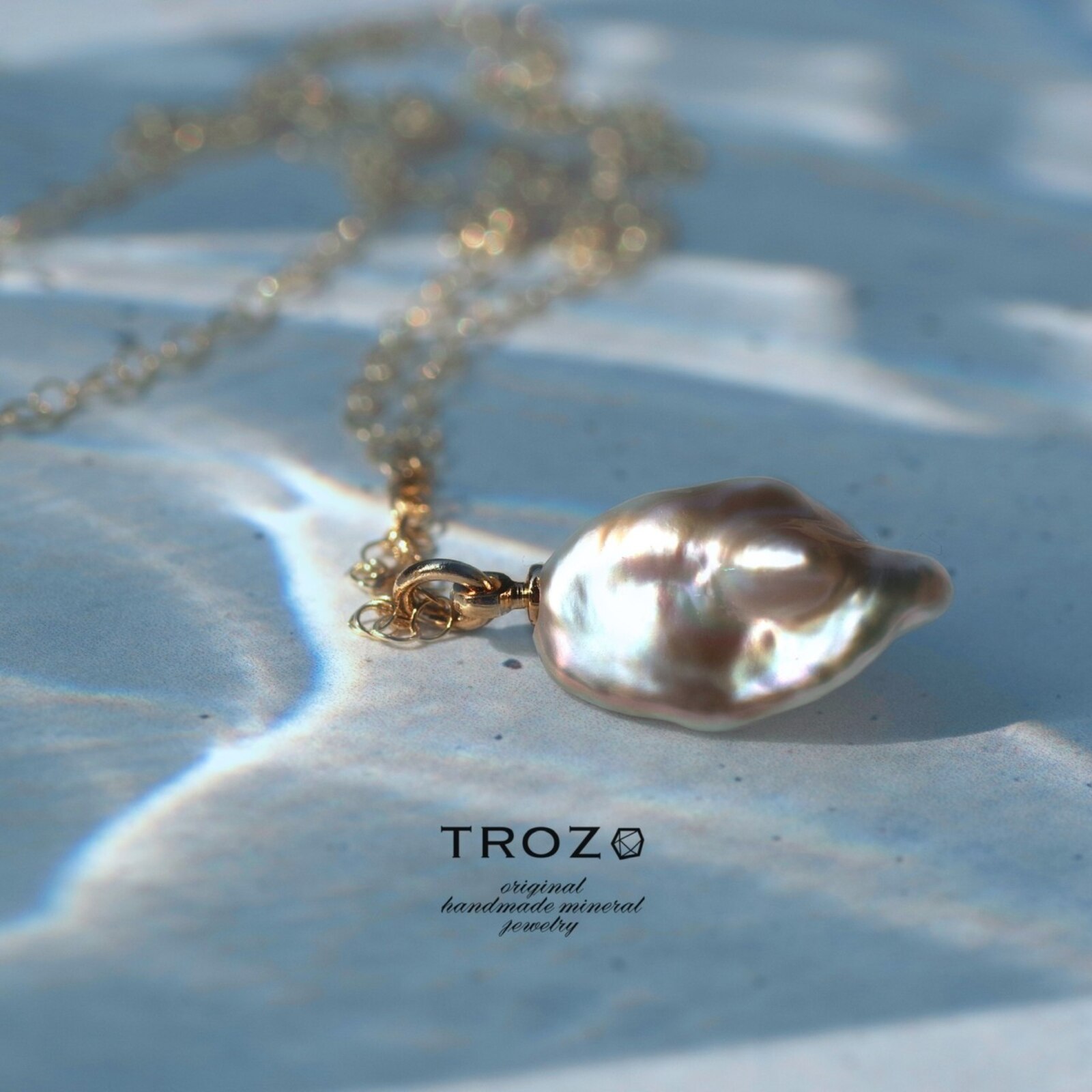
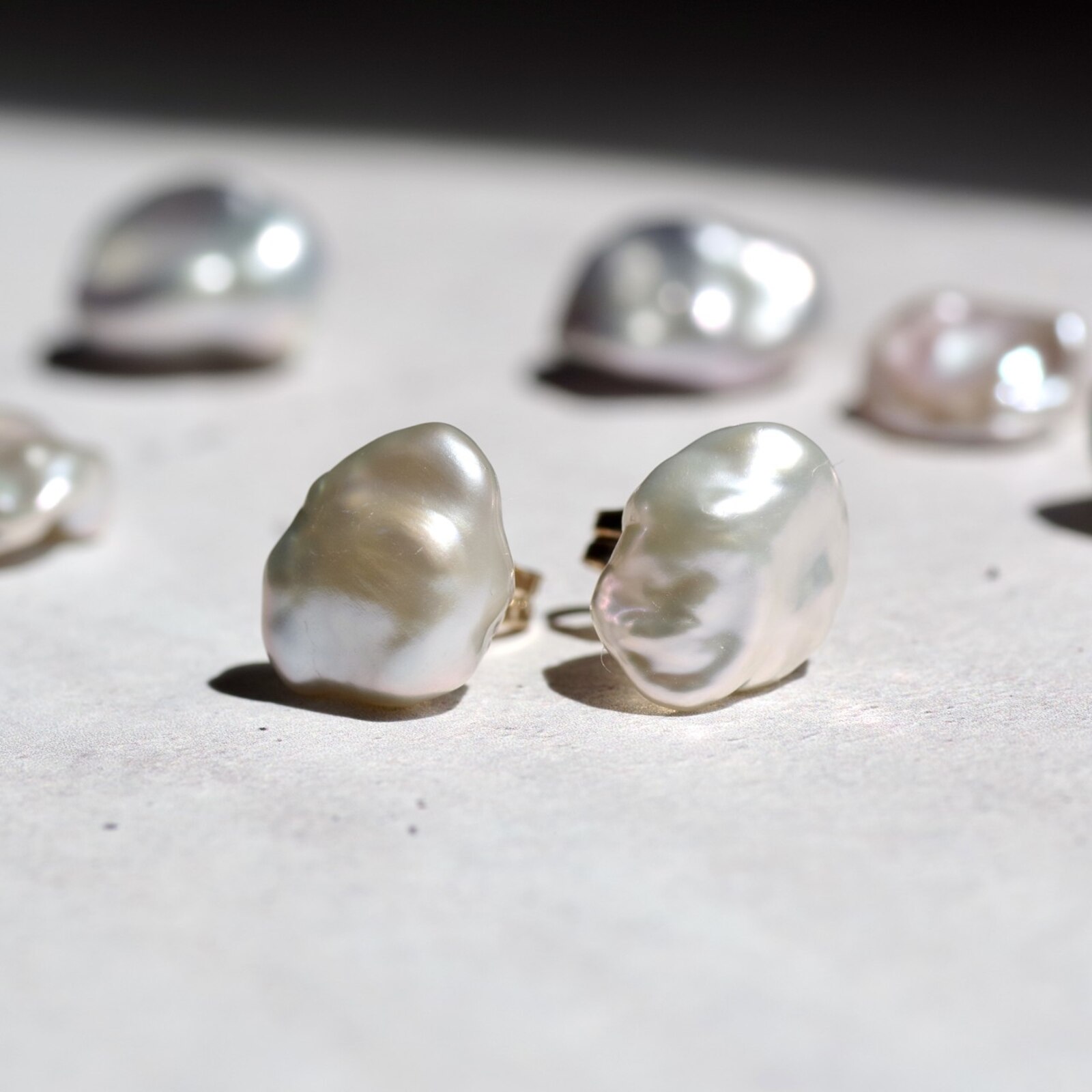
Pearl has types that differ by host mollusk and waters: Akoya pearl (the Akoya oyster, of Ise-Shima, Uwajima and Tsushima in Japan, white to pink and green), South Sea white pearl (the white-lipped oyster, of Australia, Indonesia, the Philippines, Thailand and Myanmar, large, white to gold), Tahitian black pearl (the black-lipped oyster, of French Polynesia, gray to black, green, purple), freshwater pearl (mussels such as Hyriopsis, of China and Lake Biwa, many shapes and colors), keshi pearl (irregular, cultured without a nucleus), baroque (oval or distorted) and mabe pearl (a half-sphere) — the character parting by mollusk, method and shape.
Pearl is one of humankind’s oldest gems, appearing in the sites and records of ancient Egypt (around 3200 BC), China (around 2300 BC), Persia (7th century BC) and Rome (3rd century BC). In the late 1800s over-fishing brought natural pearl to the brink, but in 1893 Kōkichi Mikimoto, from the Shima Peninsula in Mie, achieved the world’s first cultured half-pearl in Ise-Shima. In 1907 Tōkichi Nishikawa and others established the round-pearl method — implanting a nucleus with shell-forming tissue — and Ise-Shima became the world’s first place to culture round pearls. Today, from Mikimoto in Japan onward, cultured pearls are the foundation of the world’s pearl industry.
Pearl is loved as June’s birthstone (with moonstone and alexandrite). Soft at Mohs 2.5–4 and sensitive to sweat, cosmetics, perfume and acid, a dry wipe with a soft cloth after wear is the secret to its longevity. Also the gift for a 12th and 30th wedding anniversary, it is an elegant gem to wear for a lifetime, loved across generations.
◆ Mineral Data
- English name
- Pearl
- Chemical makeup
- CaCO₃ (aragonite, ~92%) + conchiolin (organic protein, 4–6%) + water (1–2%)
- Classification
- Organic gem — a biomineral formed within a living shellfish, outside the mineral definition (inorganic, natural, with a definite crystal structure)
- Structure
- Microcrystalline aragonite layers + conchiolin stacked in many thin-film layers → nacre; thin-film interference between the layers gives the “orient”
- Mohs hardness
- 2.5 – 4 (very soft; handle with care)
- Specific gravity
- 2.60 – 2.85
- Main sources
- Japan (Akoya pearl: Ise-Shima, Uwajima, Tsushima), Australia / Indonesia / the Philippines / Thailand / Myanmar (South Sea white pearl), French Polynesia, Tahiti (black pearl), China (freshwater pearl, the largest producer)
- Types
- Akoya pearl (Akoya oyster) / South Sea white pearl (white-lipped oyster) / Tahitian black pearl (black-lipped oyster) / freshwater pearl (mussels such as Hyriopsis) / keshi pearl (nucleus-free, irregular) / baroque (distorted) / mabe pearl (half-sphere)
- Color range
- White, pink, cream, gold, gray, black, green, blue, purple (the color shifts with the host mollusk)
- Notable trait
- The one organic gem a shellfish makes. Among the world’s oldest gems, recorded from around 3200 BC in Egypt. In 1893 Kōkichi Mikimoto achieved the world’s first cultured half-pearl in Ise-Shima; in 1907 Tōkichi Nishikawa and others established the round-pearl method
- Birthstone
- June (with moonstone and alexandrite; alexandrite added in the 2021 revision)
◆ The one organic gem — layers of light a shellfish makes
Not an inorganic gem, but a luster born of a living thing.
Pearl is the one gem born of a living thing, outside the definition of a “mineral” (inorganic, natural, with a definite crystal structure) — an organic gem. As a defensive response, wrapping a foreign body that has entered it, a shellfish secretes from its mantle microcrystalline layers of aragonite (a crystal form of CaCO₃) and an organic matrix of conchiolin (protein), stacking them in many layers into nacre. The thin-film interference between the layers gives pearl’s soft, rainbow luster, the orient. Unlike a mineral gem, it is a story of light spun by life — that is pearl’s singularity.
◆ Kōkichi Mikimoto — the cultured pearl Japan gave the world
The dawn of the modern pearl industry, begun in Ise-Shima.
Humankind has prized pearl since ancient Egypt (around 3200 BC), but in the late 1800s over-fishing drove natural pearl to the edge of extinction. It was a Japanese who broke the impasse. In 1893, Kōkichi Mikimoto (founder of Mikimoto), from the Shima Peninsula in Mie, achieved the world’s first cultured half-pearl in Ise-Shima. Then in 1907 Tōkichi Nishikawa and others established the round-pearl method — implanting a nucleus together with mantle tissue that forms shell — and Ise-Shima became the world’s first place to culture round pearls. Today Japanese culturing technique is the foundation of the world’s pearl industry, and Akoya pearl is known with Japanese material at its finest — quite literally a gem Japan gave the world.
◆ June’s birthstone — choosing pearl jewelry
A world of many natural pearls, the color shifting with the host mollusk.
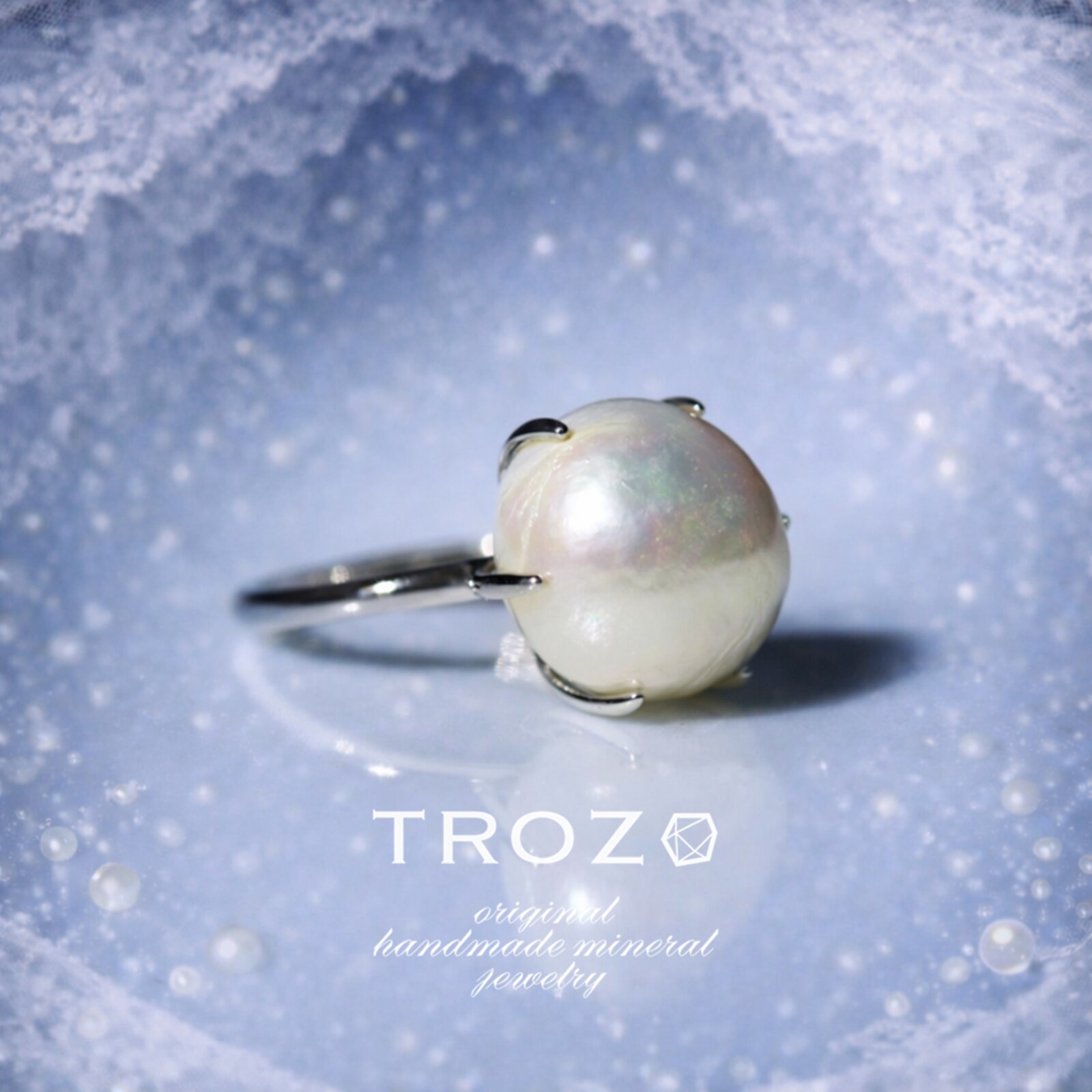
June’s birthstones are three — moonstone, pearl and alexandrite (alexandrite added in the 2021 revision). Pearl in particular, also the gift for a 12th and 30th wedding anniversary, is an elegant gem to wear across generations. Pearl has types that differ by host mollusk — Akoya pearl (mainly Japanese, white to pink), South Sea white pearl (Australia and Southeast Asia, large, white to gold), Tahitian black pearl (French Polynesia, gray to black, green, purple), freshwater pearl (China and Lake Biwa, many shapes and colors), keshi pearl (nucleus-free, irregular), baroque (distorted) and mabe pearl (half-sphere). Color and luster shift greatly with mollusk, method and shape.
TROZO works pearl so that the natural orient and the original form lead the design. We offer pieces for those who would like to choose color, size and shape from stock, as well as pieces where we entrust the meeting to chance. Soft at Mohs 2.5–4 and sensitive to sweat, cosmetics, perfume and acid, a dry wipe with a soft cloth after wear is the secret to its longevity. As a gem to wear for a lifetime, choose TROZO’s natural pearl jewelry for a June birthday gift or a wedding-anniversary piece.
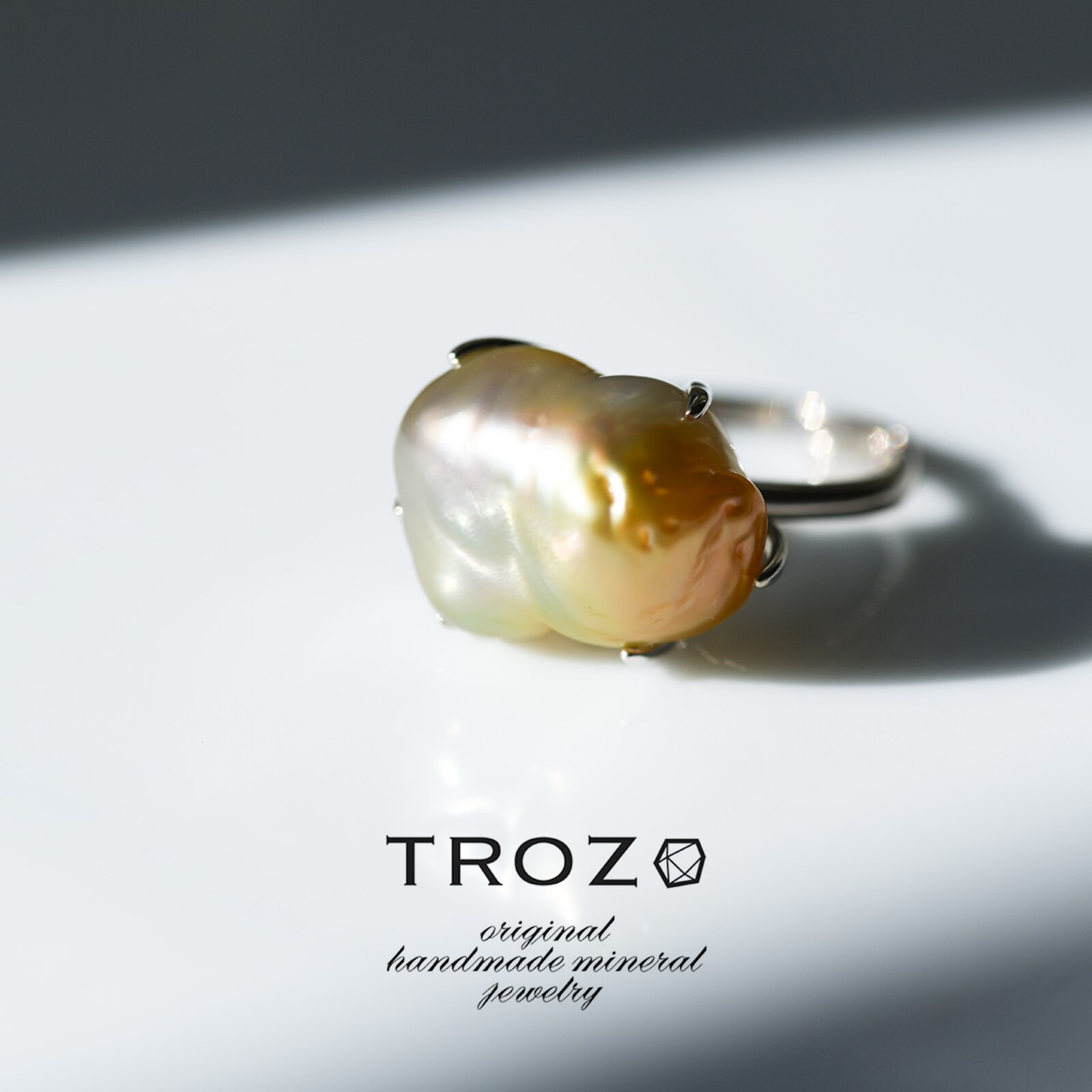
◆ Pearl Raw-Stone Jewelry
Handmade raw stone & mineral pieces — TROZO
◆ Frequently Asked Questions about Pearl
Q What does pearl symbolize?
Pearl is traditionally associated with health, longevity, wealth, beauty, family love, calm of mind, purity and creativity. Long called “tears of the moon” and “tears of the mermaid”, cherished as a symbol of a woman’s beauty and purity, it is an elegant gem to wear for a lifetime.
Q What month’s birthstone is pearl?
It is June’s birthstone. The June birthstones are three — moonstone, pearl and alexandrite (alexandrite added in the December 2021 revision by Japan’s gemstone association). It is also a customary gift for a 12th and 30th wedding anniversary.
Q Is pearl a mineral?
No — pearl is not a mineral but is classed as an organic gem. The mineral definition requires being inorganic, natural, with a definite composition and crystal structure; pearl is organic matter (aragonite + conchiolin) formed within a living shellfish, a gem born of a living thing. It belongs to the “organic gem” category with coral, amber and jet.
Q How hard is pearl, and what care does it need?
Its Mohs hardness is 2.5–4, very soft and among the gems that need care. It is sensitive to sweat, cosmetics, perfume, acid (including fruit juice) and alkali, which can cause discoloration and loss of luster. Always wipe it dry with a soft cloth after wear, put it on last after applying cosmetics, store it in its own pouch somewhere with little humidity, and never use an ultrasonic or steam cleaner — and it is a gem that lasts for decades.
Q What is the difference between Akoya, South Sea, Tahitian and freshwater pearls?
The host mollusk and waters differ. Akoya pearl is the Akoya oyster, mainly Japanese (Ise-Shima, Uwajima, Tsushima), white to pink and green. South Sea white pearl is the white-lipped oyster, of the warm seas of Australia, Indonesia, the Philippines, Thailand and Myanmar, large, white to gold. Tahitian black pearl is the black-lipped oyster, of French Polynesia and Tahiti, gray to black, green, purple. Freshwater pearl is mussels such as Hyriopsis, of China (the largest producer) and Lake Biwa, many shapes and colors. Color and size vary with the mollusk.
Q What is the history of Mikimoto and cultured pearls?
In 1893, Kōkichi Mikimoto (founder of Mikimoto), from the Shima Peninsula in Mie, achieved the world’s first cultured half-pearl in Ise-Shima. Then in 1907 Tōkichi Nishikawa and others established the round-pearl method — implanting a nucleus together with shell-forming mantle tissue — and Ise-Shima became the first place in the world to produce round cultured pearls. It is the history of Japanese culturing technique rescuing a world pearl industry that over-fishing had driven near extinction in the late 1800s.
Q Where do pearls come from?
Japan (Akoya pearl: Ise-Shima, Uwajima, Tsushima), Australia, Indonesia, the Philippines, Thailand and Myanmar (South Sea white pearl), French Polynesia and Tahiti (black pearl), and China (freshwater pearl, the largest producer) are the main sources. The waters, the host mollusk and the method shift a pearl’s color and character greatly.
EXPLORE THE SHOP
Explore the world of Pearl
Discover more pieces than we can show here at the TROZO shop.
Shop Pearl